TSMC seeks factory-equipment alternatives
Reuters, TAIPEI and SINGAPORE


Taiwan Semiconductor Manufacturing Co (TSMC, 台積電) is exploring alternatives to rare earth components in factory equipment, three people familiar with the matter said, aiming to reduce the risk that Beijing’s export controls could disrupt operations at plants that make the world’s most advanced chips.
The move underscores how China’s grip on rare earths has become a vulnerability for the global semiconductor industry after the country last year put some rare earth materials, magnets and related processing technology under export controls, requiring licences.
Rare earth magnets are commonly used in motors that power moving parts in industrial equipment, including machinery in highly automated factories such as those operated by TSMC.
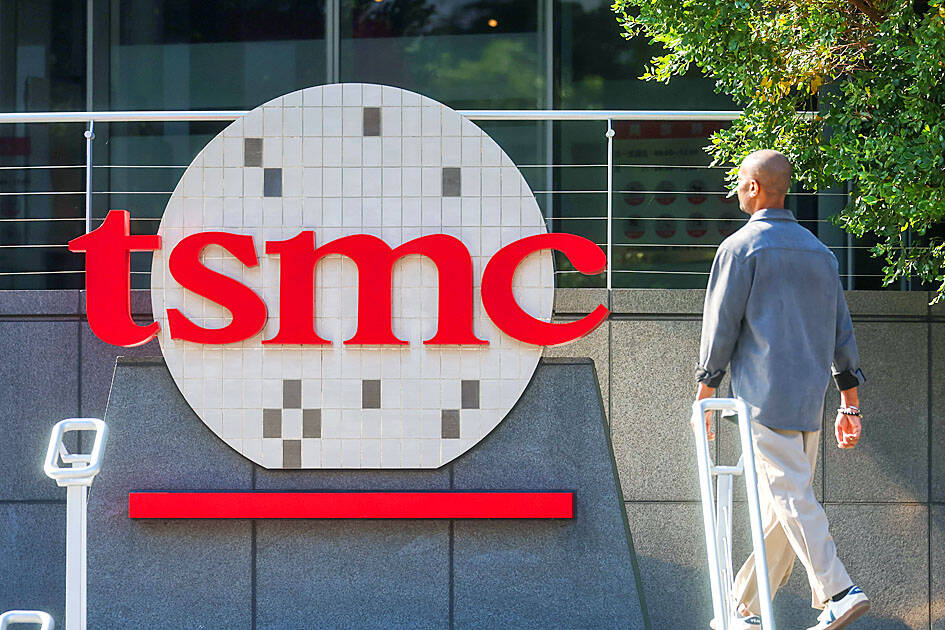
A man walks past the logo of Taiwan Semiconductor Manufacturing Co in Hsinchu on Jan. 29.
Photo: AP
A shortage of such specialized parts could disrupt chip production for customers in smartphone, artificial intelligence system, data center and defense supply chains.
TSMC, the world’s largest contract chipmaker, has surveyed suppliers on using rare earth-free motors in factory-automation equipment, three industry executives briefed by the company on its plans said.
One of the people said the effort was driven by concerns about potential supply disruptions from China.
The discussions remain in the early stages and have not yet resulted in a broad rollout of rare earth-free equipment, two of the people said.
The Taiwanese company did not immediately respond to a request for comment.
TSMC’s efforts follow statements from Taiwan and the US that they would begin looking for ways to reduce their reliance on Chinese rare earth and critical-mineral supply chains.
In June, American Institute in Taiwan Director Raymond Greene said that the US is working with Taiwan and other partners to develop alternative sources of supply, expand processing capacity and build more resilient supply chains.
Minister of Economic Affairs Kung Ming-hsin (龔明鑫) in February said that the government would support the Industrial Technology Research Institute (工研院) to develop rare earth technologies, with plans to establish a pilot production line within three years that could meet an estimated 50 percent of the nation’s domestic demand.
KioskNews shows a cleaned-up reading view extracted from the publisher’s page — the original always lives on their site, not ours.