PH fertility rate hits historic low as contraception gaps persist

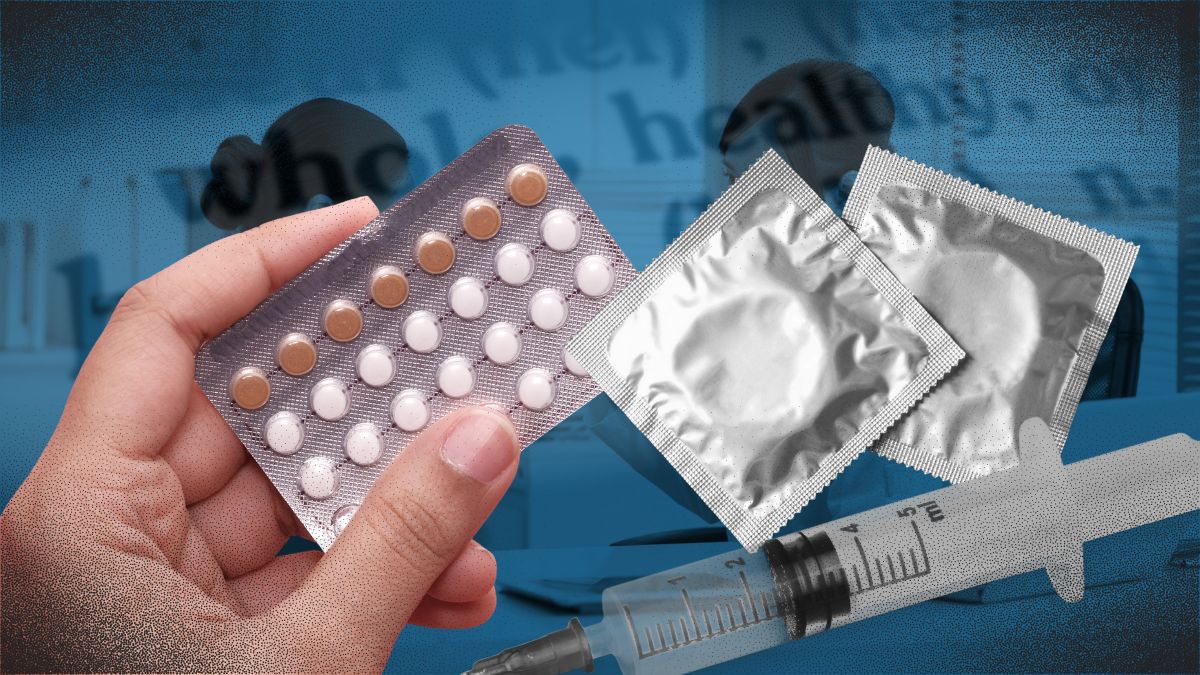
Composite image from INQUIRER files
MANILA, Philippines — The Commission on Population and Development (CPD) and its partners on Thursday called for wider access to family planning and contraception as the Philippines records its lowest fertility rate yet, while many women still face difficulty obtaining the reproductive health services and methods they need.
Article continues after this advertisement
The call came as the country observes World Contraception Day on Sept. 26 under the theme, “No barriers, just choices: Access to options, freedom to decide.”
FEATURED STORIES
NEWSINFO
NEWSINFO
NEWSINFO
The observance brought together the CPD, Bayer Philippines Inc., the Philippine Society for Responsible Parenthood Inc. (PSRP), Jhpiego Philippines and the Forum for Family Planning and Development to discuss gaps in contraceptive access.
Citing data from the Philippine Statistics Authority (PSA), CPD Deputy Executive Director Lolito R. Tacardon said the country’s fertility rate has fallen to a historic low of 1.7 children per woman.
READ: CPD says falling fertility rate opens doors to better workforce
However, he noted that the decline does not diminish the importance of family planning and responsible parenthood.
Article continues after this advertisement
“For us, it is becoming more relevant than ever to continue advancing the importance of family planning and responsible parenthood because now the focus is on ensuring women’s capacity and rights to achieve and exercise their reproductive rights,” Tacardon said.
“Hence the focus now is on how we would be able to support the reproductive agency and choices of women,” he added.
Article continues after this advertisement
CPD said the slowing population growth, largely driven by declining fertility, signals the country’s entry into a late demographic transition phase and presents both opportunities and challenges as the Philippines seeks to maximize the benefits of its changing population structure.

Graphics by Ed Lustan/Inquirer.net
According to the 2025 National Demographic and Health Survey, modern contraceptive use among currently married women rose to 44.5%, from 41.8% in 2022.
Tacardon said the latest survey also showed that progress in contraceptive use has not been matched by equal access to family planning services.
“The 2025 NDHS tells two stories. The first is progress: more Filipino couples are exercising their reproductive agency — the ability to freely decide whether, when, and how many children to have, and to have the information and services to act on those decisions. But the second is persistent inequality,” he said.
“Unmet need among married women rose slightly to 12.5 percent in 2025, while met need barely moved. Among sexually active unmarried women, unmet need is far higher, at 48 percent, a gap unaddressed for too long. Reproductive agency is not truly universal if it is enjoyed only by some,” he added.
Still, CPD said access remains unequal. Among all women ages 15 to 49, the most commonly used modern contraceptive methods were pills at 11.6%, followed by female sterilization at 4.6% and injectables at 3.4%.
READ: CPD: 14.1% of Filipinos still use traditional family planning
The agency said barriers persist, including myths and stigma, limited access to preferred contraceptive commodities and a lack of trained providers.
Reaching those left behind
CPD Undersecretary for Population and Development Lisa Grace Bersales said the government needs to strengthen efforts to reach Filipinos who continue to have limited access to reproductive health services.
“While more and more women and men are recognizing the importance of family planning, the government needs to strengthen its initiatives to reach out to women and men who have low access to reproductive health services, so they can fully exercise their reproductive rights,” Bersales said in a statement.
“We need to reach those who are poor, marginalized, and those living in isolated and disadvantaged areas,” she added.
The agency said people with lower incomes and less education continue to face particular challenges, noting that they tend to have more children than they desire.
Men’s participation in family planning also remains low, with vasectomy prevalence at 0.08%, prompting the agency to emphasize shared responsibility between couples in family planning and responsible parenthood.
READ: Married Filipino women more likely to use contraceptives than single ones
Bersales said the country’s demographic shift should also change how family planning is viewed.
“This demographic situation provides the opportunity to shift the focus of family planning and reproductive health from human numbers to human lives.”
“In view of this, as the main duty bearer, the government must be able to help couples and individuals take advantage of their greater opportunity to improve their wellbeing through a well-planned family,” she added.
CPD said its approach to family planning amid the country’s declining fertility and aging population is anchored on responsible parenthood, reproductive intentions, reproductive agency and socioeconomic security.
It said these efforts are also part of the country’s push to maximize its demographic window of opportunity and achieve a demographic dividend through investments in human capital, education, health and productivity-enhancing employment.
Adolescent pregnancy, reproductive health gaps
CPD also highlighted adolescent pregnancy, which it placed at 4.9% overall but 9.4% among the poorest households, with certain regions also reporting disproportionately high levels.
The agency stressed that the issue should be approached not only as a health concern but also as a matter of development inequality, with an emphasis on investing in adolescent health and development programs that provide young people with life skills, emotional resilience and sound decision-making skills.
READ: Teen pregnancies on the rise again
Forum for Family Planning and Development Vice President Dr. Juan Antonio Perez III said adolescents can also face difficulty seeking reproductive health services, even in communities where such services are supposed to be available.
“It is ironic if a sexually active teenager in an urban or community is questioned about her need for RH (reproductive health) services at the clinic level,” Perez said.

Graphics by Ed Lustan/Inquirer.net
He also raised concerns over the risks faced by girls below 16, saying the age group continues to experience significant gaps in sexual and reproductive health and rights.
“Girls under 16 today suffer the greatest deprivation of their sexual and reproductive health and rights, with almost 13,000 victims of possible statutory rape below 16 years old in 2024 alone,” Perez said.
Perez also cited HIV among 15- to 24-year-olds, saying cases in the age group continued to rise amid declining awareness and persistent misconceptions about the infection.
The concerns, he said, reinforce the need for stronger adolescent-focused reproductive health and development programs alongside efforts to improve access to services.
Barriers continue to limit reproductive choices
Tacardon said this year’s World Contraception Day observance would focus on the barriers women face in exercising their reproductive agency, including their decisions on whether to use family planning methods and contraception.
“That’s why our theme for World Contraception Day this year is all about conversations on the barriers and challenges that women encounter in exercising their reproductive agency, and one of the choices they have to make is whether to use family planning methods and contraception,” he said.
Perez likewise said contraceptive choices are not always easy to exercise despite greater awareness of sexual and reproductive health and rights.
“First of all, numbers and statistics will not lie. Today, women, couples, boys and girls are exercising their sexual and reproductive health and rights, choosing to plan and develop their families — that is real. But what is also real is that the choices are not made easily,” Perez said.
READ: Lack of trainers, poor LGU support stall RH drive
PSRP Vice President Dr. Bernabe Marinduque likewise highlighted misinformation surrounding contraception, particularly claims about the effects of hormonal methods, which he said continue to influence women’s decisions.
“The fears that drive women away from hormonal contraception — that it causes weight gain, depression, infertility, sexual dysfunction or cancer — are now amplified at an extraordinary scale online,” Marinduque said.
He cited a single study that found 700 contraception videos on one platform had drawn 1.18 billion views, saying the scale of online content makes access to accurate health information increasingly important.
Closing access gaps
Perez called for evidence-based advocacy starting at the community level, with local evidence used in discussions with local and national governments to strengthen sexual and reproductive health services and contraceptive security.
“Choice is not real if only a few can afford it. Access is not real if judgment stands at the clinic door,” Perez said.
The CPD called on government agencies, local governments, schools, health providers, faith-based organizations, civil society, the private sector, communities and families to work together to improve access to family planning and reproductive health services.
Left to Right: Dr. Corazon Raymundo, President, The Forum for Family Planning and Development; Dr. Carmela Pagunsan, ASEAN Head for Medical Affairs, Bayer Philippines Inc.; Dr. Ingrid Magnata, Country Program Manager, Jhpiego Philippines; Lolito R. Tacardon, Deputy Executive Director, Commission on Population and Development (CPD); Dr. Juan Antonio Perez, Vice-President, The Forum for Family Planning and Development; Dr. Esmeraldo Ilem, President, Philippine Society for Responsible Parenthood Inc.; Dr. Bernabe Marinduque, Vice- President, Philippine Society for Responsible Parenthood Inc. (Photo courtesy of CPD)
Dr. Carmela Luisa Pagunsan, Bayer Philippines’ ASEAN head of medical affairs, said access involves more than simply making different contraceptive methods available.
“Every woman deserves a full range of choices about her own body, and that starts with making those choices reachable,” Pagunsan said.
Meanwhile, Dr. Ingrid Magnata, Jhpiego Philippines country program manager, said expanding contraceptive options also requires stronger health systems, trained providers and reliable information.
“Expanding contraceptive choice is not only about having different methods available. It requires strong health systems, equipped providers, reliable information, and services that enable people to make voluntary and informed decisions,” Magnata said.
Push for full implementation
The Forum for Family Planning and Development likewise called for sustained action to address gaps in reproductive health services.
Forum President Dr. Corazon M. Raymundo said full implementation of the Reproductive Health Law remains challenging nearly 14 years after its passage.
“Almost 14 years after the passage of the Reproductive Health Law, full implementation remains an uphill battle,” Raymundo said, citing shifting political priorities and continued opposition from conservative groups as challenges for vulnerable communities.
READ: The Reproductive Health law
“Multisectoral partnerships are our best model for dismantling these barriers and ensuring that our youth, women in precarious work, and rural communities are no longer left behind,” she added.
The CPD said ensuring access to reproductive health options, freedom to decide and the ability to act on those decisions can contribute to individual well-being and broader socioeconomic progress.
“Let us build an environment where every pregnancy is wanted, every childbirth is safe, and every Filipino has the freedom to decide their own reproductive future,” the agency said. /dm
KioskNews shows a cleaned-up reading view extracted from the publisher’s page — the original always lives on their site, not ours.