Writer’s Corner: Carnatic Wars through a former Bengaluru coporate manager’s lens
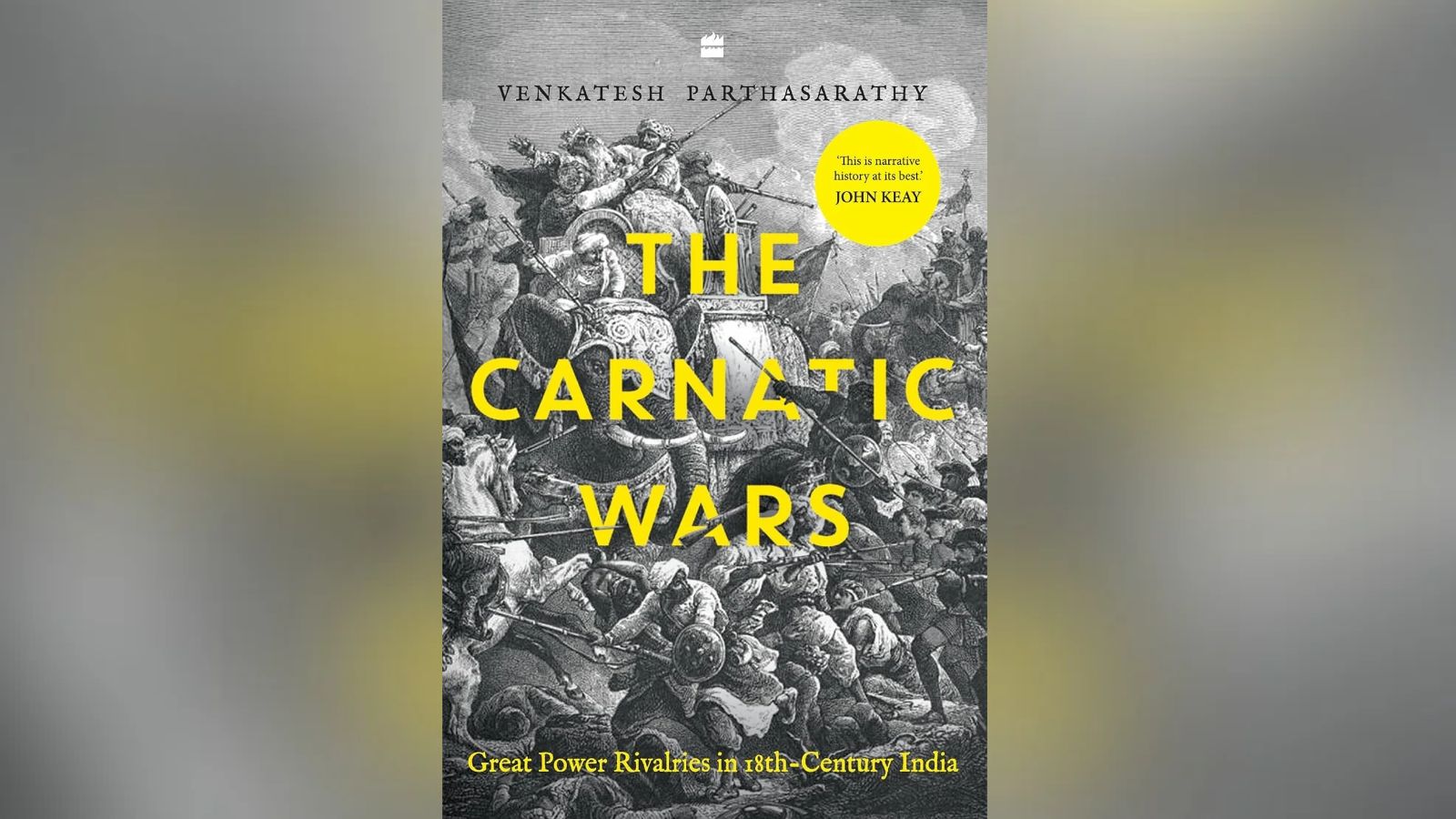
Over 200 years ago, South India was torn apart by the Carnatic Wars — the French and British waging war directly and through local proxies as they fought for the position of the main European power in India, finally ending in favour of the British in 1763. It is this period of history that former Bengaluru-based corporate manager Venkatesh Parthasarathy has chosen to examine in his book, The Carnatic Wars: Great Power Rivalries in Eighteenth Century India.
Drawing on East India Company records, merchant Ananda Ranga Pillai’s journals and various Persian and French sources, the book explores how European powers built influence through local alliances, military logistics and banking networks.
“When I was around 11 years old, I had gone on a family holiday to Vellore – one of my uncles took me to the fort and told me stories about it. This would have been at the back of my mind – and when I was doing research for my first book, I came across this topic (Carnatic wars),” he told The Indian Express.
As it happens, The Carnatic Wars: Great Power Rivalries in Eighteenth Century India is not his first book. Parthasarathy had previously authored a book researching the origin of the ‘Venkatesa Suprabhatam’ prayer.
Compiling all information from various sources was not an easy task. Parthasarathy started during the second Covid wave and took three and a half years to complete the book. A steady routine helped: he would start writing in the morning and would not stop until around 1 pm, setting a goal of how much to write each day.
Despite not being formally trained as a historian, his corporate background may have helped in one way – the East India Company was one of the great corporate set-ups of its time, complete with records of its cash flows and minutes of its meetings.
Following the money trail
Parthasarathy followed the money trail, putting it down on an Excel spreadsheet. He explained, “It is like reading your accounts, and you send your weekly reports when running a business. So I started reading it like that. You discover a mass of information – political, economic, a lot of stuff about the trading operation.”
Story continues below this ad
Another fascinating source on what the French were doing was Ananda Ranga Pillai. Interestingly, the Tamil in which he wrote his journals used many mercantile terms, something translators around a century ago clarified. Parthasarathy also sourced a rare 1933 book which translated the important letters of the French Governor of Pondicherry, Joseph Francois Dupleix, as well as a contemporary Persian source. Many contemporaries had also left eyewitness accounts.
Parthasarathy discovered many fascinating things while researching the Carnatic Wars. He said, “Most of even the lesser-known aspects of this history were written by the English. If you look at even the Persian version, there are significant differences.”
He added, “This is when the Europeans learned how to dominate India. They learned that there are diverse polities and fault lines… they learned how to handle logistics in India, and most importantly, the local banking network.”
Parthasarathy traces the start of this to the Battle of Adyar in 1746, where a small French force (including French-trained Indian soldiers) held its ground against a much larger force sent by the Nawab of Arcot.
Story continues below this ad
All of this has come together to leave readers with a fascinating tale – a time of power struggles and bloodshed that determined the fate of the subcontinent.
KioskNews shows a cleaned-up reading view extracted from the publisher’s page — the original always lives on their site, not ours.