Murder on the dancefloor: are phones, drugs and chatter killing off dancing?

Towards the end of summer, a debate began raging in clubland, kick-started by an Instagram post from the esteemed DJ Jane Fitz. Ahead of the Houghton festival, where she is a regular fixture, she posted a request asking people to stop chatting so much during DJ sets.
“What I wrote was super respectful,” she tells me. “A bit of talking is obviously OK. But why would you stand completely still, where the sound is super loud, just to ask your mate about a new boyfriend or what they had for lunch? It’s called a dancefloor for a reason.”

Fitz’s plea exploded. It chimed with many, while others were up in arms, claiming that paying an entry fee allowed them to do whatever they wanted. “People were accusing me of being the fun police,” she says. “I’m not trying to stop your fun, mate. I’m trying to give you a better night out.”
“I think the dancefloor is dead,” Charli xcx sang on her tongue-in-cheek comeback single Rock Music this spring. Was she right? Many DJs and clubbers are worried it goes further than the yappers Fitz complained about, citing the rise of certain drugs – insular ketamine, chew-your-ear-off cocaine – and TikTok-boosted star DJs bringing in passive fans used to consuming dance music through a screen, who end up standing still filming the DJ and their visuals. Then there is the rising cost of clubbing, prohibiting younger, potentially bouncier dancers from attending raves.
As fewer purpose-made clubs have been built in recent years, clubbers have got used to squeezing into one-room raves often in converted arches, warehouses and garages. Josh Aitman, an organiser of the sober-friendly London queer party Good As You, complains that “some parties can be so packed in that I get looks just for dancing”. Separate bar areas are scarce and the 90s concept of a dedicated chill-out room is long gone, so the smoking area is often the only safe – if smelly – bet for a chat away from the music.
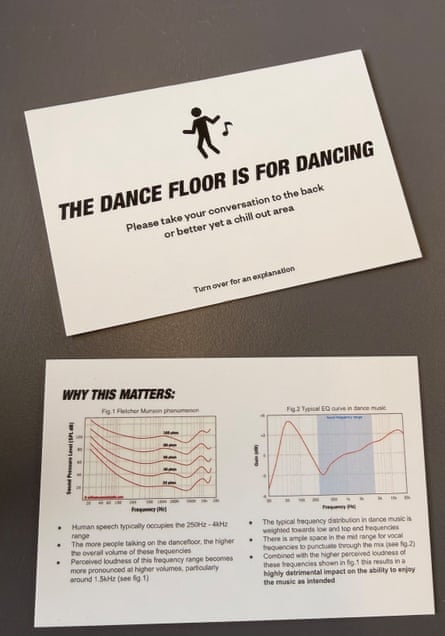
While the audiophilia boom has improved sound quality in many clubs, stricter council licensing demands often result in quieter dancefloors, making chat more liable to cut through and annoy other punters. One diehard group of clubbers detailed the science on cards they handed out this summer on dancefloors including at Houghton. One side read: “The Dance Floor Is For Dancing” with “Please take your conversation to the back” written underneath. The flipside featured a diagram of EQ curves. “Dance music is very bassy, meaning there’s loads of room on the top end of the EQ spectrum for vocals to punctuate,” says Paul M, one of the instigators of the cards.
“The sadistic side of me wishes I could just turn the music off for 10 minutes and give these people a lecture on all this so they understand,” says Paul. “The cards were a jokey way of doing that – but it’s no joke. I was watching a DJ I’d wanted to see for ages and two men next to me were having a 20-minute discussion about mortgage rates.” Astonishingly, this group of dancefloor activists wasn’t alone – someone else at Houghton gave out cards that just said: “Stop Talking.”
Not everyone in clubland wants the dancefloor to be treated as a sacred space. James Ronald, who plays as Hot Cross Fun and is a resident DJ for the nomadic party Disco Disco, posted a heartfelt rebuttal to Fitz’s post titled: “Please Talk on the Dancefloor.” It garnered a similarly huge reaction. “I get that you should be respectful,” says Ronald. “But she talked about treating it like a church, cinema or a theatre – places where you just observe and nobody communicates.”
Ronald tapped into an important reason why club culture is such a powerful force: the dancefloor is a place for people to connect. “Community is a really big part of clubbing,” he says. He defends the right for clubbers to get deep. “There’s been instances with a particular friend, for example, who only really opens up when he’s a bit wasted. We’ve had important chats about family and personal issues, chats we wouldn’t have had anywhere else.”
It’s a fairly new discussion and, apparently, an intractable one. Dan Beaumont, a DJ who is writing a history of London’s queer club culture, sees it like this: “Gossip is the glue that holds clubbing together. You need an equilibrium of yappers and dancers. Clubbing doesn’t work when it’s one and not the other.”
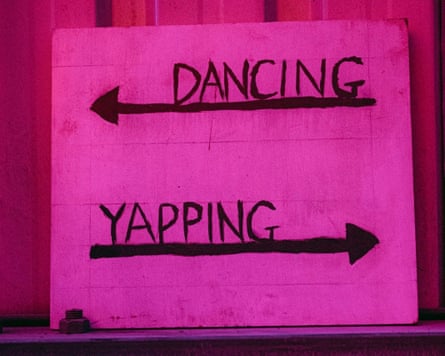
One possible way forward is for venues to set more direction for what they expect from punters. At Gaffe, an intimate DIY 150-capacity club in south London that opened in early 2025, a sign shows two arrows pointing in different directions. One says “Dancing”, the other “Yapping”.
“The sign is a bit tongue in cheek,” says founder Luca Marchal. “But the arrows point in different directions for a reason. We’re asking people to take the longer chats off the dancefloor. Having a proper catch up is a massive part of going out, so we want that to happen somewhere good.”
Until more venues spell it out quite so clearly with signs, interpersonal skills have become more important than ever in this delicate standoff, a challenge for conflict-averse Britons. Compare that with Berlin, where there is far less social stigma around asking someone to take their chat outside. “There’s a certain etiquette that leads to more satisfying and transformative experiences on the dancefloor,” says the British DJ Pandora, who is based in Berlin. “You’re more able to get into a flow state without the distraction of nearby conversations.”
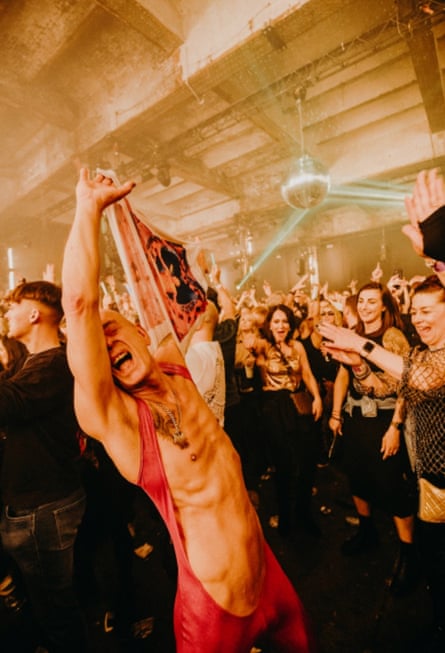
British clubs have started to follow Berlin’s lead in banning phones on the dancefloor, a change that many have credited with restoring a bit of life. Michael Peacock, an almost ambassadorial figure for British clubbing, is one of those leading the charge. The 68-year-old likes to arrive at clubs barefoot, often wearing little, and proceeds to have the most fun in the room; he says his peak this summer was dancing for 30 straight hours.
In 2022, a video of Peacock going for it at Fabric in London was shared online by a punter with mocking intent. There was a huge outcry: not only are people not dancing because they are filming the DJ (or each other) but they may be worried about someone else filming them. “A lot of the debate on social media is about how phones destroy the vibe for the DJ,” says Peacock. “But there’s still scant regard for ravers who are filmed without their consent.”
Peacock now campaigns for less phone use in clubs. He praises Amber’s in Manchester which goes further than most “no-phones” clubs with a strictly enforced zero tolerance policy. “There are still times when I have to remonstrate with people,” he says with a sigh.
Sheffield DIY venue Plot 22 staff place a sticker over your phone camera on the way in, and will have a word if they catch you breaking the rules. “Our space is small and intimate,” says the venue’s manager, Mike Thompson. “Even just one person filming with a flash would really disrupt the vibe”. Co-owner Adam Seymour agrees: “People say they feel free to enjoy the dancefloor when you take away the ability to use their phone.”
If clubbing’s heyday was defined by ecstasy, today’s most popular drugs can pull the dancefloor in disparate and equally destructive directions. Many feel that the rise in ketamine use – a drug that creates a profound sense of dissociation – has made dancefloors markedly less buoyant in recent years.
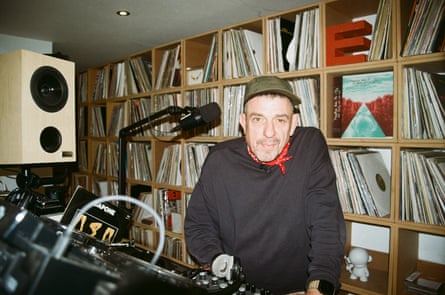
Manchester DJ Luke Una stresses that he doesn’t want to be judgmental about drug use, but calls ketamine a “very solo” drug. “It breaks any sense of communal togetherness. For me, music has to be about connection. A nightclub should be about bringing people together and transcending and escaping together. The one time I had it, I’ll be honest with you, I thought I was listening to Underground Resistance for 12 hours until I came round and realised that I was listening to the air conditioning unit.”
Then there’s cocaine, the cost of which has plummeted in recent years and is now as omnipresent as ecstasy used to be. Clubbers have “gone from a drug that makes the music sound amazing, to a drug that makes you think you’re amazing and people need to listen to you instead,” says the DJ Wes Baggaley, a resident on NTS Radio, a London music station.
But Luke Una is keen to point out how a revival of a different drug is having the opposite effect. “In the last 12 months, there’s been a lot more unity, love, warmth and smiling – down to people taking mushrooms again. I played a party in Belfast and said to the person running it, ‘Why is everyone so fucking happy?” And he said, ‘Luke, they’re all on mushrooms.’ I’m not advocating using them – but you can see the difference.”
Now Jane Fitz feels optimistic: “We started a debate, which was a great first step. I have seen differences, I think people have realised there should be some kind of etiquette. During the breakdowns in songs, the dancefloor has been feeling quiet with people listening again.”
When a party pops off, Luke Una also sees optimism: “I believe something is going on which feels like a reaction to what has become a brutal, toxic world out there. It feels like people are coming back to life in 3D again, showing a need to be together and – without being cringe about it – to kind of transcend together too.”
KioskNews shows a cleaned-up reading view extracted from the publisher’s page — the original always lives on their site, not ours.