Lack of evidence, endless delays: Why Goa’s illegal mining probe went nowhere
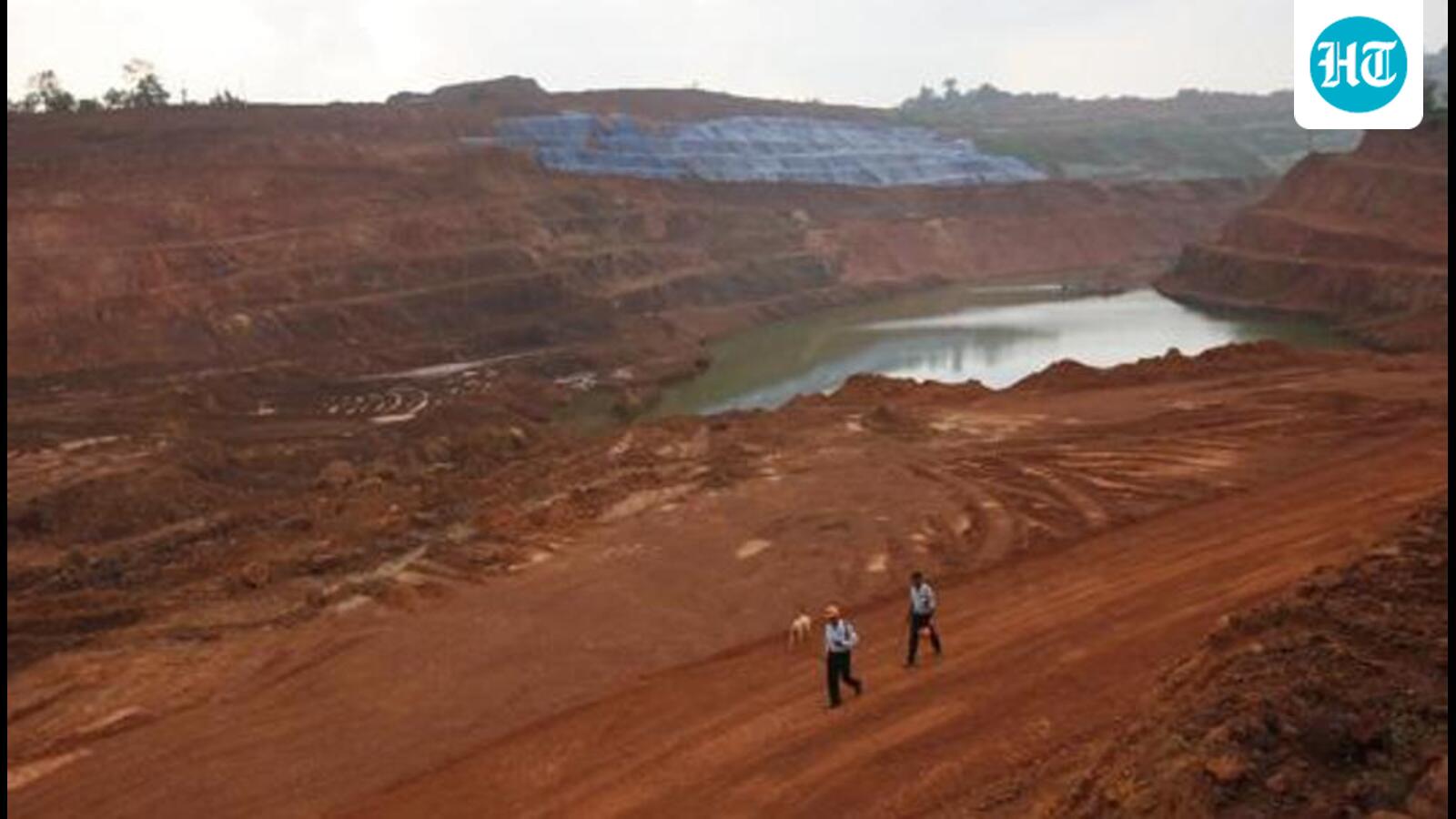
On October 12, the High Court of Bombay at Goa quashed the Enforcement Directorate (ED)’s June 2014 case based on the 2012 Justice MB Shah Commission’s findings of large-scale violations in iron ore mining. It was among the last cases related to the alleged irregularities that left the industry shuttered for more than a decade. A Goa Police Special Investigation Team (SIT) probed the matter. The ED probed the money laundering angle.
Three days after the Justice Shah Commission Report was tabled in Parliament in 2012, the Goa government ordered the suspension of mining operations, a mainstay of the state’s economy dating back to the Portuguese colonial era. Mining remained halted until December 2022, when the state government conducted its first auctions.
From colonial concessions to an economic powerhouse
To shore up state finances, the erstwhile Portuguese government granted mining rights in 1906. The first mining concession was issued in 1929. Between the 1930s and the 1950s, 791 mining concessions gave rights to mine in perpetuity without a fixed tenure.
Mining in Goa took place in the Mayem-Bicholim and Pissurlem clusters in the north, and the Codli-Costi, Sigao, Tollem, and Caurem-Sanguem clusters in the south. It offered these formerly agricultural villages employment opportunities beyond agriculture. Mining in Goa initially began manually through a labour-intensive process.
In the absence of other industry, mining soon occupied a lion’s share in the state’s economy. The industry mechanised and expanded operations, giving rise to ancillary industries like ship-building. It helped Goa’s lone port, Mormugao, become profitable. The industry thrived. It had the first-mover advantage thanks to its willingness to sell cheap ore to rapidly emerging economies, most notably Japan, after World War II, thanks to the location of the mines close to the port. Mining soon became the mainstay of Goa’s economy long before tourism emerged.
Mining bosses built a name and reputation as philanthropists. They established colleges and institutes of higher education, newspapers, and sponsored football clubs and promoted cultural events, building a legacy that dominated the state’s social landscape. Tourism began to pick up in the 1980s, but mining continued to dominate.
According to the Goa Mineral Ore Exporters Association, mining grew to 54 million tonnes annually in 2012 from 10 million tonnes in 1970. Between 2004-05 and 2010, it nearly doubled from around 24 million tonnes to 45 million tonnes as demand for ore grew in China.
Locals invested in trucks with the boom. Mining companies promptly contracted them to ferry the ore between the mine and the jetty, from where it was loaded onto barges and ferried to the port.
At its peak in 2010-11, a National Council for Applied Economic Research study documented the economic growth and role of the mining sector in the Goan economy. It estimated that the industry contributed roughly ₹6,500 crore, or 16.94% to the state’s GDP, and employed 19,000 directly out of a total labour force in Goa of 582,000.
The Supreme Court held in 2014 and reiterated in 2018 that all mining in Goa after November 22, 2007, was illegal and without lawful authority.
An endless probe
In August 2013, Goa’s then mines director Prasanna Acharya registered a police complaint alleging that persons identified in the Supreme Court-appointed Justice Shah Commission report and the Goa Public Accounts Committee Report hatched a criminal conspiracy. He added they illegally extracted mineral ore in violation of laws, causing ₹35,000 crore loss to the exchequer and wrongful gain for themselves.
A First Information Report (FIR) was filed based on Acharya’s complaint. The ED initiated its investigation on the basis of this FIR.
The Justice Shah report flagged lapses, including unauthorised increases in production that caused environmental hazards, encroachment outside the mining lease areas and unauthorised amalgamation of leases. It said Portuguese-era mining leases that had expired were renewed, violating environmental conditions. The report cited a lack of state and central government oversight.
As many as 52 people and two companies were booked. Of the total 16 FIRs, only nine reached the chargesheet stage. This included three cases in which politicians, including former chief minister Digambar Kamat, were named as accused and later discharged.
The SIT has claimed that investigations into 125 of the 127 mining leases were still ongoing. But a SIT official said that there were no investigations in progress. He added that the SIT has been scaled down and reduced to keeping track of the ongoing cases and assisting the prosecution.
“The SIT first had five police inspectors besides sub-inspectors and other staff. Today the strength is reduced to just one police inspector,” the official said.
In July, the high court quashed the FIR registered based on Acharya’s complaint against seven companies. The court noted that there has been no progress in the investigation since August 2013. It added that the delay in prosecution is not merely a delay but an inordinate one.
The crux
Kamat, who helmed the mines department for 12 years across governments between 2000 and 2012, was accused of what was known as illegal condonation of delay. The Justice Shah report said the government accepted renewal applications long after Portuguese concessions had expired during Kamat’s tenure as mines minister. In some cases, it was done around two decades later by condoning the delay in filing the application, it said.
Justice Shah report said 42 leases were resurrected in this manner. But FIRs were lodged in only two cases, and the accused, including Kamat, have been discharged. Fifteen other accused named in the two cases for causing a loss of ₹135 crore to the exchequer were all discharged last February due to insufficient evidence.
The report said there was no statutory provision to condone the delay in these cases, but the state government still went ahead and wrongly interpreted provisions and accorded renewals. It flagged irregularities and suggested case-wise action against state government officials.
The report said another 97 lease renewals were void as they were not disposed of within the time limit of six months. Fifty-four mining leases were allowed to operate based on deemed extension. A renewal was deemed to have been granted provided the application was filed in time.
Another 10 leases were renewed without seeking prior approval of the central government.
A former official, who turned approver in the ‘condonation of delay’ cases, told investigators that he was forced to sign the files at Kamat’s insistence despite highlighting that they were time- barred.
Mining companies were expected to pay fines calculated based on ore extracted during the period they operated the leases despite the lease not being valid.
Negligible recoveries
The state government issued demand notices to mining lease holders seeking to recover ₹3,431 crore. Notices worth ₹1,922 crore were issued pursuant to a report of the Comptroller and Auditor General in 2016 over ₹1922 crore losses to the state exchequer. Notices worth ₹1,508 crore were issued after a report by a team of chartered accountants
Chief minister Pramod Sawant this year told the assembly that mining companies owe ₹319.5 crore to the government on account of illegal mining, excess extraction, penalty, royalty, interest, environmental compensation and court-ordered dues. He added that companies have paid dues of ₹61.58 crore. Sawant said the balance of 258 crore is pending for recovery and notices have been issued.
The way forward
The industry is a pale shadow of itself. In August, Sawant promised that mining would restart in a full-fledged manner by October this year.
The state government auctioned around 20 mineral blocks beginning in December 2022. But only a handful have restarted operations. Of the 20, only nine have received consent to operate. The ore extraction in 2025-26 was over four million tonnes. Over two million tonnes were sold. At its peak, Goa exported 54 million metric tonnes.
Police have said that they are awaiting a government decision on whether to carry forward the investigation in the remaining cases or allow the sole remaining FIR, registered against those named in the Shah Commission report, to lapse. A decision has been pending since at least 2024.
KioskNews shows a cleaned-up reading view extracted from the publisher’s page — the original always lives on their site, not ours.