'Mahapralaya, no chance of survival': Silkyara rescuer Arnold Dix on Nepal’s Chilime disaster
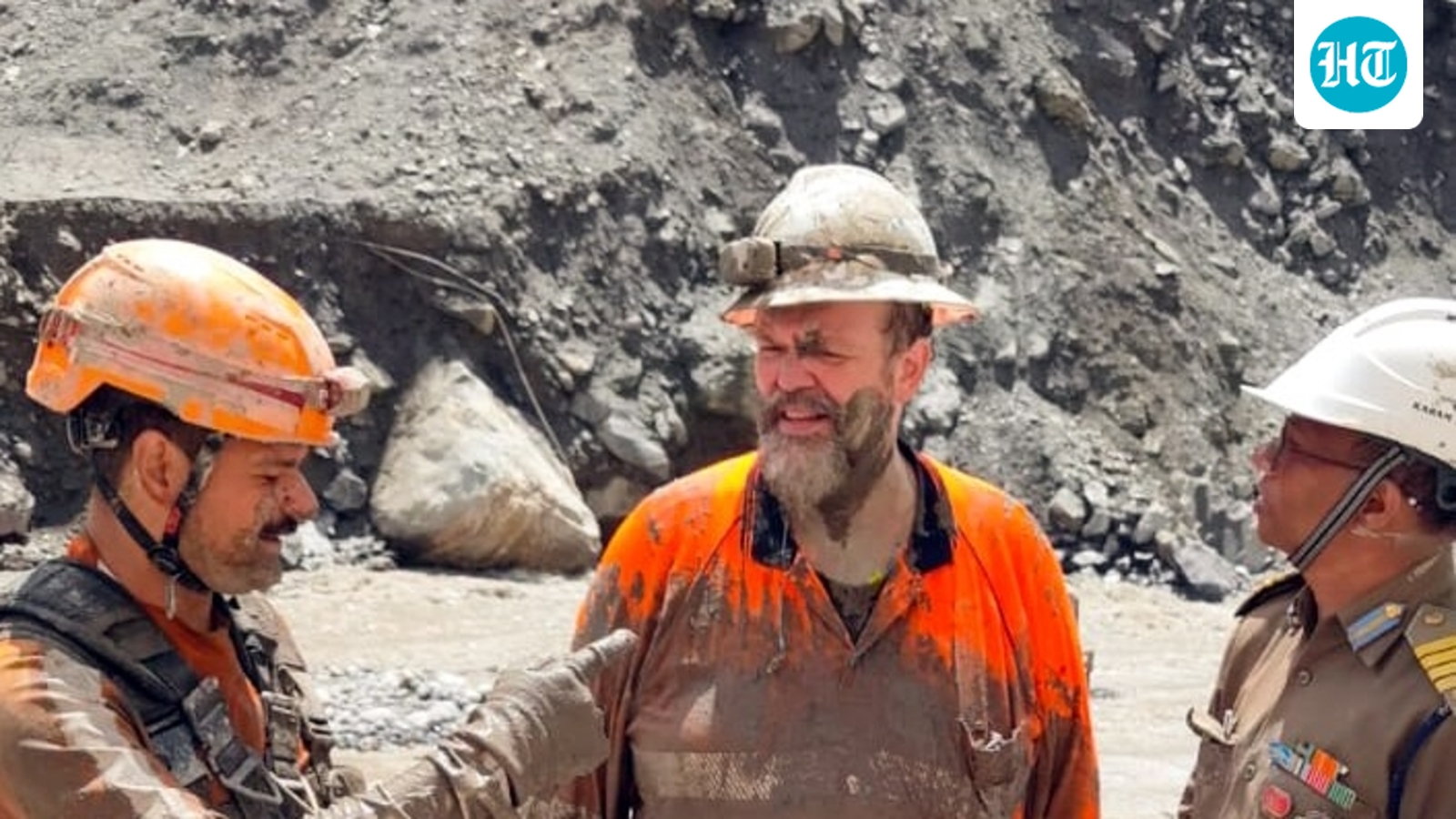
Australian tunnel rescue expert Arnold Dix, who is known in India for his role in the successful rescue of 41 workers from the Silkyara tunnel in 2023, has said people caught directly in the initial flood of water, mud and debris at Nepal’s Chilime hydropower project had “no possibility of survival”.
He described the disaster as one of the most extreme natural events he has encountered in decades of working on underground emergencies.
Dix, who has joined the emergency search operation at the flood-hit Chilime tunnel, shared a video from the site on X and said the scale and force of the disaster meant there was no basis for blaming Nepal or its engineers.
Also Read: HT Interactive: How a Himalayan glacier collapse caused deadly floods in Nepal
‘Mahapralaya’ at Chilime
Dix described the disaster as “Mahapralaya”, a term from the Nepali linguistic and Sanskrit philosophical tradition meaning “the great dissolution” a catastrophe so overwhelming that the world as people knew it appears to have been unmade.
“In all my decades of work with underground emergencies and natural disasters, I have never encountered an event combining this scale, this violence and this complexity.”
He said immense flows of water, mud, giant rocks and debris struck multiple hydropower projects at the same time, in terrain that was already among the most difficult and inaccessible on Earth.
Also Read: 2015 earthquake, glacier retreat, warming world: The chain that may have ended in Nepal disaster
“In my professional judgment, this event belongs in the same class as the most severe natural disasters of the modern recorded era,” Dix said.
He said this was because of not only the lives lost, but also the physical violence of the disaster, its simultaneous impact across multiple sites, the destruction of access and communications, and the complexity of the rescue operation.
“At Chilime, it was as though Mahapralaya itself entered the mountain.”
‘More destructive than a bomb’
Dix said the force of the flood and debris was unlike a conventional explosion because it travelled through the entire underground system.
“What happened at Chilime was not merely like a bomb detonating at the tunnel entrance. It was more destructive than that,” he said.
“A bomb has a single point of detonation. At Chilime, an immense flow of water, mud, debris and rocks the size of a bus tore, almost in a single instant, through the entire tunnel system and into the powerhouse.”
He said the flow did not simply destroy the tunnel entrance but moved through the underground works, including major plant and control rooms and areas where people worked, ate and rested.
“On the basis of the available evidence, and my direct conversations with the responders at the site, I am firm in my professional conclusion: for those caught in the direct path of the first inrush, there was no possibility of survival. Death was instantaneous,” Dix said.
Why rescuers continued searching
Dix stressed that his assessment did not mean the search should have been abandoned.
“That conclusion takes nothing from the search. Nor does it mean rescuers could simply have concluded that everyone throughout the vast underground system was lost,” he said.
“Until the tunnels were entered, the evidence examined, and the possible places of survival searched, no one could responsibly abandon the chance that someonw somewhere, might still be alive.” He said the rescuers were right to continue.
‘Not because of negligence’
Dix also rejected suggestions that the disaster reflected a failure by Nepal or its engineers.
“Just three weeks earlier, Chilime stood as a proud achievement of Nepali engineering. Today it lies in ruins — not because of negligence; not because Nepal failed; not because its engineers were unprepared,” he said.
Dix praised Nepal’s Army, Police, rescue services, engineers, workers, communities and international rescue teams for continuing the search in extremely difficult conditions.
India continues relief efforts in flood-hit Nepal
India on Saturday continues its humanitarian assistance to flood-hit Nepal, dispatching another 11 tonnes of relief material, including medicines, forensic supplies, tents, hygiene kits and sleeping bags, as the neighbouring country grapples with the aftermath of devastating floods and landslides.
According to NDRRMA data released at 7 pm on September 18, the death toll stands at 1,410, including 525 human body remains.
NDRRMA said 6,055 people remain missing, while 13,756 people have been rescued.
KioskNews shows a cleaned-up reading view extracted from the publisher’s page — the original always lives on their site, not ours.