IT student develops app to bring Koronadal’s heritage to life
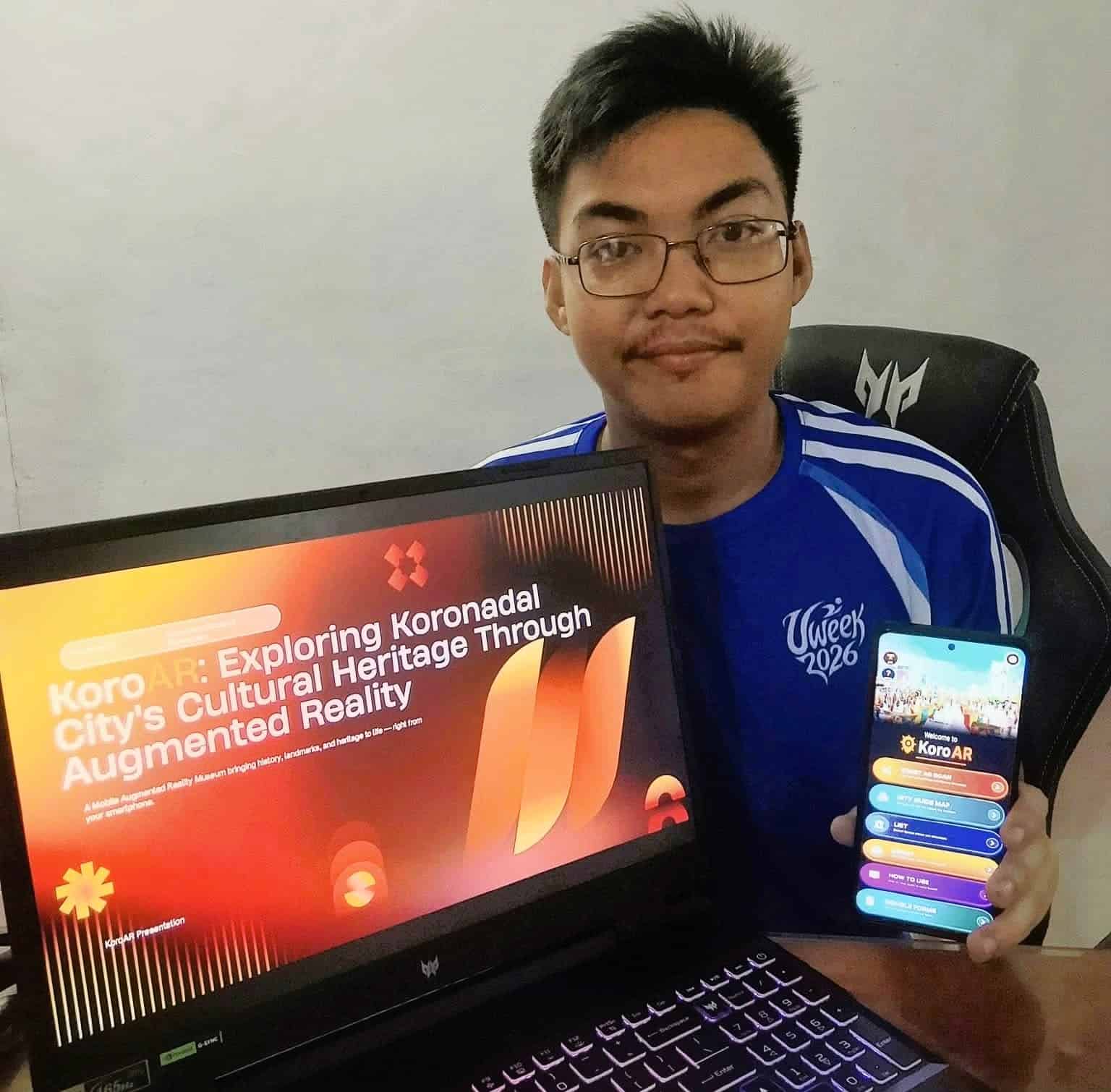

Charles Luke Templonuevo, a Bachelor of Science in IT student at Notre Dame of Marbel University, developed KoroAR as his undergraduate thesis project, using augmented reality (AR) to make historical landmarks, notable personalities, and cultural artifacts easier to explore through smartphones.“As an IT student, I wanted to create something meaningful that would help people, especially the younger generation, learn about our history in a more interactive and engaging way,” Templonuevo, the youngest of three siblings, said.
READ: Marcos to gov’t agencies: Use AI to improve servicesHe said he realized that some young people might not be familiar with certain aspects of Koronadal’s history and culture.“I wanted to create an application that would make learning more interesting and accessible through augmented reality,” he said.KoroAR, short for Koronadal augmented reality, features 30 cultural heritage entries, including 10 historical landmarks, 10 notable personalities, and 10 cultural artifacts.Users can scan designated image markers using their smartphones to view three-dimensional (3D) models of the featured heritage items and access information about them.Templonuevo said he personally created all the 3D models, making the project more challenging but also rewarding.He chose Koronadal as the focus of his thesis to highlight thelight the city’s history and cultural heritage while developing a project that could benefit students, residents, and tourists beyond its academic purpose.“I hope that through KoroAR, students, tourists, and residents will gain a deeper understanding and appreciation of Koronadal City’s history and culture,” he said.
READ: Mindoro students develop smart tool for power utility
Article continues after this advertisement
The application also includes a city guide map and heritage collections organized by category, allowing users to explore different aspects of the city’s cultural identity.Templonuevo presented the project to local government officials and tourism representatives, drawing interest in its potential use for education and tourism.Former mayor and now city administrator Vicente De Jesus stressed the importance of preserving Koronadal’s history, particularly for young people who may not be familiar with the city’s origins and significant events.
FEATURED STORIES
NEWSINFO
NEWSINFO
NEWSINFO
He is willing to share additional historical information to expand the application’s content.Templonuevo said KoroAR remains a prototype that could still be improved through additional heritage entries, historical information, and enhancements to the user experience.“This can be improved in the future,” he said, hoping to continue developing the application even after completing his academic requirements.For Templonuevo, the project goes beyond meeting his degree’s requirements.“It is my way of showing how technology can help preserve and promote our local history and culture,” he said.
READ: 19-year-old student develops free alternative grammar-checking web app
Although KoroAR is already functional, it remains under development and is not yet publicly available through the Google Play Store or Apple App Store. For now, users can access it through a Google Drive link shared by its developer.
He hopes to improve the application to make Koronadal City’s history more accessible to the public and encourage younger generations to appreciate and take pride in their cultural heritage./coa
KioskNews shows a cleaned-up reading view extracted from the publisher’s page — the original always lives on their site, not ours.