Report: Argentina has fewest companies in 19 years
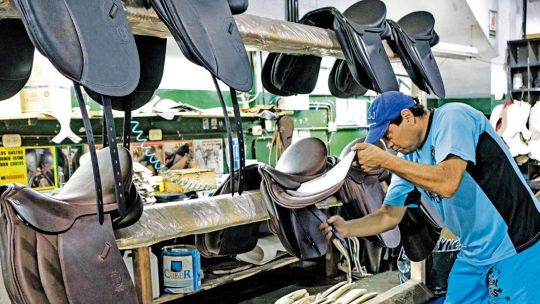
Argentina has lost 32,290 companies since President Javier Milei took office, leaving the country with its lowest number of businesses since 2007, says a new report.
The decline in the number of firms has continued for 18 consecutive months, affecting 14 of the 18 economic sectors and 23 of the country’s 24 provinces, according to the study by the Fundar think tank, a non-partisan research foundation.
A total of 32,290 companies have disappeared since November 2023, Fundar’s Monitor Mensual de Empresas (“Monthly Business Monitor”) reported. Compared with the same month last year, 15,475 firms were lost, a fall of 3.1 percent. The number of companies has fallen by 10,095 so far this year alone.
The contraction is the steepest recorded during the first 32 months of a presidential administration since comparable data became available, said the report. During the first 32 months of the presidencies of Cristina Fernández de Kirchner (entering office in December 2007), Mauricio Macri (December 2015) and Alberto Fernández (December 2019), changes in the number of companies ranged from a 2.2 percent decline to growth of 4.1 percent. Under Milei, the total has fallen by 6.3 percent.
“The data show a persistent and widespread deterioration of Argentina’s business fabric. Falling domestic demand, together with high costs in dollar terms, the tax burden, infrastructure problems and financing costs, are creating a highly adverse environment for companies, including those productive enough to compete. Argentina needs to create conditions that make production and investment viable again,” said Guido Zack, Fundar’s director of economics.
Against this backdrop, the Central Bank’s REM market expectations survey last month cut its growth forecast for 2026, from the three percent projected in June to 1.5 percent. The same report lowered its projection for Argentina’s economy from three percent to 2.5 percent.
A weekly report by Banco Provincia’s Economic Research Department said the economy would need to expand by at least 2.3 percent between August and December to prevent the statistical carry-over effect into next year from turning negative.
Private consumption could help drive GDP growth, given its large share of economic output. But its performance depends on purchasing power, employment levels, access to credit and public-sector transfers to households – all of which have deteriorated in recent months.
KioskNews shows a cleaned-up reading view extracted from the publisher’s page — the original always lives on their site, not ours.