‘I thought the baby would change him’: the women whose pregnancies are blighted by domestic abuse

Evie bought the baby monitor with a rare flicker of enthusiasm, having become increasingly numb as her pregnancy progressed. She liked that it would send video footage to her phone. “I thought, ‘This is really good. Not only can you hear the baby – you can see the baby.’” Unfortunately, her partner appreciated the monitor too. Soon she was carrying it around the house on his orders, so he could watch her. “He used it as surveillance,” she says.
By then she was worn down, and terrified. He had become more controlling since they learned she was pregnant. By the seventh month he had become physically abusive, too. “We were just lying in bed watching something,” she recalls of the first attack. “An argument broke out but it started getting overly aggressive … It just felt more threatening and he looked really agitated. So I ended up shimmying over and sitting on the edge of the bed. All of a sudden he just swung the biggest punch at my arm. Then he did it again. The impact was like whiplash.”
Trauma makes her memory hazy, Evie says, but somehow she ended up lying on the bed again. “Then he climbed over me, putting his knees either side. As he put his arm down, it squashed my belly.”
She shrieked. “Then he just snapped out of it.” As she cried he apologised and put his arms around the bump. “He talked to the baby, sang to the baby …” she recalls. He claimed he had lashed out due to his anxiety. “I accepted it wouldn’t happen again because he was so apologetic.”
The Domestic Abuse Commissioner estimates that in England and Wales, 30% of domestic abuse begins during pregnancy, but the real figure is almost certainly higher because of underreporting. New research published by the For Baby’s Sake Trust, which supports young families experiencing domestic abuse, estimates that 20,000 cases of domestic abuse are disclosed to maternity services in England every year.
Lauren Seager-Smith, the chief executive of For Baby’s Sake, stresses “pregnancy does not cause abuse”, but explains: “It can be a context in which we see an increased use of abusive behaviours … This could include increased monitoring, isolation from family, friends and colleagues, financial control, coercion around healthcare or reproductive rights, physical, emotional and sexual abuse, and even jealousy and resentment towards the developing baby.”
Elaha Walizadeh, a senior programme manager at Refuge, the biggest specialist domestic abuse organisation in the UK, says that between 2024 and 2025 “14% of our service users reported being pregnant”, but believes this is the “tip of the iceberg”. Women may come into more contact with healthcare professionals during pregnancy, but “because not all healthcare professionals and advisers are trained in recognising the signs and having the right conversations with these survivors, survivors are being missed”.
Evie became pregnant early in her relationship. She describes “lovebombing”: gifts, flowers, chocolates. She now sees signs of control were there, dressed up as love. “‘Oh, you’re going to see your mum?’ he would say. ‘I was going to get a movie night ready …’”
He was “over the moon” when she became pregnant but his control intensified. “It started with tracking apps – he ‘wanted to know I was safe’,” she says. “Or he’d say: ‘I’d rather you not go there. I’ve got a bad feeling.’” He even started accompanying her to work sometimes. “He had to be with me constantly. Every midwife appointment. I couldn’t go to doctors on my own, couldn’t have my flu jab on my own.” Evie was asked routine questions concerning domestic abuse. She said everything was fine because she thought it was.
Later her partner became aggressive. Arguments escalated, usually triggered by an accusation she was not paying him enough attention. Doors would slam, and the name-calling began: “slag”, “stupid bitch”. But the apologies afterwards and excuses of anxiety convinced her, until the physical attack. Even then, she felt too vulnerable to leave or seek help. “No one wants to bring a child up in a broken home,” she says. “I thought the baby would change him and make him happy.”
A month before the birth, another violent outburst led to the authorities finally becoming involved. He eventually moved out, but would “sneak back” and continued to demand Evie carry the baby monitor. Fear kept her silent. She allowed him to attend the birth and he had supervised contact with the new baby, who he bonded with, but the physical abuse against her escalated until she secured a non-molestation order, granted by courts to prevent domestic abuse. She has not had any contact for years.
“I feel like I died and my body just carried on,” is how Evie describes her emotions towards the end of her pregnancy and early motherhood. There is a blankness to her voice even now. “I hold a lot of guilt,” she says, believing she “failed” her child. “I am hypervigilant, extremely jumpy …” She still ruminates on why the abuse began. “I believe at first he thought it was a good idea to have a child because then: ‘She can’t leave me.’ But then the baby was getting all the attention.”
Dr Panos Vythoulkas, a lead perinatal clinical psychologist at the North London NHS foundation trust, says this is common. “The baby introduces another person whose needs must be recognised. Someone who feels entitled to control their partner may experience these changes as a threat to their position, attention or authority.” He cites survivor accounts that repeatedly describe “increased possessiveness”. Abusers resent “the attention given to the pregnancy or experience the baby as a rival. A woman’s need for rest, support or choice not to have sex may be interpreted as rejection or a challenge to their authority.”
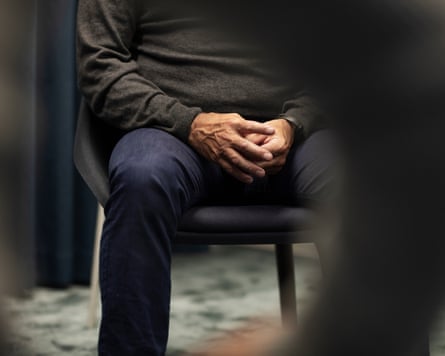
The clinical psychologist Dr Jill Domoney has worked with abusers who have faced up to their actions. “In some of those cases there was a real tension between what they’d internalised about masculinity – needing to be strong and in control and to look after the family financially – and what was being expected of them as fathers, needing to provide in circumstances where that might not be possible,” she says. “Maybe they’re feeling quite vulnerable and scared – but not feeling they were allowed to express that.” Some had difficult relationships with their own fathers.
Like Evie, Vythoulkas believes that abusers may initially desire pregnancy because it offers opportunities for control. “Financial pressures, insecure housing, isolation and increased dependence can restrict a woman’s options. An abusive partner may exploit these circumstances by withholding money, limiting contact with others or obstructing healthcare,” he says.
Riley says her partner was desperate for children. Although they were in a long-distance relationship, “within a matter of weeks” he was talking about babies. She eventually agreed. However, when she rang to tell him the news, his reaction was staggering. As well as asking her to do a pregnancy test on video to prove she wasn’t lying, “He immediately said: ‘Is it mine?’” Shaken, she refused to do the test but still found herself desperately reassuring him. Vythoulkas confirms that “accusations of infidelity and doubts about the baby’s paternity” are regularly observed as part of abusers’ insecurity.
The abuse Riley then began to experience was initially a disorientating combination of lack of interest and manipulation. Her partner would look at his phone if she put his hand on her stomach to feel the baby kicking, and insisted he felt nothing. He did not want to discuss baby names. No plans were made to move in. Yet he would regularly visit unannounced. “He would turn up on my doorstep at 2am; it was like he was trying to catch me out or put fear into me,” she says.
Then the verbal insults and aggression escalated, especially when Riley declined sex. “He used to call me a rhino and said I looked disgusting. If I cried he would tell me to stop turning on the waterworks and ask if I agreed it was pathetic. My self-esteem was at an all-time low.”
She tried to end the relationship but he kept showing up. Her low confidence made this harder to resist. “I felt very alone. I didn’t share the things he was saying to me, partly because I felt ashamed and partly I had become so used to what was happening.”
Then the physical intimidation began, stopping short of contact. “He was once boiling a pan of water and we got into an argument and he held this big pan of water in front of me and kind of lunged.” He didn’t throw it. “It creates a really confusing emotional situation because you can be genuinely frightened of someone while still desperately wanting the relationship to be OK.”
Fear stopped her taking action: fear of his response and fear of having her baby removed. “He would say: ‘Don’t go and pull something where I’m not at the birth because you’ll regret it,’” she recalls. He was present, but they did not move in together afterwards. When he visited, the violent outbursts intensified, usually when Riley was holding the baby. It culminated with Riley being held hostage in her home with her baby, punched as she fed the infant, strangled and raped. She believes she could have died. Her partner was convicted and is now serving a prison sentence. “At no point did he ever beg for forgiveness,” she says. “He would talk about work stresses, money pressures, his childhood or the way he had been treated himself.”
Abuse during pregnancy can be fatal. A Byline Times investigation based on police information found at least 223 women experienced pregnancy loss linked to domestic abuse in England and Wales between 2017 and 2021. Victims of intimate partner violence are also twice as likely to forgo prenatal care, exacerbating the risk of pregnancy loss. The MBRRACE Confidential Enquiry into Maternal Deaths found that suicide was the leading cause of maternal death in the first postnatal year, and that domestic abuse was documented in 43% of women who died. Evie says she felt suicidal after her child’s birth. “I drank to numb myself and I wanted to end my life because I couldn’t cope,” she says.
Evie also points to another potential result of abuse: the behavioural challenges she now observes in her son. Walizadeh says Refuge sees children with brain injuries potentially caused by physical abuse during pregnancy, as well as “children who later in life go on to develop symptoms of ADHD [attention deficit hyperactivity disorder] and other forms of developmental conditions”.
For Baby’s Sake and Refuge stress the need for continued training in perinatal services about domestic abuse. It needs to be spotted early. “By the time you’ve actually realised how dangerous it is, it’s too risky to leave,” says Riley.
KioskNews shows a cleaned-up reading view extracted from the publisher’s page — the original always lives on their site, not ours.