Indonesian fires: twin helicopter crashes expose fragile safety margins
Four deaths in two helicopter crashes within five days have raised questions about the dangers facing those fighting Indonesia’s massive forest fires, prompting a government review on aerial firefighting efforts.
But those dangers extend beyond the skies, with volunteer firefighters on the ground describing inadequate protective equipment, scarce water supplies and peatland fires that can suddenly erupt beneath their feet.
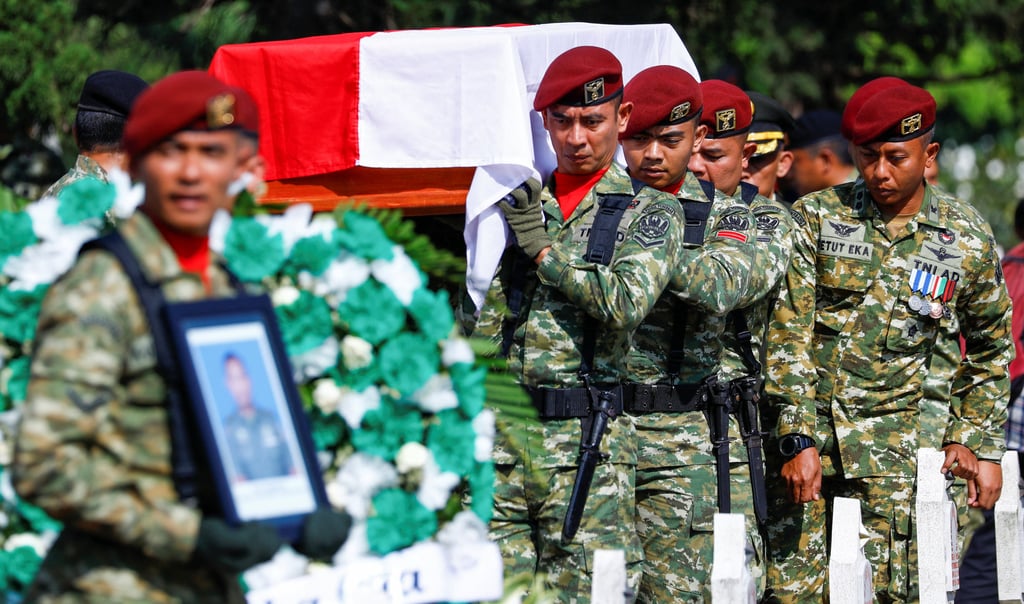
On November 4, an Indonesian army Mi-17V5 transport helicopter carrying eight crew members crashed during a water-bombing mission over Central Kalimantan’s Tanjung Puting National Park. The army said it was investigating the accident, which killed three soldiers.
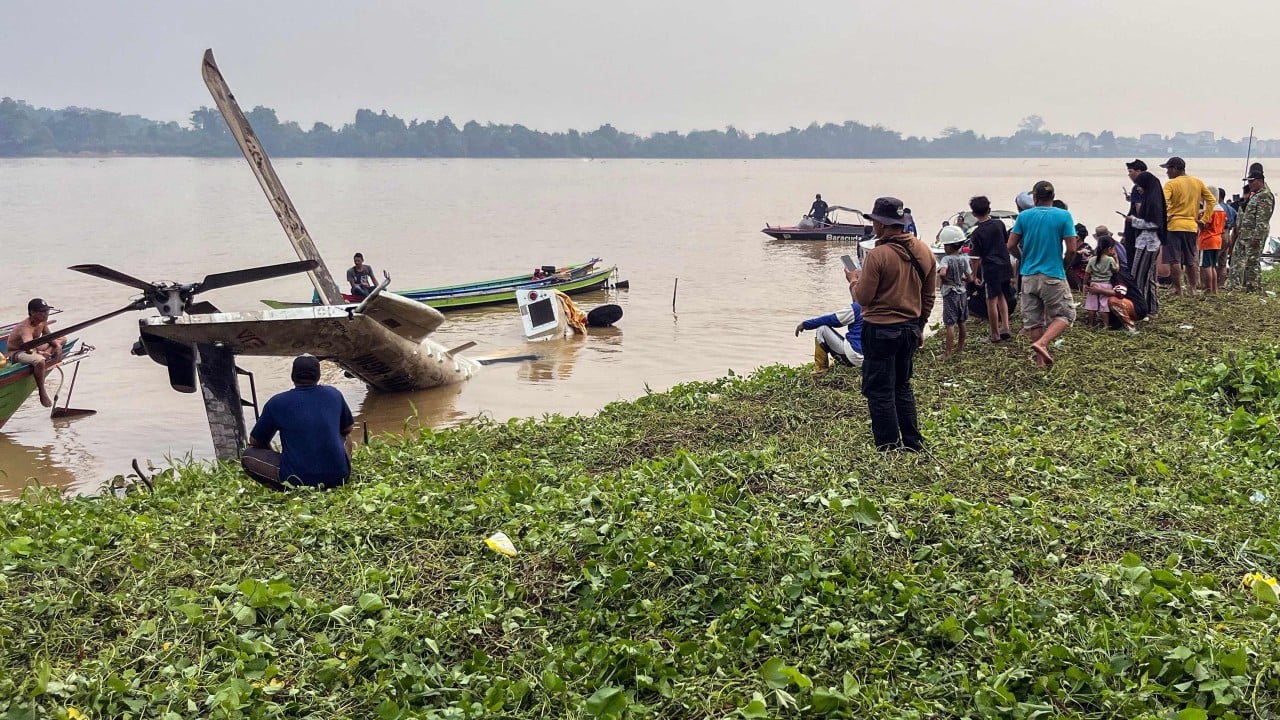
Just four days later, a Super Puma helicopter crashed while scooping water from the Barito River in South Kalimantan, killing landing officer Yayan Supyansuri. Two other crew members, an Australian and a New Zealander, survived.
The helicopter had been hired by the National Disaster Management Agency (BNPB) through a private operator. It had initially been firefighting in West Kalimantan but was diverted because of the high number of hotspots in South Kalimantan, BNPB said in a statement on Monday.
Two accidents “in close succession are a serious warning for the government to evaluate forest and land fire extinguishing operations”, lawmaker Nurul Arifin said on Sunday, as cited by Kompas news portal.
On Monday, BNPB head Lieutenant General Kristomei Sianturi said he would conduct a review of aerial firefighting operations, “including procedures when helicopters scoop water from rivers or the sea”.
“For example, should crews wear life jackets when collecting water from the sea or rivers? We will also assess how we can prevent similar incidents from happening again,” Kristomei said.
Disaster response operations would continue during the evaluation, he said, but safety procedures would be “prioritised”.
Dangerous mission
For ground firefighters like Muhammad Ihsan, the accidents underline the risks of the mission, both on land and in the skies.
“We hope there will be no more casualties, especially those of us on the front lines. We’re also afraid, because we’ve been exposed to this smoke for five months,” said Muhammad, a volunteer firefighter in South Kalimantan. “If I were to stop, I’d feel sorry for the community. So, right now, I am doing my best.”
The 34-year-old is part of the Palm 21 Fire Brigade, a team of 30 volunteers who have been fighting the forest and peatland fires in Banjarmasin since June. The team pooled their money to purchase water suction machines and personal protective equipment, which remained insufficient, Muhammad said.
“In Kalimantan, because of the peatland, fire doesn’t appear when we step on the ground. Within two minutes, we could suddenly be surrounded by flames, which blaze from beneath the ground,” he said.
The hidden reason why Indonesia’s fires are so hard to put out
“Many of our hoses have already caught fire. The fire suddenly grew so large that we had to escape at any cost. So, we abandoned our hoses. Three or four of our water supply machines had already burned down.”
The father of two, whose day job is trading second-hand goods, said many of the volunteers did not wear fireproof boots as they could not afford to buy them.
“Some of my friends, because they were wearing standard boots, suddenly had their feet burnt and blistered because their boots also blistered when they were extinguishing the fire in the peatland,” he said.
Muhammad also burnt his feet last month so he could not volunteer for two weeks.
The volunteers often struggle to find water sources. As the team cannot afford to buy or rent a mobile water tanker, they have to transport a 1,200-litre (320-gallon) container to a hotspot, then fill it up from whichever water source they can find to hose down the fires.
“Water sources are very far away, and some areas here are still dry. Although it rains, it is only intermittent, so it is not yet sufficient to provide a water source.”
Volunteers also lacked heavy-duty flashlights for nighttime operations, while the prolonged fires had taken a toll on their health, leaving many suffering from respiratory infections, he said.
Sling risk
Imanuddin Yunus, a former chairman of the Indonesian Helicopter Pilot Association, pointed to factors such as “power loss” or complications with external sling loads or Bambi buckets as possible causes of the Super Puma accident.
“When the helicopter was about to overshoot or take off again, the sling cable and the external Bambi bucket might still be [submerged]. The Bambi bucket might still be in the water, so it would drag [the helicopter] downward,” Imanuddin said.
Although Indonesia was under intense pressure to extinguish the ongoing blazes, Imanuddin said that water-bombing pilots retained “final authority” on flight decisions – such as a horizontal visibility threshold of at least 4.8km (3 miles).
Water bombing missions generally rely on two operational strategies: dropping water via external Bambi buckets or through the built-in belly tank system, Imanuddin said. Indonesia generally uses the former.
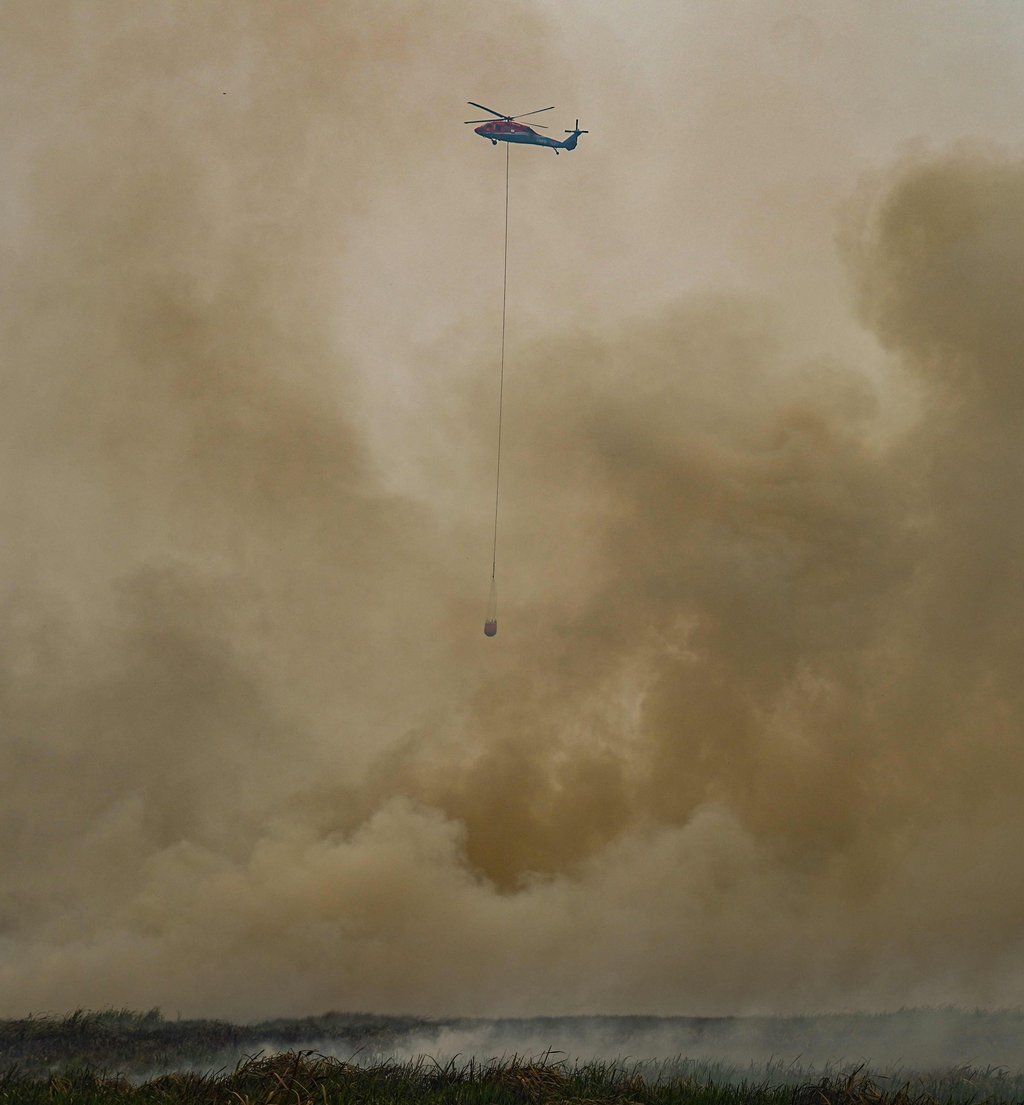
“Water bombing operations using sling loads are more hazardous and riskier. With the external sling, the aircraft is less stable and can’t reach high speeds. It has to slow down. Water bombing through the built-in tanks is faster. It can drop water five to six times an hour,” he said.
There might also be contributing factors – such as language barriers and external stressors that can degrade pilot performance.
“Every flight, whether civil or military, carries risks, but they are all manageable. That’s why operations continue, despite the risks,” Imanuddin said.
KioskNews shows a cleaned-up reading view extracted from the publisher’s page — the original always lives on their site, not ours.