What it really takes to send an emergency alert to millions of Malaysians – S.I.
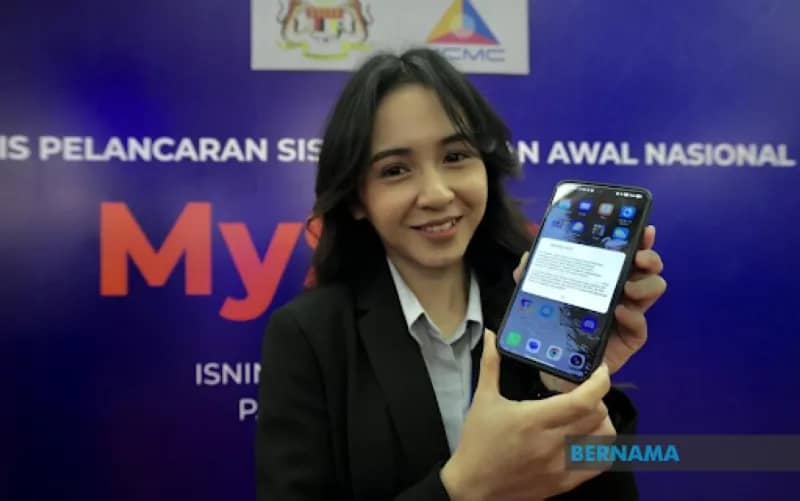
NOVEMBER 27 – Imagine sitting at a coffee shop when the phones around you begin sounding an unfamiliar emergency alert. Nobody downloaded an application, subscribed to a service or provided their phone number.
In the few seconds it takes to read that message, an enormous amount of work will have happened out of sight.
Much of the conversation surrounding Malaysia’s Early Warning System (EWS), known as MySiren, has centred on policy and public safety. Far less attention has been given to the technological undertaking behind delivering a single warning to potentially millions of devices, in the right places, at the right time.
The concept sounds simple. Making it work reliably across an entire country is anything but.
Not just another text message
At the heart of MySiren is a technology known as the Cell Broadcast System (CBS).
Think of conventional SMS as a postal service. Each message is addressed to an individual recipient and goes through a delivery process that may experience delays when networks are congested.
Cell broadcast, by contrast, works like a public loudspeaker. A warning is broadcast through selected mobile network cells to compatible phones within their coverage areas.
Whether there are 100 or 100,000 devices within the targeted area, the system does not need to send a separate message to each recipient.
It requires neither mobile data nor Wi-Fi, although devices must still be connected to a participating 4G or 5G mobile network.
Unlike many digital services we use today, MySiren does not identify individual recipients, nor can authorities determine whether a particular person has received or read an alert.
The invisible machinery behind a single alert
Consider a district facing an imminent risk of flooding.
Once the threat has been identified and assessed, designated and trained personnel within authorised disaster management agencies prepare, approve and issue a warning through the secured MySiren platform.
The affected geographical area must then be translated into the relevant mobile network cells.
Here lies an interesting technical challenge. Flood zones follow rivers and terrain, while mobile network coverage is shaped by telecommunications infrastructure. The two do not always align, meaning people just outside an affected area may also receive an alert.
Once issued, the warning passes through participating telecommunications networks before compatible phones display it through their built-in emergency alert functions.
Ultimately, the success of MySiren should not be measured by how loudly our phones ring during a nationwide test, but by how reliably warnings reach those in danger and whether people know how to respond.
Coordination is the real infrastructure
Malaysia’s telecommunications landscape comprises different network operators, equipment and technical configurations, alongside millions of devices running different operating systems.
Getting these technologies to work together goes beyond ensuring that mobile networks can broadcast a warning. Devices must also support Wireless Emergency Alerts (WEA) and Malaysia-specific software configurations.
Even two people sitting at the same coffee shop may receive an alert at slightly different times, depending on their network connections and how their devices process the warning.
Beyond engineering lies the challenge of coordinating regulators, disaster management authorities, technical agencies, telecommunications providers and device manufacturers.
The system must also contend with circumstances that could compromise it, such as floods disrupting electricity supplies or damaging telecommunications infrastructure. Unlike network congestion, a complete loss of mobile connectivity can prevent alerts from being received.
This puts the nationwide public alert test scheduled for November 29 into perspective. MySiren is expected to be operational by the end of 2026, subject to the necessary testing and readiness assessments.
Testing is not simply about whether a phone rings, but whether the different components can work together reliably.
Public readiness matters too. Keeping devices updated and relevant emergency alert settings enabled is important, while existing warning channels such as SMS, television and radio remain essential.
The social media paradox
In today’s environment, communicating an initiative of this scale may not be the hardest part, given the reach of social media.
Ironically, it is also because of social media that the challenge becomes greater.
Screenshots can circulate without context, while messages impersonating MySiren may spread through SMS, messaging applications and social media. Genuine MySiren alerts, however, appear through a phone’s built-in emergency alert function.
A fabricated warning could cause unnecessary panic, while a genuine one dismissed as another viral message could have serious consequences.
Engineers can build a system capable of broadcasting warnings to millions of devices. What they cannot engineer as easily is the public trust needed to make people act on them.
For the public, it may be nothing more than a notification on a screen. Behind that apparent simplicity is an entire ecosystem of technology, infrastructure and people working together to make those few critical seconds count.
*This is the personal opinion of the writer or publication and does not necessarily represent the views of Malay Mail.
KioskNews shows a cleaned-up reading view extracted from the publisher’s page — the original always lives on their site, not ours.