10 Greatest Beatles Songs With Orchestral Arrangements, Ranked

Val Barone is a journalist working remotely and specializing in music features. A passionate music lover, she keeps up to date on the latest developments in the entertainment world, and in the past five years, she's written for several sites, including ScreenRant, MovieWeb, TheThings, and Far Out Magazine. She covers breaking news in the music world and loves sharing stories about the classic rock musicians she grew up listening to. As a Gen Z writer, she offers a fresh perspective on the events that change music history.
Sign in to your Collider account
The Beatles were innovators in many ways. From incorporating Indian instruments to pushing the boundaries of what a rock song could be about, they experimented with practically everything in their short career. But one thing that they tried early on was adding orchestral arrangements to their albums, and in the process, they discovered that classical instruments could definitely improve rock 'n roll.
A big reason why they dared to experiment with that was their producer, George Martin. He was a classically trained musician, and his instincts pulled him in that direction when the band started doing ballads. The Fab Four quickly fell in love with the sound, and thanks to this innovation, we now have all these incredible songs that changed the world of music forever.
10 "Eleanor Rigby" (1966)
"Eleanor Rigby", one of the singles from Revolver, the 1966 album that Paul McCartney praised as the greatest Beatles album, stands out as one of the most important orchestral pieces the Fab Four have put together. This is an unusual track, for The Beatles and for rock bands in general, since it's almost purely orchestral. McCartney sings over a classical string ensemble, and while the melody was ideated by him, it was producer George Martin who arranged the backing music.
The song is a gloomy reflection on the life and death of people who are alone in the world, and the string arrangement is the perfect background for it. There are two main characters: Eleanor Rigby, of course, and Father McKenzie. "Eleanor Rigby / Picks up the rice in the church where a wedding has been / Lives in a dream," the first verse sings. "Father McKenzie / Writing the words of a sermon that no one will hear / No one comes near," the second one adds. Then, these two lonely people finally meet, but by then it's too late. McCartney then reflects on what these people truly meant to the world. "Eleanor Rigby / Died in the church and was buried along with her name / Nobody came / Father McKenzie / Wiping the dirt from his hands as he walks from the grave / No one was saved / All the lonely people / Where do they all come from? / All the lonely people / Where do they all belong?"
9 "She's Leaving Home" (1967)
"She's Leaving Home" is probably one of The Beatles' more heartbreaking songs, and despite not having topped the charts when it came out, it's still a favorite among Beatles fans. The song tells a story that was very representative of the youth of the 1960s. Paul McCartney wrote it after reading a news story about a 17-year-old girl who had run away from home. Reading about her parents' desperation and lack of understanding inspired McCartney to write this devastating anthem.
Much like "Eleanor Rigby," in this song, the band is replaced by a string arrangement, including cello, violins, and harp. The teary harp intro sets the tone for the first verse, which tells the story of the girl sneaking out of her house while everyone is asleep. Then, the strings intensify in the chorus, where McCartney and John Lennon alternate points of view: McCartney sings as the narrator telling the girl's story, while Lennon, taking the role of the parents, is distraught and confused. She... (we gave her most of our lives) / Is leaving (sacrificed most of our lives) / Home (we gave her everything money could buy) / She's leaving home after living alone for so many years."
8 "Something" (1969)
A top-notch George Harrison composition, "Something" is one of the greatest love songs ever written. This song is powerful in its softness, which is channeled in the accompanying music video. In the video, The Beatles walk around a beautiful, sunny field with their partners, and there are no exaggerated displays of affection. Just four young couples peacefully spending time together.
This song is popularly known as Harrison's ode to his first wife, Pattie Boyd, and his delicate guitar is as romantic as the lyrics. George Martin's instincts were spot on when he chose to overdub a string orchestration after the band recorded the song. The strings are not overpowering; instead, they're a subtle addition that drives the point home, and makes the romantic sentiment shine.
7 "Golden Slumbers" (1969)
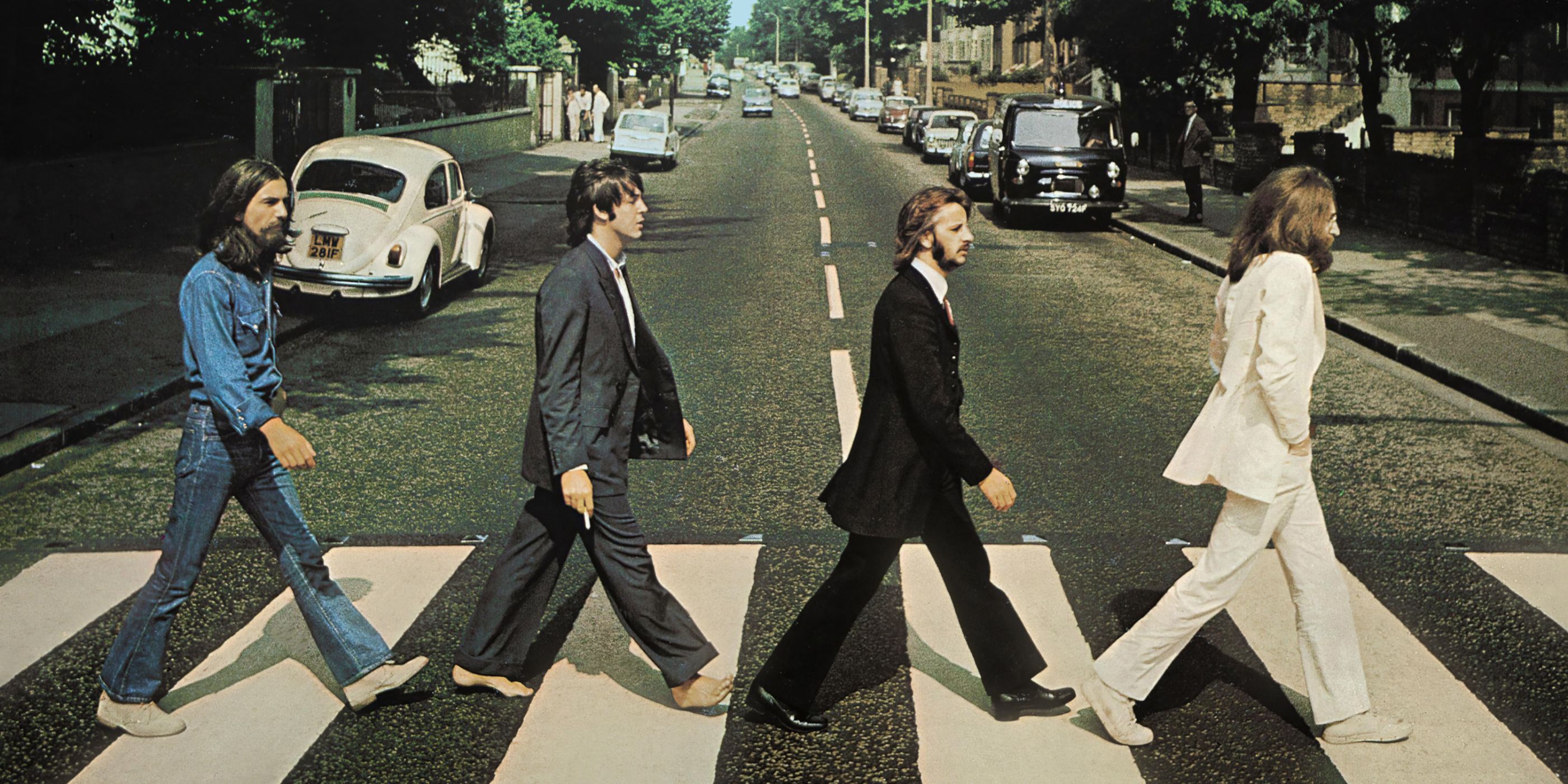
"Golden Slumbers" marks the beginning of the end of the last Beatles album, Abbey Road, and the orchestration perfectly captures that epic moment. It's a bittersweet song, and the moment the soft piano of this epic lullaby begins to play, every Beatles fan tears up. Adapted from a classic lullaby called "Cradle Song," this song is a tender goodbye from McCartney to the fans, who, at the time without knowing it, were witnessing the end of The Beatles. To this day, McCartney uses it to close his live shows.
The orchestra picks up after the first verse, with a crescendo of strings and brass instruments that signal this isn't an ordinary McCartney ballad; this is part of something much greater. "Once, there was a way / To get back home / Sleep, pretty darling, do not cry / And I will sing a lullaby," he promises softly.
6 "Strawberry Fields Forever" (1967)
"Strawberry Fields Forever," arguably John Lennon's magnum opus, is an almost perfect song. Brilliant songwriting, beautifully evocative, and an orchestral arrangement that really highlights the nostalgic essence of this track. Strawberry Field was a Salvation Army children's home in Liverpool near Lennon's Aunt Mimi's house, where he grew up, and he would spend a lot of his childhood playing in their fields. In 1967, after The Beatles had stopped playing live, he poured himself into this track, which ended up becoming his favorite.
He described "Strawberry Fields Forever" as "one of the few true songs I ever wrote." Along with "Help!", those songs "were the ones I really wrote from experience and not projecting myself into a situation and writing a nice story about it." The song has a lot of convoluted lines, like "Living is easy with eyes closed, misunderstanding all you see," "No one I think is in my tree," and "Always, no sometimes, think it's me, but you know I know when it's a dream." Lennon explained that it was a way of expressing how lonely and misunderstood the success of the band made him feel. "What I’m saying, in my insecure way, is, ‘Nobody seems to understand where I’m coming from. I seem to see things in a different way from most people.’” After years of feeling this way, it makes sense that, the moment he had time to breathe and regroup, Lennon went back to his roots, to Strawberry Field, to work through these feelings.
5 "Blue Jay Way" (1967)
"Blue Jay Way" is Harrison's perfect mix of his passion for Indian music and an ominous string arrangement. The cello parts, which were overdubbed after the band had finished the track, set the tone for the ominous tune Harrison wanted for this song, as well as emulate the sound of an Indian sarod. "There's a fog upon L.A. / And my friends have lost their way / We'll be over soon they said / Now they've lost themselves instead," he almost whispers on the song. The real meaning of the song is not sinister at all, though. In fact, it was very literal. While jet-lagged on his trip to California, he was falling asleep waiting for a friend, and wrote this song to entertain himself.
“Derek Taylor got held up. He rang to say he’d be late. I told him on the phone that the house was in Blue Jay Way. And he said he could find it. OK… he could always ask a cop. So I waited and waited. I felt really knackered with the flight, but I didn’t want to go to sleep until he came. There was a fog and it got later and later.”
4 "I Am the Walrus" (1967)
With "I Am the Walrus," The Beatles took experimental to another level. John Lennon was fully committed to exploring the psychedelic side of rock music, and this track had everything: delirious lyrics, Lennon's affected, strong vocals, random excerpts from Shakespeare's King Lear that somehow fit perfectly, and of course, an outrageously talented orchestra arranged, of course, by George Martin.
The lyrics are purposely nonsensical, but if you listen enough times, there are a few clear messages in this apparent fever dream. "Yellow matter custard / Dripping from a dead dog's eye / Crabalocker fishwife, pornographic priestess / Boy, you've been a naughty girl / You let your knickers down / I am the egg man / They are the egg men / I am the walrus," Lennon insists cheerfully. His main inspiration was Lewis Carroll's "The Walrus and the Carpenter" from Through the Looking Glass, although he admitted that one or two acid trips also helped things along.
3 "All You Need Is Love" (1967)
"All You Need is Love" is an iconic song for many reasons, the main one being that it was the song The Beatles performed during the legendary Our World broadcast. This event was the first live, international, satellite TV broadcast, and their performance was a historical event that celebrities like Mick Jagger, Eric Clapton, Marianne Faithfull, and more, went to witness. The Beatles were backed by a thirteen-piece orchestra, and the famous opening of the French national anthem "La Marseillaise" establishes this song as the international peace anthem it is.
2 "Yesterday" (1965)
It's hard to choose The Beatles' greatest hit, but "Yesterday" is definitely a contender. The band took a risk with this song, which ended up being their most popular track, and part of the reason it was a risk is because, at George Martin's insistence, Paul McCartney agreed to let him add a string quartet to his soft ballad. It was a bold move for a rock band, and the great reception was a surprise for the Fab Four. The popularity of the song is said to have caused friction between McCartney and John Lennon, who resented him for writing it, but despite the band's individual opinions, "Yesterday" was undeniably a turning point for The Beatles.
1 "A Day in the Life" (1967)
"A Day in the Life" closes Sgt. Pepper's Lonely Hearts Club Band, and it was so groundbreaking that it was even banned by the BBC. The song has two sections, and it was a collaborative effort between Lennon and McCartney. "It was a good piece of work between Paul and me. I had the 'I read the news today' bit, and it turned Paul on, because now, and then we really turned each other on with a bit of song, and he just said 'yeah' — bang bang, like that. It just sort of happened beautifully," Lennon said about the songwriting process, calling it "a real groove." What really makes the song earn No. 1 on this list, though, is the orchestral climax, conducted by producer George Martin. For it, McCartney requested that every musician start at the lowest note of their instrument, and then went up, note by note, at whatever speed they wanted. Martin arranged it into an epic piece that, to this day, is still considered the best song The Beatles ever wrote.
KioskNews shows a cleaned-up reading view extracted from the publisher’s page — the original always lives on their site, not ours.