18 Years Ago, Lost Released 7 Forgotten Episodes That Replaced The Show's Main Characters


Nicholas Becher is a gaming journalist with an MFA in Creative Writing from FAU. With extensive experience playing video games, he covers all forms of gaming content at Screen Rant, from breaking news to the latest fan theories. Most-played games range from Clair Obscur to Civ to Elden Ring to Halo 2 and beyond.
Sign in to your ScreenRant account
Despite a divisive finale after years of built-up anticipation, Lost remains one of the most beloved and influential chapters in modern television history. Debuting in 2004, the ABC series quickly became a cultural phenomenon, drawing millions of viewers into the mysteries surrounding Oceanic Flight 815 and the strange island where its survivors found themselves stranded. Its winning formula helped make Lost appointment television, with weekly speculation among friends and online forums being a major part of the viewing experience.
Even though the ending remains one of television's most debated finales, that controversy has done little to diminish the show's legacy, especially when it comes to its unforgettable ensemble of characters. Jack, Kate, Sawyer, Locke, Hurley, and the rest of Oceanic Flight 815's survivors became the emotional core of Lost, with much of the series' appeal coming from their complicated relationships, backstories, and evolving roles on the island.
Nearly two decades ago, however, Lost released seven additional episodes that nobody remembers. This forgotten chapter in the series pushed its familiar stars into the background and replaced them with an entirely new central character, retelling part of the island's story from a perspective most fans have probably never experienced.
Lost Replaced Its Ensemble Cast With A Completely New Survivor

Lost: Via Domus took an unusual approach to adapting the television series by effectively replacing its famous ensemble with a survivor audiences had never met. Instead of putting players in control of Jack, Kate, Sawyer, Locke, or any of the other characters who drove the show, the 2008 game introduces Elliott Maslow, an original passenger aboard Oceanic Flight 815. Elliott is a photojournalist suffering from amnesia after the crash, with his attempt to recover his memories becoming the central mystery of the story.
The game even presents Elliott's journey like a miniature season of Lost. Via Domus is divided into seven episodes, each featuring its own storyline, flashbacks, character encounters, and cliffhangers. Episodes begin with "Previously on..." recaps and use the familiar Lost presentation, while Elliott's story unfolds alongside roughly the first 70 days experienced by the survivors on television. His flashbacks are also incorporated directly into gameplay, requiring players to uncover clues and reconstruct photographs to gradually piece together his forgotten past.
That doesn't mean Via Domus completely abandoned the television cast. Jack, Kate, Locke, Sawyer, Hurley, Sayid, Charlie, Claire, Sun, Jin, and several other familiar characters appear throughout Elliott's adventure, while recognizable locations and events continually connect his story to the series. Players can speak with them, undertake objectives involving them, and occasionally experience familiar events from a different perspective.
Crucially, though, none of them are the protagonist. For these seven "episodes," Lost temporarily pushed its established ensemble into supporting roles and made an entirely new Oceanic survivor the center of the mystery.
These 7 Forgotten Lost Episodes Rewrote The First 70 Days

The seven "episodes" released in Via Domus effectively rewrote the beginning of Lost by inserting Elliott directly into events viewers already experienced. Rather than simply telling an unrelated story somewhere else on the island, the game begins with the crash of Oceanic Flight 815 and allows Elliott to move through many of the same locations, mysteries, and major events that defined the show's opening stretch.
This meant that familiar moments were suddenly experienced through the eyes of someone who seemingly should have been there all along. Elliott explores the survivors' beach camp, encounters the Smoke Monster, enters locations connected to the Dharma Initiative, and crosses paths with characters including Jack, Kate, Locke, etc. His personal mystery is threaded through the existing timeline, essentially creating an alternate version of Lost in which another important survivor we never saw was running around in the background.
Via Domus' story spans roughly the survivors' first 70 days on the island, carrying Elliott into events associated with the show's first and second seasons. Executive producers Damon Lindelof and Carlton Cuse helped plot the game's seven episodes, although importantly, they made clear that Elliott's storyline itself was not considered canon to the television series.
Lost: Via Domus was developed by Ubisoft Montreal and published by Ubisoft, launching in 2008 for PlayStation 3, Xbox 360, and Windows PC. Despite arriving while Lost was still one of television's biggest shows, it wasn't an especially celebrated adaptation. Reviews were decidedly mixed: the Xbox 360 version holds a 55 Metascore, while GameSpot awarded it a 6.5/10, praising its atmosphere and connection to the series but criticizing its length and other shortcomings.
Ultimately, Via Domus never became a defining piece of Lost history, but it remains a fascinating alternate set of seven "episodes" that briefly rewrote the show's early story and completely replaced the beloved cast fans grew to love.
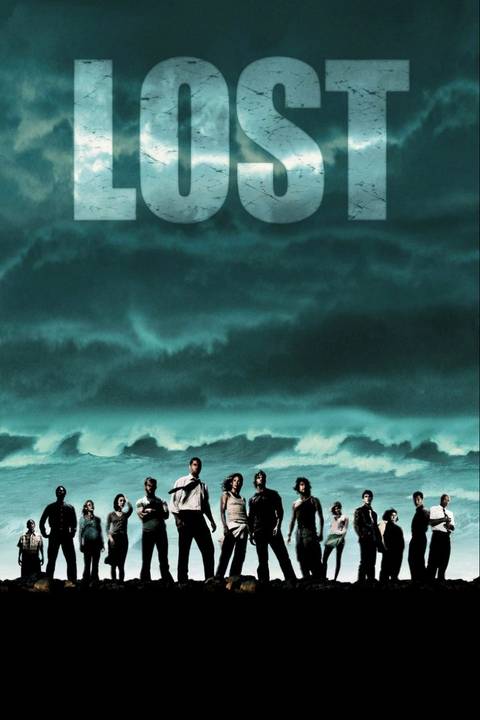
Lost

9/10
- Release Date
- 2004 - 2010-00-00
- Network
- ABC
- Showrunner
- Damon Lindelof, Carlton Cuse
- Directors
- Jack Bender, Paul A. Edwards, Tucker Gates, Eric Laneuville, Bobby Roth, Greg Yaitanes, Daniel Attias, J.J. Abrams, Karen Gaviola, Kevin Hooks, Rod Holcomb, Stephen Semel, Adam Davidson, Alan Taylor, David Grossman, Deran Sarafian, Fred Toye, Mario Van Peebles, Marita Grabiak, Mark Goldman, Matt Earl Beesley, Michael Zinberg, Paris Barclay, Robert Mandel
KioskNews shows a cleaned-up reading view extracted from the publisher’s page — the original always lives on their site, not ours.