Hulu’s 3-Part Sci-Fi Thriller Turns a Billion-Dollar Franchise Into a Masterpiece

Chelsea Adelaine Hassler is an award-winning editorial, social, and creative director with two decades of media and entertainment experience and an all-consuming obsession with TV. A native New Yorker, she always completes the Sunday crossword, reads at least 100 books per year, and has Knicks season tickets.
Sign in to your Collider account
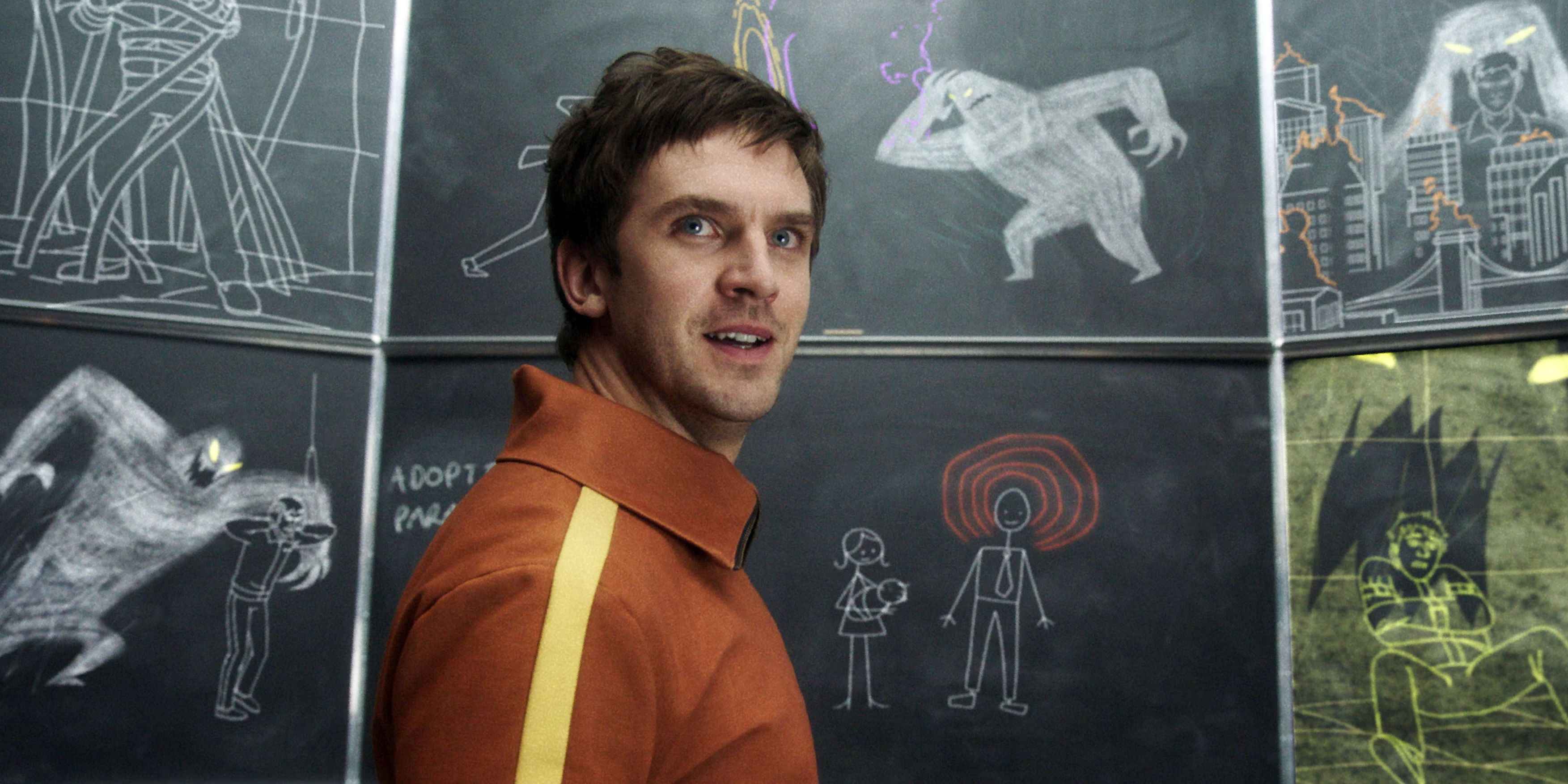
In 2017, Marvel Studios was on the brink of conquering pop culture. With Avengers: Infinity War and Avengers: Endgame looming, the MCU hurtled toward a two-part narrative culmination that would lead to unrivaled mainstream domination. But as the cinematic side of the house approached its commercial and cultural peak, Marvel Television partnered with FX to deliver something that defiantly opposed the blockbuster formula. Legion was a work of high art, a prestige television masterpiece that shattered superhero storytelling conventions and rewrote the boundaries of what a Marvel adaptation could achieve.
Created by Fargo mastermind Noah Hawley, Legion took the form of an avant-garde psychological puzzle box, exploring the fractured mind of an X-Men character who had not yet made the jump to live action. A fever dream of insane visual surrealism, fractured timelines, deeply unreliable narration, and elaborate musical interludes, the series treated its source material not as a blueprint for another superhero adventure, but as the backdrop for an unsettling examination of the human mind. Legion proved a character in a popular comic book series could be far more than just an extension of a billion-dollar franchise, becoming a singular work of creative ambition in its own right.
‘Legion’ Was the Anti-Marvel Marvel Show – and That Was Its Greatest Strength

Marvel had spent years perfecting its superhero storytelling formula, using its then-key film and television properties, the MCU and the Marvel Netflix series, to build shared universes and carefully interconnected stories. But while Legion is technically an X-Men spin-off, it operates independently of any cinematic continuity, telling a self-contained story without relying on or contributing to established lore. Freed from the responsibility of advancing a shared universe, Hawley built a narrative on dream logic, moving between realities, timelines, and states of consciousness without having to explain how or why.
It's an almost anti-Marvel approach to storytelling, allowing Legion to inhabit a genuinely unpredictable world without the baggage of franchise continuity. Its central character, David Haller, is arguably one of the most powerful mutants in the X-Men comics and the son of one of its most well-known faces, Charles Xavier, and his extraordinary psychic abilities provide a force of unimaginable power. Yet despite his formidable pedigree, David remained largely unknown to mainstream audiences before the FX series. Rather than introducing him through a conventional superhero origin story, Hawley created a character whose greatest conflict wasn't learning to harness his powers, but figuring out whether he could trust his own mind.
A Mutant's Mind is Fertile Ground For Stunning Storytelling in 'Legion'
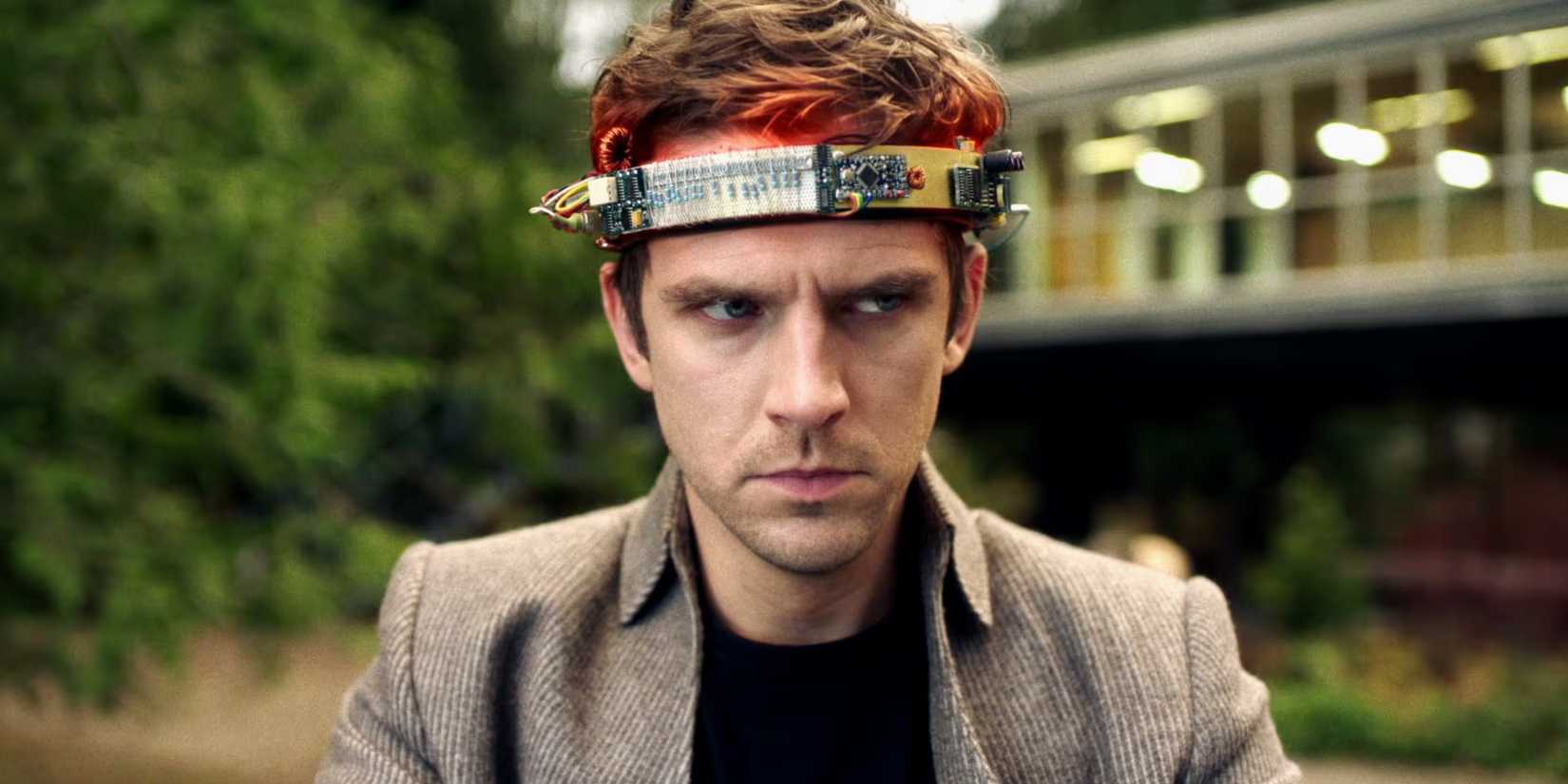
When Legion opens, David, played by Dan Stevens, is a chronic psychiatric patient who believes his life has been shaped by schizophrenia, until a chance encounter with fellow patient Syd Barrett (Rachel Keller) forces him to reevaluate everything he knows about himself. As David begins to uncover the depths of his abilities, he finds himself caught between a secret government agency and a group of mutants led by Melanie Bird (Jean Smart). With Melanie's help, he realizes an ancient, parasitic mutant known as the Shadow King has haunted him since childhood, manipulating his perception of reality by appearing as his friend Lenny Busker (Aubrey Plaza) despite being Amahl Farouk (Navid Negahban). What begins as a search for answers ultimately becomes a fight for control over David's mind, though, as the line between reality and delusion fades, forcing him to navigate a surreal battle between those who want to weaponize him and those who want to save him.
David's relative absence from live-action adaptations may have made him a difficult character to introduce casually, given the sheer scale of his powers, the enormous backstory attached to them, and the ripple effect it would've had on the franchise's continuity. But that challenge is exactly what gave Hawley an opening to step outside Marvel's formula, focusing on the man who wields tremendous power instead of the traditional exploration of the world-ending havoc those powers could produce or prevent. David's unreliable perspective turns his abilities not into gifts but a source of psychological horror, effectively transforming a familiar Marvel comic book premise into a wildly unsettling exploration of identity and the uncertainty of never truly knowing what's real.
A Visual and Narrative Magnum Opus, 'Legion' Pushed Television Forward
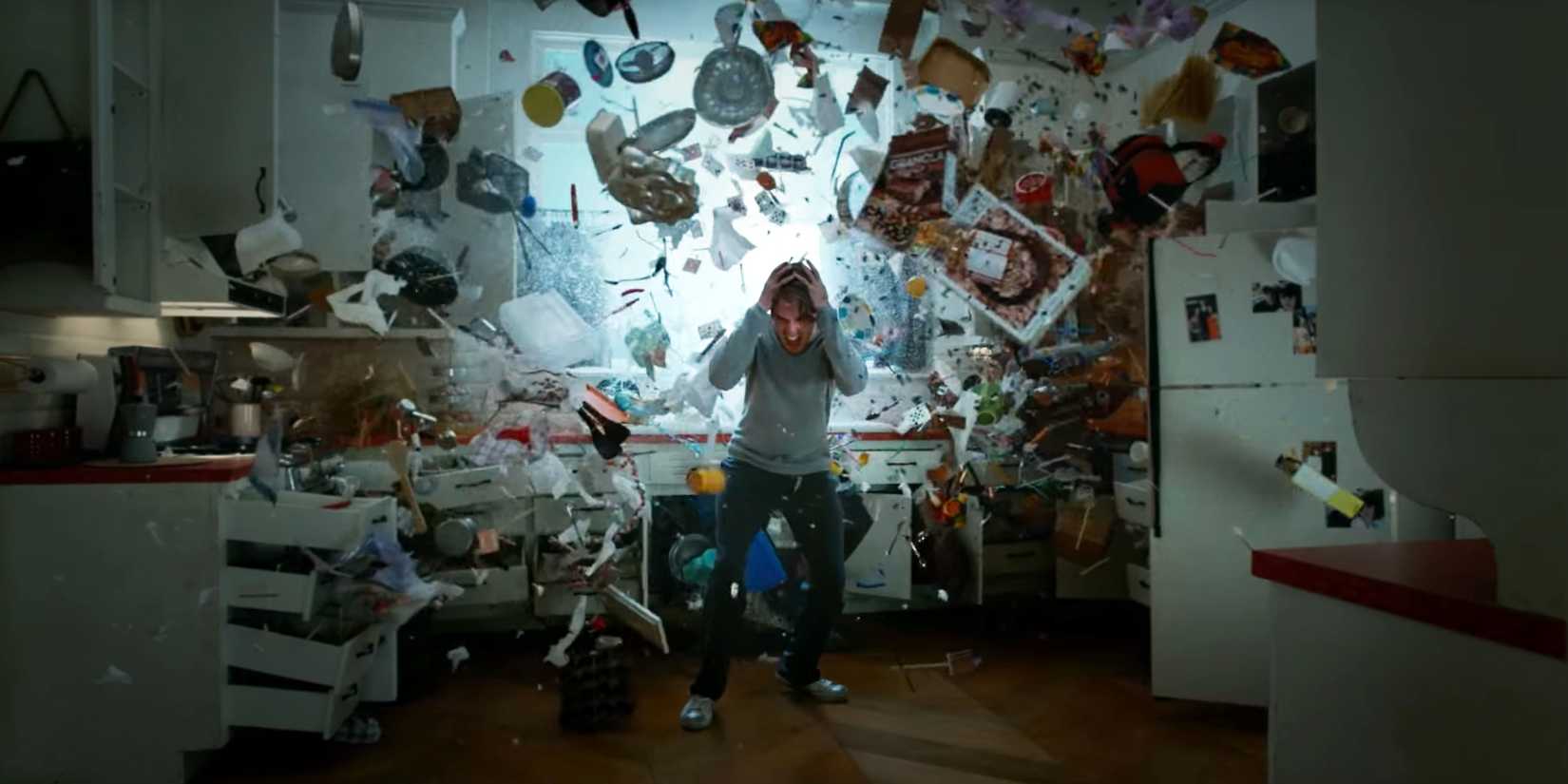
Across its three-season run, Legion refused to look or feel like anything else on television. Drawing inspiration from nearly every genre, from surrealism to brutalism, stage performance to psychedelic pop art, the series regularly abandoned its narrative structure to embrace visual or auditory experimentation that better brought the story to life. Distorted audio, shifting aspect ratios, striking color palettes, and color-coded lighting made David's unstable perspective tangible, turning the show's style into an extension of its story. Even its soundtrack was adventurous, frequently interrupting the action with musical numbers, dance sequences, or animated performances. But none of it was a decorative flourish; every single creative decision in Legion externalized emotions and psychological states that simple exposition could never fully capture.
The show's surrealism wasn't limited to its cinematography; it extended into its characters, settings, and narrative motifs. Melanie's husband, Oliver Bird (Jemaine Clement), spends much of the series on the astral plane, appearing in a mid-century modern lounge encased in an ice cube. In the second season, interstitial segments narrated by Jon Hamm took the form of artistic PSAs about the descent from delusion into madness. Even the androgynous government androids known as Vermillion, who share a hive mind and take turns speaking, turn routine exposition into something delightfully uncanny. Rather than using surrealism to set the tone, Legion uses experimentation to deliver its entire story, building a world that feels absurd, beautiful, and horrifyingly disturbing all at once.
Collider Exclusive · Sci-Fi Personality Quiz Which Sci-Fi Hero Are You Most Like? Paul Atreides · Captain Kirk · Princess Leia · Ellen Ripley · Max Rockatansky
Five iconic heroes. Five completely different ways of facing an impossible universe. One of them shares your instincts, your values, and your particular way of refusing to back down. Eight questions will tell you which one.
🏜️Paul Atreides
🖖Capt. Kirk
✊Princess Leia
🔦Ellen Ripley
🔥Max Rockatansky
01
How do you lead when the stakes couldn't be higher? The way you lead under pressure is the most honest thing about you.
02
What is your greatest strength in a crisis? The quality that keeps you alive when everything else fails.
03
What is the thing you'd sacrifice everything else for? Your deepest motivation is your truest compass.
04
How do you relate to the people around you? Who you are to others under pressure is who you really are.
05
You're facing a threat that no one else believes is real. What do you do? How you respond when you're the only one who sees it defines everything.
06
What has your heroism cost you personally? Every hero pays. The question is what — and whether they'd pay it again.
07
How do you feel about the rules of the world you're in? Every hero has a relationship with the system. What's yours?
08
When everything is on the line, what keeps you going? The answer is the most honest thing about you.
Your Hero Has Been Identified Your Sci-Fi Hero Is…
Your answers point to the iconic sci-fi hero who shares your instincts, your values, and your particular way of facing the impossible.
Paul Atreides
You carry a weight most people would crumble under — the knowledge of what you're capable of, and the burden of what you might have to become.
- You see further ahead than others and you plan accordingly, even when the vision frightens you.
- You are driven by loyalty to your people and a sense of destiny you didn't ask for but can't escape.
- Paul Atreides is not simply a hero — he is someone who understands the cost of power and chooses to bear it anyway.
- That gravity, that willingness to carry what others won't, is exactly you.
Captain Kirk
You lead with instinct, warmth, and an absolute refusal to accept a no-win scenario — because you've always believed there's a third option nobody else has thought of yet.
- You take the mission seriously without ever taking yourself too seriously.
- Your crew would follow you anywhere, not because you demand it, but because you've earned it.
- Kirk's genius isn't tactical — it's human. He reads people, bends rules with purpose, and wills outcomes into existence through sheer conviction.
- That combination of warmth, audacity, and relentless optimism is unmistakably yours.
Princess Leia
You are the kind of person who holds the line when everyone else is losing faith — not because you're fearless, but because giving up simply isn't something you're capable of.
- You lead through conviction. Your voice carries because your belief is unshakeable.
- You gave up everything ordinary the moment you chose the cause, and you've never looked back.
- Leia is not a supporting character in her own story — she is the moral centre of the entire rebellion.
- That same fierce, principled, unbreakable core is what defines you.
Ellen Ripley
You are not reckless, not grandiose, and not particularly interested in being anyone's hero — you just refuse to stop when it matters.
- You see threats clearly, you document the truth even when no one listens, and when the time comes you handle it yourself.
- Ripley's heroism is earned, not performed. She doesn't have a speech — she has a flamethrower and a plan.
- You share her composure under the worst possible pressure, and her refusal to pretend the monster isn't there.
- When it counts, you don't flinch. That's everything.
Max Rockatansky
You have been through fire that would break most people — and what came out the other side is something the world underestimates at its peril.
- You don't ask for help, don't need validation, and don't wait for anyone to tell you the rules no longer apply.
- Your loyalty, when it finally arrives, is absolute — but it's earned in silence and tested in action, not in words.
- Max is not a nihilist. He is someone who lost everything and found, against his will, that he still has something worth protecting.
- That bruised, stubborn, ultimately human core is exactly yours.
Ultimately, Legion is a rare achievement, a superhero series that treated its origin story as an invitation to deviate rather than a set of rules to follow. At a time when Marvel was taking over the cultural zeitgeist with its interconnected storytelling, Hawley built something defiantly self-contained, prioritizing psychological complexity and artistic ambition over franchise expansion. Legion didn't need to reshape the MCU or set up the next big crossover to leave its mark as a masterwork; it simply had to prove that, even as part of a billion-dollar franchise, superhero storytelling could still be strange, personal, and genuinely transcendent.

- Release Date
- 2017 - 2019-00-00
- Network
- FX
- Showrunner
- Noah Hawley
- Directors
- John Cameron, Michael Uppendahl, Noah Hawley, Tim Mielants, Dana Gonzales, Charlie McDowell, Andrew Stanton, Dennie Gordon, Ellen Kuras, Keith Gordon, Hiro Murai, Jeremy Webb, Ana Lily Amirpour, Larysa Kondracki, Sarah Adina Smith, Daniel Kwan, Arkasha Stevenson
- Writers
- Noah Hawley, Nathaniel Halpern, Olivia Dufault, Peter Calloway, Jennifer Yale, Kate Thulin
-

David Haller / Legion
-

Sydney ‘Syd’ Barrett
David Haller, a troubled young man diagnosed with schizophrenia, discovers that the voices and visions tormenting him are manifestations of his mutant abilities. As he navigates a complex web of realities, he uncovers secrets about his past and faces powerful forces that threaten the fabric of existence.
KioskNews shows a cleaned-up reading view extracted from the publisher’s page — the original always lives on their site, not ours.