10 Best Thriller Movies With Unreliable Narrators & Protagonists


Richard Craig is a Senior Author at Screen Rant covering film and TV. Richard has also written extensively about horror and film soundtracks, contributing a chapter to the first major academic collection on the folk horror genre, The Routledge Companion to Folk Horror. Richard is also a performing musician and holds an MA in Music and Sound Art.
A great thriller can fool an audience without cheating. The trick is to give viewers all the information they need while encouraging them to interpret it incorrectly. It's particularly effective when the person supplying that information is the protagonist. Audiences instinctively trust the character whose perspective they are following, even when the movie is quietly giving them reasons not to.
That makes these thrillers particularly devious. Their central characters’ lies shape the entire viewing experience. They manipulate other characters and, by extension, the audience. Others have convinced themselves of a false reality so completely that there is no obvious distinction between deception and self-preservation.
The best examples also make their twists work retrospectively. A second viewing doesn't invalidate the earlier scenes; it makes them more interesting. A strange reaction, an apparently insignificant prop, or a contradictory piece of dialogue suddenly becomes evidence that the movie was playing fair all along. These are thrillers where trusting the main character is precisely what gets the audience into trouble.
The Machinist (2004)

The Machinist makes Trevor Reznik convincing because Christian Bale never plays him like a man who knows he's deceiving anyone. Trevor's conviction that Ivan exists is what sells the lie. He approaches the mystery with the obsessive logic of a detective, following Ivan's car, checking his supposed employment, and even trying to establish his identity through the vehicle's license plate.
The photograph of Ivan fishing with Reynolds seems particularly persuasive because photographs normally function as objective proof in thrillers. When Trevor's coworkers deny knowing Ivan, the audience can initially interpret that as further evidence of a conspiracy rather than evidence that Trevor is wrong.
Trevor's eventual recognition that Ivan is a projection of his guilt doesn't feel like a random twist. The Machinist has spent the entire runtime showing a man desperately looking for evidence while refusing to examine the one piece of evidence he cannot escape – himself.
Secret Window (2004)

Mort Rainey's deception works because Secret Window makes his version of events emotionally persuasive before asking whether it is factually reliable. Johnny Depp plays Mort as an exhausted writer whose life has already fallen apart, so John Shooter's arrival looks like one more indignity inflicted on a man who has been pushed too far.
The clever detail is that Mort's identity as a writer becomes part of the deception. He's a man who creates stories for a living, yet the audience rarely considers how easily storytelling could become a defense mechanism. Mort's encounters with Shooter are staged so that viewers spend their energy trying to establish the stranger's motives rather than questioning Mort's own account.
It makes the eventual revelation considerably nastier than a conventional imaginary villain twist. Shooter gives Mort a personality through which he can externalize his resentment, jealousy and capacity for violence. Secret Window therefore turns the unreliable narrator into a separate character.
The Prestige (2006)

Deception is the operating principle of Christopher Nolan's The Prestige. Firstly, it's revealed that two identical twins share the name Alfred Borden, allowing one to perform while the other exists as Fallon, and they maintain the lie even when it destroys their personal relationships. Sarah's observation that Borden sometimes loves her and sometimes doesn't is one of several clues hiding in plain sight.
Angier's deception is different. His version of The Real Transported Man depends on the audience believing that the machine physically transports him. In reality, Tesla's machine creates a duplicate while the original Angier falls into a tank beneath the stage and drowns.
Every supposed explanation leads to another performance, and every apparent confession is often misdirection. The Prestige treats the audience like it’s watching a magic trick – and repeatedly declares so. However, Nolan’s compelling direction makes it impossible to see until the movie’s chilling climax.
A Perfect Getaway (2009)

The great trick in A Perfect Getaway is that it understands how audiences identify with protagonists before they've earned any trust. Cliff and Cydney are introduced as a newlywed couple on holiday who become tangled in a murder. Once the film begins presenting suspicious alternative couples, attention naturally shifts toward deciding which supporting characters are dangerous.
A Perfect Getaway keeps feeding viewers material for amateur detective work. It even has enough self-awareness to acknowledge its own twist-driven construction, making viewers feel clever for spotting the obvious red herrings. The eventual revelation that they are, in fact, the killers is so effective because the audience has been duped throughout, along with the supporting characters.
Audiences assume the perspective they follow is the heroes’. Once that assumption disappears, earlier conversations between “Cliff” and “Cydney” become blatant performances.
Shutter Island (2010)

Teddy Daniels works as an unreliable protagonist because Martin Scorsese makes his false identity more attractive than reality. In Shutter Island, Teddy is a U.S. Marshal investigating a disappearance at Ashecliffe. Viewers immediately believe Teddy because he behaves like the kind of movie protagonist who is supposed to uncover a conspiracy.
That makes every suspicious detail useful to the deception. The restricted areas, evasive doctors, and missing records seem to validate Teddy's instincts. His flashbacks also encourage viewers to search for clues rather than question the man doing the searching.
The reveal that Teddy is actually Andrew Laeddis is dumbfounding because of how consuming DiCaprio’s performance is as Teddy. Yet his entire detective persona has been constructed to protect him from responsibility for Dolores' death. Even then, Shutter Island refuses to reduce him to a simple twist. The final scene suggests that he understands the truth and may deliberately retreat into the Teddy persona again.
Frailty (2001)

Frailty is another example of a movie weaponizing the audience's trust in the person telling a story. Matthew McConaughey's narrator presents his childhood memories as testimony, and the framing device encourages viewers to treat him as someone finally exposing a family tragedy.
His brother's name, his father's religious fanaticism, and the history of the murders all appear to establish a straightforward moral perspective. Frailty cleverly makes viewers think a deception must be within the story, when it’s actually in the framing narrative. The contents are accurate, but the narrator is a different player within it.
Even better, Frailty doesn't immediately demand that viewers dismiss Adam as a conventional liar. The supernatural elements surrounding his story make the audience confront the possibility that his apparently impossible claims might actually be true. Frailty therefore turns uncertainty into its weapon, and makes skepticism just as dangerous as belief.
Primal Fear (1996)

Aaron Stampler's deception succeeds because he understands exactly what his audience wants him to be. Edward Norton spends much of Primal Fear performing vulnerability: the stutter, the nervous mannerisms, and the apparent terror of being accused of murder all encourage Martin Vail to see him as someone who needs rescuing.
Aaron's supposed psychological fragmentation gives the attorney an intellectually satisfying explanation for the evidence. Importantly, Vail gets to believe that he has figured Aaron out. The final revelation consequently attacks Vail's ego as much as his case.
In a jaw-dropping reveal, Aaron loses his stutter and calmly explains that he has no second personality. He gives Vail just enough information to make the attorney feel clever while ensuring that Vail reaches exactly the conclusion Aaron needs.
The Usual Suspects (1995)

Verbal Kint's great weapon in The Usual Suspects is storytelling. He understands that Agent Kujan wants a coherent explanation. So Verbal gives him one. He takes details from around the interrogation room and constructs a narrative. Names, objects, and fragments of information are transformed into the elaborate mythology of Keyser Söze.
Because the story is so specific, it feels lived rather than improvised. Verbal understands that audiences tend to distrust vague lies but accept elaborate lies because detail looks like evidence. Kevin Spacey's performance reinforces it.
Verbal's limp, nervousness, and apparent reluctance to implicate himself make him look like the least threatening person in the room. The final revelation is so satisfying because it shows viewers how he lied before revealing what the lie is. Audiences realize the truth with Kurjan, suddenly shifting audience perspective when it's far too late.
Fight Club (1999)

Fight Club boasts perhaps the most famous deception in cinematic history – there is no Tyler Durden. David Fincher plants the truth in the film's visual language. Tyler flashes onto the screen before he is properly introduced. Other characters react to the Narrator's behavior without acknowledging Tyler as a separate person.
Marla's confused relationship with the Narrator becomes an especially important clue because she never treats Tyler as the independent person he appears to be. Fight Club's biggest advantage is that the Narrator isn't consciously deceiving anyone. His mind has divided the truth so completely that Tyler can exist as a separate character in the viewer's perception.
The Narrator isn't withholding information; he genuinely doesn't possess the information he is withholding. The audience has been complicit because Tyler represents the fantasy the Narrator (and, to some extent, the viewer) would rather believe.
Memento (2000)
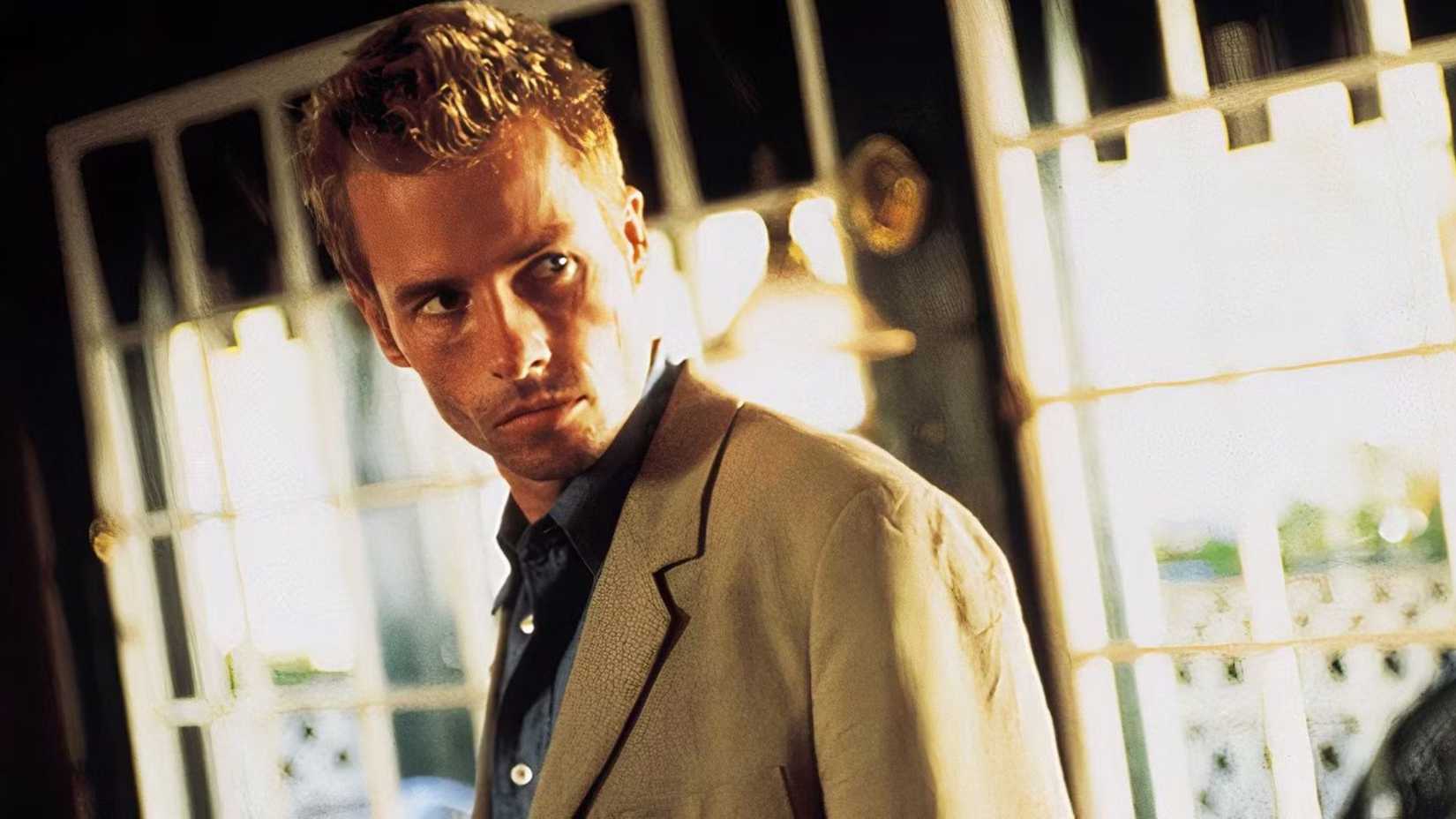
Memento makes Leonard Shelby's lie particularly effective because the audience initially assumes his memory system is protecting him from deception. His Polaroids, tattoos, and handwritten instructions look like objective evidence. They appear more trustworthy than human testimony precisely because Leonard knows he can't remember the past.
Christopher Nolan quietly turns that apparent safeguard against the audience. After hearing Teddy's version of events, Leonard writes down information that will cause his future self to identify Teddy as the next target. He understands that the Leonard who reads the note later will not remember why it was written. The deception is therefore deliberate, as the future Leonard will experience it as truth.
With the non-linear narrative structure, this means that much of the previous narrative was instigated by Leonard lying to himself, and therefore the audience. The fact he does all of this to hide his wife's true killer is even more stunning. Memento began Nolan's impressive run of thriller movies wherein the narrative cannot be trusted, or outright lies to the audience.
Question 1 of 3

- Release Date
- October 11, 2000
- Runtime
- 113 minutes
- Director
- Christopher Nolan
- Writers
- Christopher Nolan, Jonathan Nolan
- Producers
- Jennifer Todd, Suzanne Todd
KioskNews shows a cleaned-up reading view extracted from the publisher’s page — the original always lives on their site, not ours.