COPEC backs possible transport fare increase but warns of impact on commuters
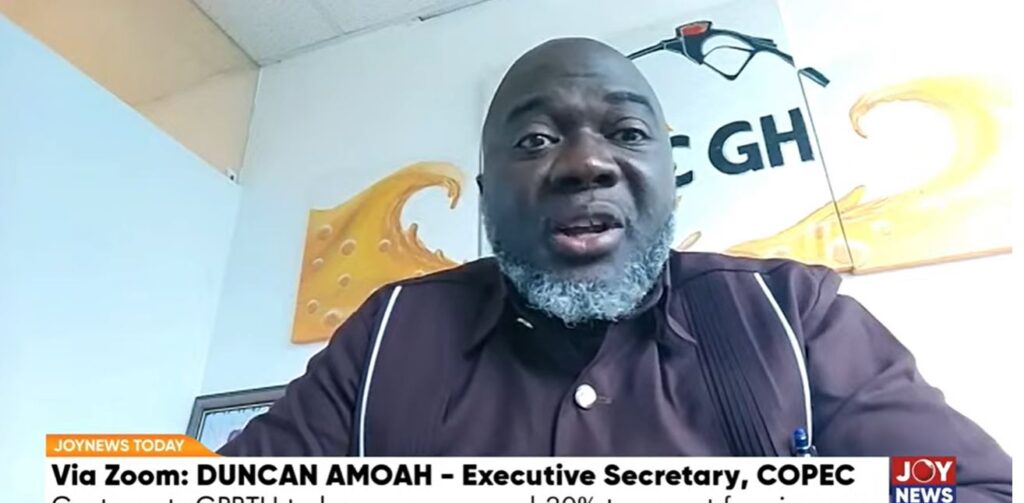
The Executive Director of the Chamber of Petroleum Consumers (COPEC), Duncan Amoah, says some increase in transport fares may be justified as operators continue to grapple with rising fuel and maintenance costs.
Speaking in an interview on JoyNews, he said the government’s GH¢2 per litre intervention on diesel has helped sustain fuel prices for transport operators but has not fully offset the rising cost of operations.
According to him, the Ghana Private Road Transport Union (GPRTU) has been engaging stakeholders for several months over its request for a fare adjustment.
He argued that given the financial pressures facing commercial drivers, “it is only fair that some amount of increase be allowed to the driving community.”
Mr Amoah said he would expect the ongoing discussions between the GPRTU and government to result in a lower adjustment than the 30% increase initially proposed by the union.
“I would be surprised if they come back and say they could not reach an agreement. I would expect maybe 15, 20 percent by the close of the engagement,” he said.
He stressed, however, that the figure was his expectation rather than an agreed fare adjustment.
Mr Amoah also acknowledged that any increase in transport fares would ultimately affect commuters, whose incomes have largely remained unchanged.
“The end payer is going to bear the brunt because salaries have not been increased,” he said.
He therefore suggested that discussions on transport fares should be accompanied by broader consideration of workers’ incomes, with organised labour playing a role in negotiating possible adjustments to salaries.
Mr Amoah further called for a more scientific approach to determining transport fares, proposing that the GPRTU and the Transport Ministry develop a cost-per-kilometre and cost-per-passenger model.
He said such a system would allow fares to be calculated objectively based on factors such as distance, fuel consumption, vehicle maintenance and passenger numbers, rather than being determined through negotiations alone.
DISCLAIMER: The Views, Comments, Opinions, Contributions and Statements made by Readers and Contributors on this platform do not necessarily represent the views or policy of Multimedia Group Limited.
Tags:
DISCLAIMER: The Views, Comments, Opinions, Contributions and Statements made by Readers and Contributors on this platform do not necessarily represent the views or policy of Multimedia Group Limited.
KioskNews shows a cleaned-up reading view extracted from the publisher’s page — the original always lives on their site, not ours.