‘We don’t hear about athletes’: Cate Campbell on what Brisbane 2032 is missing
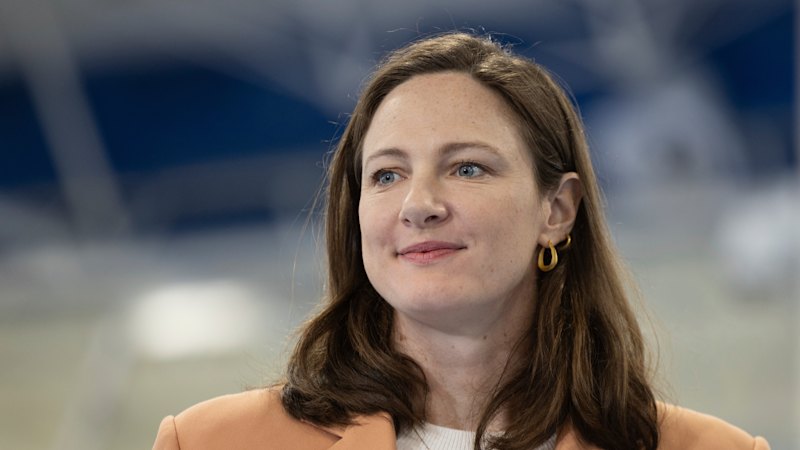
Welcome to CityChats, where Brisbane Times meets our city’s most interesting characters on our most iconic form of transport. This week, retired Olympic swimmer Cate Campbell tells us about life after the pool, what we should be focused on in the lead-up to Brisbane 2032, and where she sits on the Rockhampton rowing debate.
Campbell meets us at New Farm ferry terminal, having finally locked in an interview with her after weeks of coordinating around all things weddings. While waiting for the northbound boat, we bond over our connections to the Sunshine Coast – Wright and Sinnya grew up there, and Campbell now lives there with her new husband.
What’s life been like since calling time on your swimming career? Obviously, you had such a decorated one, but how has life been since stepping out of the swimming spotlight?
Yeah, it’s been really interesting. I’ve had one big focus for pretty much my whole life and then I stepped out and I’ve been able to diversify my interests, which has been fun. I do a little bit of work in the media, I sit on the board of the Queensland Academy of Sport, I do a little bit of public speaking, I do a little bit of mentoring, run swim clinics out to regional Queensland.
I’m able to have the variety that is impossible to have when you’re an elite athlete, when your whole focus is towards one goal, where you can win or lose by a hundredth of a second, and so everything you do has to be focused towards that. I’ve really enjoyed being able to spread myself over a few different projects.
Talk to us about the transition away from that constant drive towards that one thing. Did you struggle with that at all originally, or did you have enough things to keep you occupied?
It’s very well documented that athletes really struggle with that transition period. You go from being structured and regimented and having a routine, and you have a team and all those support systems around you, to suddenly being ejected out into the cold.
Maybe you don’t know exactly what you want to do, maybe you don’t know who you want to do it with, and so it has been quite destabilising, but I think I knew I was in for that.
Even when I was feeling uncomfortable, or even when I was feeling unmoored or like I didn’t really know what I was going to do next, I knew this was coming. I knew I was going to be feeling it, and so I could feel those feelings but not let it worry me, if that makes sense.
I’ve spoken to a lot of retired athletes and they say, on average, it takes about five years for you to be able to find your feet and figure out who you are away from your sport. As much as we like to say sport is what we do and not who we are, it does form a massive part of your identity because your whole life becomes shaped around it.
When you do get a chance to reflect though on your whole career, what are the moments that stand out, that you still maybe dream about when you go to bed?
To be honest, I don’t reflect on it very much at all. It feels like that was another lifetime that I was an elite athlete. I think more than the medals, it’s the memories and the moments that stand out. It’s the people who you’ve met or the way that you felt after a race or coming back and seeing friends and families, it’s those things that really stay with you.
Someone once said to me: “People will forget what you do, but they will never forget how you made them feel.” And I can say that that’s very, very true for myself. I forget all the stats, but I remember the moments and the people who were part of that.
That pretty talented sister of yours [Bronte] has also called an end to the Campbell dynasty. How has your relationship been throughout this period?
She had a long time to make this decision, and it is always tricky, and even when you feel like you are totally prepared for it, there are some elements and moments of grief for the loss of part of yourself that was so big.
It’s been wonderful watching her leap into this next phase of life. She’s so smart, and while I could beat her in the pool, I could never win an argument.
Who does take the mantle between now and ’32? Is there anyone you’ve got your eye on?
We have some of our most successful athletes in swimming history in the pool right now. Particularly Kaylee McKeown – she is our most successful-ever individual Olympic athlete.
I know that we like to harken back to the golden era, we like to talk about the Thorpes and the Hacketts and the O’Neills and the Libby Tricketts, and all credit to what they did, but the athletes that we are seeing today are surpassing and breaking the records that they have set.
It’s really exciting to be able to see the careers of our athletes being elongated. But where we need to be really careful is, we need to still keep the pipeline fresh. The rewards of going to the Olympic Games is you get to call yourself an Olympian, and that’s pretty much it. You’re not on multimillion-dollar or hundreds of thousands of dollars of contracts a year.
And so, for me, and part of my role as sitting on the board of the Queensland Academy of Sport, is how do we keep that talent pipeline going, and how do we keep nurturing it knowing that the average age of our athletes is starting to shift and the average age of athletes qualifying for their first teams is getting later and later?
How do you feel we are placed for Brisbane ’32?
There are a couple of really important key aspects to delivering a good Olympic experience. What we hear about mostly in the media is we hear about infrastructure and we hear about stadiums.
What we don’t hear about is athletes. But when you cast your mind back to the Sydney Olympics, no one is really talking about the fact that a lot of the tunnels in Sydney were built for the Games, the fact that there is a rail network that connects the airport to the city came because of the Games. No one really remembers or talks about that.
You know what they do remember and they do talk about? They talk about Cathy Freeman crossing that line. They talk about us winning gold on Bondi Beach in the beach volleyball. They talk about the American boys getting smashed like guitars by the Australians in the men’s 4x100 freestyle relay.
Those are the moments that are going to stand the test of time and embed themselves in the Australian psyche. We need to give our athletes every possible chance of success. We’re not going to remember how good the stadium was or how good the new rail system is, we’re going to remember that we fumbled an opportunity.
There’s been a lot of debate about the rowing for Brisbane 2032 and whether Rockhampton is an appropriate venue. Where do you stand on the issue, and striking the balance between giving regional Queensland a slice of the Games without taking too much from the main host city?
The first thing you need to look at is what are our athletes saying, because they are the ones who are going to have to go out and perform. And overwhelmingly, athletes are saying that this isn’t a course that is going to produce the best possible performances.
I’m not saying that we rip Olympic events away from regional Queensland; I’m saying we retrofit it to make sure the events that we give regional Queensland, they are equipped to host.
We are starting to see pressure being put on Rockhampton while they’re hosting a national championship, a national age group championship. Do they have the facilities? Do they have the accommodation? Are the businesses equipped to host a big sport like rowing? I would say probably not.
I know the IOC is yet to hand down their responses, but I just feel like all of this talk is negatively impacting the Games because people are starting to see there being an issue with Brisbane hosting the Olympic and Paralympic Games, and there is no issue. It is one of the best opportunities we have.
I also think it’s quite unfair to the businesses and the people in Rockhampton because they’re preparing as if they’re hosting the rowing in six years’ time, and six years is not a long time.
And if you deep down inside know that you will not be hosting it … you need to tell people. You need to come clean, and I think, ultimately, what we want from the people in charge is accountability and transparency. Yeah. And that would alleviate so much of this angst and would stop some of the oxygen being sucked away.
We’re going to be getting close to when sports will be locked in, or potentially new sports. Do you have a preference, is there something that you really want to see?
I have recently joined the board of Sport Climbing Australia, and this was a new sport that was introduced in Tokyo.
In LA, there are going to be three separate medals, so there’s the technical climb, there’s bouldering, and then there’s speed climbing. I don’t know if you’ve ever watched speed climbing, but I think that these people got bitten by the same spider as Peter Parker because there is no other logical explanation as to how quickly you can run up a wall. And they literally run up a wall, and I don’t understand it. I think it is really important for Australia to be able to showcase some of these new events.
Start the day with a summary of the day’s most important and interesting stories, analysis and insights. Sign up for our Morning Edition newsletter.
More:
KioskNews shows a cleaned-up reading view extracted from the publisher’s page — the original always lives on their site, not ours.