Usman Khawaja remained silent for eight years. Why did he speak out now?
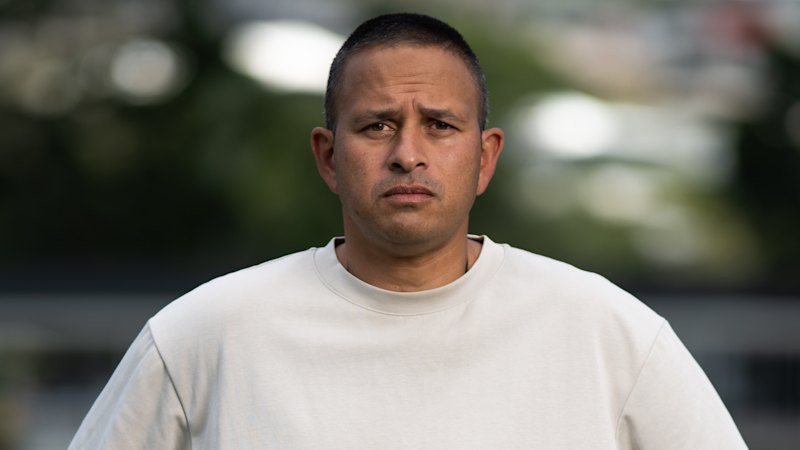
Australian cricket has itself to blame for the eight-year suppurating wound that has been reopened by Usman Khawaja’s memories of the South African tour of 2018.
It bled in 2021 when Cameron Bancroft gave the interview that sealed his fate as an Australian representative.
David Warner and his manager periodically reopened it. Left unhealed, it was always ready for a new bleed.
If they’re looking for their beloved “learnings”, Cricket Australia, and Australia’s Test players, might look back to their failure in 2018 to honestly and broadly tell the truth about what happened at Newlands and on that tour.
Their window of opportunity for truth-telling lasted about a day, when they could have accepted collective responsibility and tried to bring the rest of the cricket world with them.
Instead, they attempted to ring-fence the blame around Bancroft, Warner and Steve Smith, to punish those players and hope the heaviness of those punishments would be a substitute for treating the wound.
As any battlefield surgeon could have told them, all they were doing was creating the conditions for a long-term recurrent infection.
Their missteps started, but never finished, with that oldest of cricketing and human motives: looking after number one.
Khawaja is right when he says his three teammates were scapegoats for a responsibility that should have been shared.
Did the bowlers know Bancroft took a specific piece of sandpaper onto the field at a specific time?
No; we can take them at their repeated word. But they have not answered the question they are being asked, which is whether they knew, more broadly, that their team was altering the ball, as many other teams had done for decades, to enable reverse swing.
The plausible deniability scheme – ask no questions, hear no lies – doesn’t wash. It didn’t wash for Smith, who as captain said he didn’t want to know the specifics.
He paid the price for his dereliction of leadership. But it didn’t wash for the team, either.
Thanks to reverse swing, they won matches and series as a team, they reaped rewards as a team, they built a reputation as a team. Yet when the crunch came, Bancroft and Warner were isolated as individuals and only Smith was made to take wider responsibility.
Why didn’t Khawaja speak earlier? His explanation, that he wasn’t asked, is only a partial defence.
He had every opportunity to reveal what he knew, behind closed doors, to Cricket Australia, and he chose not to. He, like everyone else, was looking out for number one.
The only person who failed to look out for number one was Bancroft, through his naivete, implying in 2021 that the bowlers knew about the ball-tampering. He never played for Australia again.
The behaviour and treatment of Warner repeated it again and again. Look after number one because the collective won’t have the guts to step forward.
Khawaja is accused of making his revelations now so that he can profit by selling books.
Anyone who knows the first thing about books is laughing into their teacups. Khawaja has received his advance, he was well paid as a cricketer, and books aren’t that profitable. (Ask Warner, who prefers to protect his ongoing lucrative employment than throw it all away for the pyrrhic satisfaction of “selling books”.)
Khawaja remained silent for eight years for the same reason everyone else did: it wasn’t in their personal interest. Now he wants to get it off his chest. It’s a bit late but it’s also about time someone was open with their version of the truth.
The fact that he’s waited for post-career, when he has less to lose, underscores the centrality of self-interest.
Newlands offered a rare opportunity for Australian and international cricket. Ball-tampering, both contemporary and historic, could have been admitted and acknowledged. There was a chance for truth-telling and cleansing. This isn’t hindsight speaking.
On the day the scandal broke, many of us idealists pleaded for cricketers collectively to show a moral courage akin to the physical and mental courage they displayed on the field. It turns out that this would have been Khawaja’s preference, too. But instead of saying “me too”, past and present players united under a different response: me first.
And here’s where it ends up. Damage reopened, friendships rebroken, families re-traumatised, cricket re-vandalised. It didn’t need to be this way but Cricket Australia and its players set the tone on day one.
If you’re not going to cauterise this wound, get set for a long, slow bleed.
Improbably, it still isn’t too late. Khawaja has been brave, if belatedly.
The members of that team and their staff need only admit that they consented, implicitly if not explicitly, to dirty tricks because they thought such tricks were endemic in Test cricket. That’s all Khawaja has done and all he is calling for: a bit of team spirit.
Fat chance?
Maybe nothing has changed since Darren Lehmann’s first press conference as coach of an Australian team shamed by losing games. What was his responsibility? “To win,” he said, with one of those smiles that hinted that if you don’t understand it’s about winning, you don’t understand anything.
It turned out that there was a bigger shame than losing, a shame with a long life that still has years to run.
News, results and expert analysis from the weekend of sport sent every Monday. Sign up for our Sport newsletter.
KioskNews shows a cleaned-up reading view extracted from the publisher’s page — the original always lives on their site, not ours.