The need for the Mossad and the CIA to pay attention to rebuilding SAVAK - opinion

Around this time, 48 years ago, the CIA issued an irrelevant, unrealistic report on events in Iran, naively assuming the Shah would remain in power for another 10 years.
Yet it overlooked the growing cancerous tumor of Ruhollah Khomeini and Islamic terrorism in Iran. It understood neither religious despotism nor the sinister apparatus of the Shi’ite clergy.
They had not read the book on the mullahs and Khomeini, though the late Shah argued otherwise in Answer to History: the CIA had stabbed him in the back.
That spring, Parviz Sabeti, SAVAK’s prominent, respected patriot, met with the CIA. He assessed that the Soviet Union and the KGB were pulling the strings behind the Islamic-Marxist terrorists’ drama, but the CIA had no desire to hear that reality.
The Mossad, however, was more realistic.
Khomeini took power, and the monstrous genie of Islamic terrorism escaped its bottle. The CIA and the Mossad spent the Cold War’s final 10 years without SAVAK – their loyal, professional ally, true friend, and patriotic partner – and effectively lost the Middle East.
Had it survived, the transnational network of Islamic terrorism and the Shi’ite Crescent would never have emerged, and today’s world would have been more peaceful and secure.
Islamist and Marxist terrorist groups, such as the People’s Mojahedin Organization of Iran and the People’s Fedai Guerrillas, engaged in the assassination and destruction of SAVAK.
No one in the world asked: If terrorists were to carry out similar attacks against the CIA and FBI in the United States, MI5 and MI6 in Britain, and the Mossad in Israel, what would the reaction of the modern world really be?
And do individuals with such a record, filled with crimes and betrayal, have the right to speak about seeking justice, human rights, and democracy?
Later, Sabeti, a friend and colleague of the CIA and Mossad, was attacked by these same terrorists. Unable to assassinate him physically, they sat in darkness like cowards and resorted to character assassination.
Former bank robbers, bombers, and killers seeking to please the Shi’ite clerical regime appeared in an American court and, rather than filing complaints against Iran’s political figures, revived the old story of possible torture and the like within SAVAK.
But can terrorists really speak in Western courts in place of terrorism’s victims? What are their opinions worth? These groups’ terrorist creation and legacy was the Islamic Republic in Tehran. Such is the grotesquerie of today’s world.
These days, nearly half a century after the emergence of the sinister phenomenon of the Islamic caliphate in Iran, the meeting between the directors of the CIA and Mossad in Washington should be seen as more than a review of military options against the rogue regime of the Islamic Republic.
Rather, it should be an opportunity to design the security architecture of a post-collapse Iran, from training skilled, patriotic personnel alongside Prince Reza Pahlavi and rebuilding a professional intelligence and counterterrorism organization inspired by SAVAK’s experience, to preventing a security vacuum, civil war, and the resurgence of Islamic terrorist networks.
Overthrowing a regime without preparing to secure the country the next day can be the end of one crisis and the beginning of an even more dangerous one. And if the Mossad and the CIA neglect this, after half a century of experience with this virus, their efforts will not succeed.
The strategic message
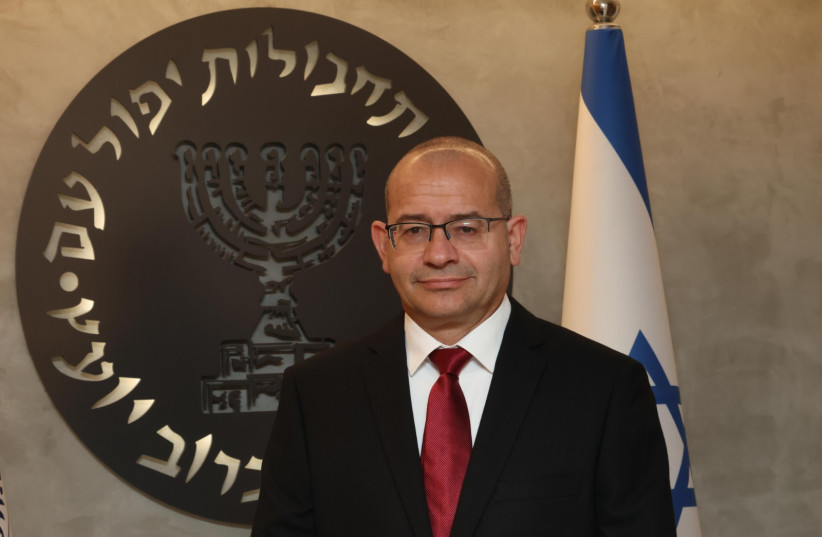
The meeting between Roman Gofman and John Ratcliffe, the directors of the Mossad and the CIA, respectively, is intended to move beyond diplomacy toward intelligence coordination.
This is not merely a ceremonial meeting; it signals Israel’s effort to translate shared intelligence assessments into operational options. In the absence of war, the mullahs’ regime of religious despotism remains under intelligence scrutiny.
It also marks, in a sense, the end of the illusion of security following the ceasefire. The mirage of diplomacy and a ceasefire does not mean the threat has ended.
Although the Islamic Republic may interpret the suspension of attacks as a sign of American and Israeli retreat, in security logic, a pause in operations can provide an opportunity to rebuild intelligence, assess targets, and renew readiness.
This meeting also marks the return of offensive deterrence, potentially combining American economic pressure and a naval blockade with a credible military threat.
The strategic message is clear: Tehran must not imagine that it can resume developing its threatening capabilities without paying a price. Yet US President Donald Trump’s coercive diplomacy is still neither genuine nor serious.
He has no intention of pursuing regime change and has not decided to resume the war; nevertheless, retaining the military option alongside economic pressure increases Washington’s bargaining power.
For the Islamic Republic, the principal danger lies not merely in an attack, but in its inability to predict America’s ultimate decision.
The Mossad-CIA meeting means intelligence warfare and the erosion of the regime’s calculations; coordination between the two can strengthen their ability to identify the Islamic Republic’s military and security networks and command structure.
In modern warfare, intelligence superiority can sometimes shift the balance of power before the first missile is fired.
This is where the danger of Tehran’s strategic miscalculation arises: the greatest danger to the Islamic Republic is repeating its mistake in assessing American and Israeli resolve.
Provocative actions or a misreading of Washington’s restraint could turn a manageable crisis into a fresh confrontation.
Have the Mossad and the CIA established that the vulnerability of Tehran's power structure is real?
External pressure becomes more dangerous for an authoritarian government when accompanied by a crisis of legitimacy, economic problems, and the erosion of public trust.
The Islamic Republic may survive a military attack, but the combination of internal erosion and external pressure could pose a deeper challenge to its political survival.
The Mossad and the CIA must not overlook the Iranian nation’s historic opportunity. Although weakening the regime’s deterrence does not necessarily mean freedom for Iran, it can create new political space.
Iran’s future will be determined not by the Mossad and the CIA, but by the organized will of the Iranian nation and the ability of national forces to manage a stable transition.
But certainly, “The message of today’s meeting between the directors of Mossad and the CIA is not that war will begin tomorrow; the message is that the Islamic Republic remains on the table of strategic calculations.
“Tehran faces three simultaneous crises: the erosion of domestic legitimacy, economic pressure, and security uncertainty.
“The greatest mistake the rulers of the Islamic Republic could make is to confuse the silence of the guns with the end of the threat. The Iranian nation must understand that no ceasefire guarantees a government’s survival, just as no war alone will guarantee a nation’s freedom.”
The risk of renewed conflict is serious and substantial, but an immediate attack is not yet certain.
Two paths
Reports from November 13 indicate that Trump has so far resisted Prime Minister Benjamin Netanyahu’s request, and that even within Israel’s defense establishment, there is no consensus on the need for an immediate attack.
Will the strategic divergence between Trump and Netanyahu, blockade or war, get in the way? Will Trump agree to the request for an immediate attack, or is he under the influence of Qatar, Pakistan, and the Muslim Brotherhood?
Saudi Arabia and the United Arab Emirates do not favor the collapse of the Islamic regime in Iran either. This is yet another grotesque aspect of the affair. The Russians, too, stand in the way of democracy in Iran.
But certainly, Washington wants to erode the Islamic Republic’s economic capacity and room for maneuver without bearing the cost of a full-scale war. This is coercive containment.
There are also concerns about the politicization of war in Israel: Netanyahu’s opponents worry that he may escalate the Iran crisis to prevent a transfer of power.
This situation raises the possibility of politically driven decisions about war, but it does not establish that an immediate attack is imminent. Yashar leader Gadi Eisenkot has not endorsed the need for an immediate operation at this stage, either.
Even if Israel’s future is left out of the picture, a credible military threat remains on the table. However, Trump is hesitant to use military force and continues to place his hopes in the mirage of diplomacy.
In any event, the Islamic Republic faces a dangerous equation: America does not want war for now, but an incident or a miscalculation could draw it back into war.
The Islamic Republic interprets Trump’s opposition to war today as a guarantee of its own immunity tomorrow. America prefers economic attrition, while Israel has kept the military option alive; these two different paths are not necessarily contradictory.
But instead of wasting time this way, are the Mossad and the CIA considering rebuilding a new ally in Iran? Will the names of SAVAK’s patriots be raised once again?
The writer is a Middle East political analyst. His latest book, Tehran’s Dictator, examines the theocratic era of Ali Khamenei (1989-2026). @EQFard
KioskNews shows a cleaned-up reading view extracted from the publisher’s page — the original always lives on their site, not ours.