[Rappler’s Best] Yes, Marcos still shuffling his Cabinet
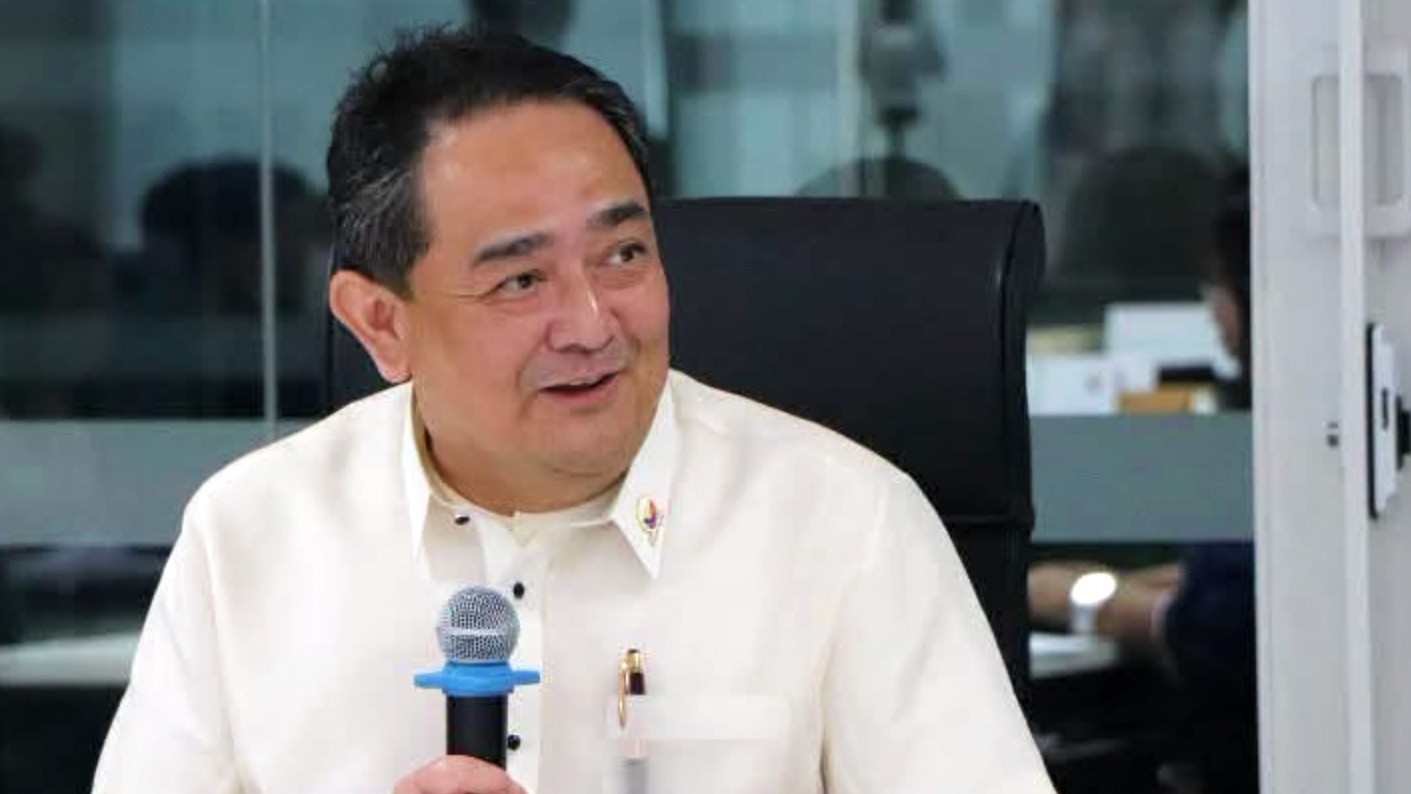
- Vince Dizon has returned to his role as transportation czar after a year as the secretary of the scandal-plagued Department of Public Works and Highways, swapping positions with Giovanni Lopez.
- The arrest of journalist Philip Lustre Jr. over a cyber libel complaint highlights ongoing issues of press freedom in the Philippines, where journalists face significant threats and legal challenges.
This is AI-generated. Read the article for full context. Report any errors.
Vince Dizon, pulled out from the transportation department a little more than a year ago to head the scandal-ridden Department of Public Works and Highways (DPWH), is back in his old gig as transportation czar, Malacañang announced on Monday, October 26. He swaps posts with the man who replaced him as transport secretary, Giovanni Lopez, now the new DPWH secretary.
Until his latest transfer, Dizon’s appointment as DPWH secretary had yet to be confirmed by the Commission on Appointments, and this showed in an awkward exchange between him and estranged presidential sister Senator Imee Marcos last month.
Dizon’s transfer also came on the heels of a spat with Senator Panfilo Lacson over the latter’s allegations that he seemed to be covering up for Senator Alan Peter Cayetano, who is being accused by Lacson of having anomalous flood control projects in Taguig. Dizon and Cayetano are longtime allies, having both served under the previous Duterte administration after playing key roles in the strongman’s successful 2016 presidential run.
Indeed, ghosts from the past continue to haunt.
On Saturday, October 24, we were disrupted by the news that a team of Quezon City cops, showing uncanny efficiency, arrested a 72-year-old veteran journalist while he was attending a media forum, over a warrant issued by a judge from Davao City, and in relation to an unknown case filed by an unknown complainant.
Philip Lustre Jr. is known to journalists of my generation as a savvy and prolific political reporter who did the rounds and made waves in his heyday, poking fun at power and unmasking its unholy alliances. For all his acerbic posts on social media especially against the Dutertes, he did not see this coming — a warrant bare in substance and brazen in form.
- It broke the norm that journalists and newsrooms are used to: when they are charged with libel or cyber libel, they get notified of the complaint and have the right of reply.
- Lustre said he was clueless about who filed a cyber libel complaint against him, and what about. That it reached the court meant it already passed the desk of a prosecutor who should have informed him about it.
- The arrest warrant, dated October 2, came from Davao City Judge Retrina Fuentes, and this gives room for a reasonable assumption that this had something to do with the Dutertes.
- Fuentes is the same judge who issued a warrant in 2022 against public intellectual and former vice presidential candidate Walden Bello, who was also arrested in Quezon City over two counts of cyber libel filed by a longtime aide of Vice President Sara Duterte, Jefry Tupas. Unlike Lustre, Bello knew that a prosecutor had indicted him and that an arrest would follow. He spent the night at a police headquarters and was released the following day after posting bail.
Lustre’s arrest came in the same week that Davao City 1st District Representative Paolo Duterte, a brother of the Vice President, filed a cyber libel complaint against executives and staff of media giant, GMA Network, over stories linking him and his sister to bribery. Included in the complaint were National Bureau of Investigation Director Melvin Matibag and whistleblower Rodulfo Gracioso Jr. Read about Gracioso’s claims here.
Philippine journalists and media organizations have been pushing for the decriminalization of libel and, shortly after the cybercrime law was enacted in 2012, they have moved to declare it unconstitutional.
- The High Court eventually declared the cybercrime law constitutional, but struck down some controversial provisions.
- Still pending for justices to decide on, however, is a petition filed by Bello in 2023, that essentially asked the Tribunal to decriminalize libel.
The criminal aspect means that one who is charged with libel faces arrest and will be freed only after posting bail. To decriminalize libel does not absolve journalists of accountability; it simply turns it into a civil case that will still be litigated on top of the constant hurdles that powerful people in the Philippines throw at them — threats and harassment, reputational attacks, killings, bribery, closed access to information that the public needs to know.
The Philippines remains to be one of the most dangerous places for journalists globally, ranking 114th out of 180 countries and territories. “Despite its extremely dynamic media landscape, the Philippines is one of the most dangerous countries in the world for journalists,” according to the 2026 World Press Freedom Index.
Because in plain truth, beyond the reach of libel are those in power, who are already gifted with all means fair and foul for their so-called grievances.
- Former president Rodrigo Duterte’s words, for instance, killed. And he’s proven it, as we wrote in this piece.
- From 2012, when the cybercrime law was enacted, up to 2022, nearly 4,000 cases were filed in various agencies, with the national police saying that cyber libel makes up 20% of the crimes they investigate. Just imagine the other crimes that need more police attention.
- Simply for practical reasons, decriminalizing libel “will free our public prosecutors to allocate their time… to prosecuting criminal cases that affect the national interest and our territorial integrity,” said lawyer Gilbert Andres in this story.
Speaking of territorial integrity: China’s agent-provocateur in Manila, Ambassador Jing Quan, also knows how to weaponize language, as we’ve seen in the past days as he fired volleys of criticism against Philippine officials.
How do we make sense of this gutter talk from the Chinese envoy? Bea Cupin weighs in in this piece.
But still a happy Monday to you! In a dramatic victory, Brazil President Luiz Inacio Lula da Silva fended off a rally by far-right candidate Flavio Bolsonaro, winning a historic fourth term.
Here are some of Rappler’s bests that you shouldn’t miss:
Dwight de Leon tells us the practical effects of a landmark Supreme Court ruling declaring the 2024 and 2025 national budgets unconstitutional, which the Solicitor General said it would ask to reconsider.
Jelo Ritzhie Mantaring looks into how prepared the education department is for El Niño.
Jairo Bolledo asks, where in the world is Atong Ang?
Our culture desk and creatives team have a quiz for you as Halloween approaches: Would you survive a Filipino horror movie?
Lance Spencer Yu reminds us that before the Philippines even had a name, it had gold.


Rappler’s Best is a weekly Rappler+ exclusive newsletter of our top picks delivered straight to your inbox every Monday. Visit rappler.com/newsletters to subscribe.
The views expressed by the writer are his/her own and do not necessarily reflect the views or positions of Rappler.
KioskNews shows a cleaned-up reading view extracted from the publisher’s page — the original always lives on their site, not ours.