‘Poets get rejected more’: The publishing lesson learnt by Lessons in Chemistry author Bonnie Garmus
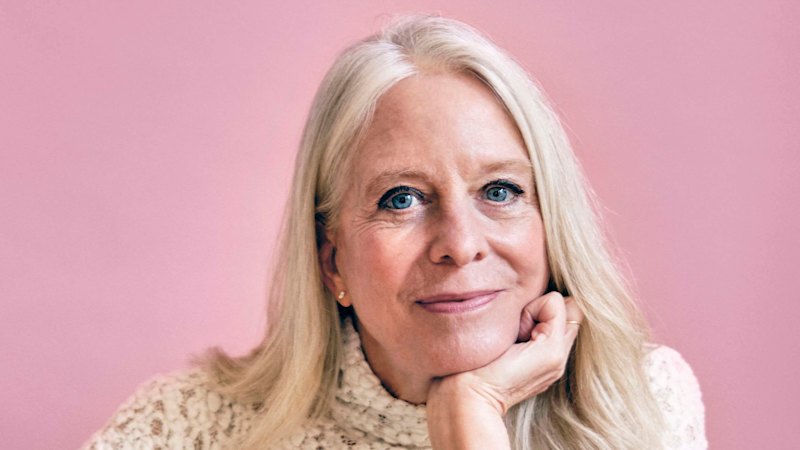
American author Bonnie Garmus was on the cusp of 65 when her debut novel, Lessons in Chemistry, was published – after a career in copywriting and advertising, and an astonishing 98 rejections from agents for an earlier manuscript. The story of Elizabeth Zott, a brilliant chemist who becomes the unlikely star of a TV cooking show in 1960s California, went on to become a global sensation, selling almost 10 million copies and inspiring a hit TV series starring Brie Larson.
Now Garmus is back with Peck & Peck, a funny, warm-hearted romp about Batter Gray, a poetry-obsessed recent graduate who lands a job at a prestigious poetry journal in 1980s New York. For all its whimsy, the novel has plenty to say about distinctly contemporary concerns: the battle between art and commerce, the value we place on art and artists, and what happens when culture becomes a business. We spoke to Garmus about obsessions, sudden fame and why poetry might just save the world.
Your characters tend to be obsessives, whether that’s about rowing, chemistry, poetry or typography. What’s taking up an unreasonable amount of brain space for you at the moment? That’s a really good question. Right now we’re about six weeks away from publication, so I’m writing a lot of articles for different magazines and things, and that’s taking up a lot of headspace. But I’m also dedicated to reading one poem a day. I’ve been doing that since 2009, and I find that evens me out.
What started the project of reading one poem a day? When I was in high school, about 14 or 15, I had a really good English teacher, and every day, he would read a poem out loud. It was one of the things that we loved about his class. He made us promise at the end of the school year that we would read a poem a day for the rest of our lives. He said, “It’s not because I think that you need to study this person or this form; it’s because poetry will end up saving your life. It will keep your brain fresh, it will keep your ideas open, and you will explore the world through poetry.”
So we all kept the promise for at least four hours – until the school year was over – and then I never read a poem. Then one day I was driving home from work, and I heard a poem by Nikki Giovanni on the radio. It was a poem my teacher had read, and it brought tears to my eyes. I thought, “Why hadn’t I kept this promise?” I felt like my brain was starting to rot and work was overwhelming, so on that day, I decided to fulfil that promise to him and started reading a poem a day. I know it sounds kind of ridiculous, but it actually matters so much. If you don’t have time to read an entire book or a long magazine article, you have time to read a poem. It’s so complex that it will actually help you in lots of ways you don’t really realise until you start getting into it, including upping your empathy and connecting you with your heartbeat a little more often.
Poetry is at the heart of your delightful second novel, Peck & Peck. Was it this routine that provided the inspiration for the book? Really, it was my unhappiness at that time with technology. This is way back, before Lessons in Chemistry. I was having a reckoning with my career and it felt like technology was moving in the wrong direction.
When I first started writing in the technology space for advertising, it was so interesting, innovative and full of promise. Then it seemed to be slowly sliding into something that I didn’t recognise. It was becoming more about making money instead of making what was worthwhile. I was really at a crossroads with what I was doing, and I was turning down more and more work because I didn’t feel good about what they were doing. This was way back before people talked about AI all the time and what a danger it is, but back then, we all knew about it and knew it was a danger. It was simply that people took it more seriously than they do today, and they would have never allowed it to come out as unregulated as it has.
Peck & Peck follows a devoted young poet, Batter Gray, who gets a job at a prestigious, if dysfunctional, poetry journal – the titular Peck & Peck – in New York in 1983. What part of the story came to you first? It was the Peck & Peck office building. As I walk around cities – I live in England – I think more and more we see the same thing over and over. We see another Kentucky Fried Chicken, another Starbucks, or whatever. There’s this creeping conformity that’s been going on for a long time around the world where we go for the familiar, and I wanted to create a building that was unfamiliar. It’s not like [Barcelona’s] Sagrada Família, but it’s like that in the sense that there’s only one in the world.
At the heart of the novel is a battle between commercial imperative and artistic integrity. Do you think those two things can ever happily coexist? I think they’ve always been at each other’s throats, but the world has become much more devoted to technology in a way that worries me. Now technology has decided that it’s going to take over the arts and do the arts for us as well. I don’t want it to do the arts for us. Technology is not an artist, and it doesn’t have the ability to do it in the same way. So I do worry a lot that this idea that technology can do everything is really misguided.
There’s always been a belief – and my character believes it – that you’re supposed to get a good job as a lawyer, in accounting, or somewhere where you can make a living, and I certainly understand that [laughs]. I have two kids, and if one of them had come home and said, “I’ve decided to become a poet for my living,” I would have said, “Oh, how interesting ... but you have to do something else as well.” So yeah, there’s always this push-pull. But it turns out the arts are every bit as vital as anything else – as medicine, lawyerly work, maths or science. They’re all vital.
There is something incredibly touching about your character Batter Gray’s obsession with poetry. Many of the staff who work at Peck & Peck are also obsessed. Do you think we need more people who care unreasonably deeply about the arts? Is that the antidote to the role of technology now? Yeah, I think so. It occurred to me as I was writing this book that it would be just bizarre if poetry was the one thing that ended up saving us. Poetry – the least-admired, least-read art – stepping forward and saying, “Here’s what we need to do.” The strange thing about poetry is that it’s incredibly honest, and right now we live in a very dishonest age.
Before you published Lessons in Chemistry – which has gone on to become a phenomenal bestseller, with millions of copies sold worldwide and a hit TV series – you worked across all kinds of different writing. Was novel-writing always the calling? Oh, I was always doing it. You know how in Hollywood, every star has a script in their drawer? In copywriting and advertising, every copywriter and creative director has a book in their drawer. It’s not that you don’t want to do it; it’s that it doesn’t pay. You can’t survive. Ninety-nine per cent of all writers don’t make more than minimum wage.
I was very lucky to have a bestseller – let’s face it, we’re almost up to 10 million copies around the world now – and I am extremely lucky to have hit this. But does it happen very often? No, it doesn’t. People think I’m crazy, but I still work outside of novels. I know a Pulitzer Prize winner who still holds a full-time job because you cannot depend on this job for your security.
Before Lessons in Chemistry was published, is it right that you had written a big, epic novel that attracted quite a number of rejection letters? Ninety-eight, yeah! I was going for the world record, but according to poets, 98 is amateur hour. Poets get rejected much more than that (laughs). But yeah, I kept submitting this thing, and it was a behemoth. It was 700 pages long. I hadn’t done my research, because if I had, I would have known that nobody in the world wants to publish a 700-page novel by an unknown writer. I found that out the hard way, and once I learnt that important lesson, I went shorter and wrote a completely different book.
Lessons in Chemistry follows the character Elizabeth Zott, who leaves her career as a chemist and starts a cooking show. At what point did you realise that this novel had become something much bigger than maybe you ever imagined? I’m embarrassed to say that it took a couple of years for me to really understand how big Lessons in Chemistry had become. Even when I had a movie deal and a series deal, it still didn’t feel real. Then it very slowly unfolded. However, it’s not like I’m recognised in public; it’s not that kind of fame. It’s just that the book did a lot better than I thought it was going to do.
Did that level of success change your relationship with writing at all? No, uh-uh. I still write everything the same way as if I were working on an assignment for work, and that really works for me. It’s not so much that I need the structure of a working day, but I know that there are going to be days of failure. I know there will be days when I just don’t write well or can’t think of exactly what I want to say, and that’s OK. I will just wait, be patient, and wait for that voice to come back. For me, no, it hasn’t changed at all.
We started this conversation talking about obsession. To see us out, do you know what obsession is coming next for you? I do, but I can’t tell you about it because it may change into another obsession of mine. I love to write about things that I’m passionate about, and it turns out that I’m passionate about a lot of things. Right now, I’m very passionate about poetry having a real place in our society, but more to the point, that AI is wrong for us right now and isn’t doing the job. It’s scary. People always ask, “How do you get your ideas?” I don’t know – I have too many, and I guess I’m mad about a lot of things, so they just keep cropping up!
This is an edited extract from a longer conversation on Good Weekend Talks.
KioskNews shows a cleaned-up reading view extracted from the publisher’s page — the original always lives on their site, not ours.