Encroachments, illegal salt pans: NGT orders Sambhar Lake inspection
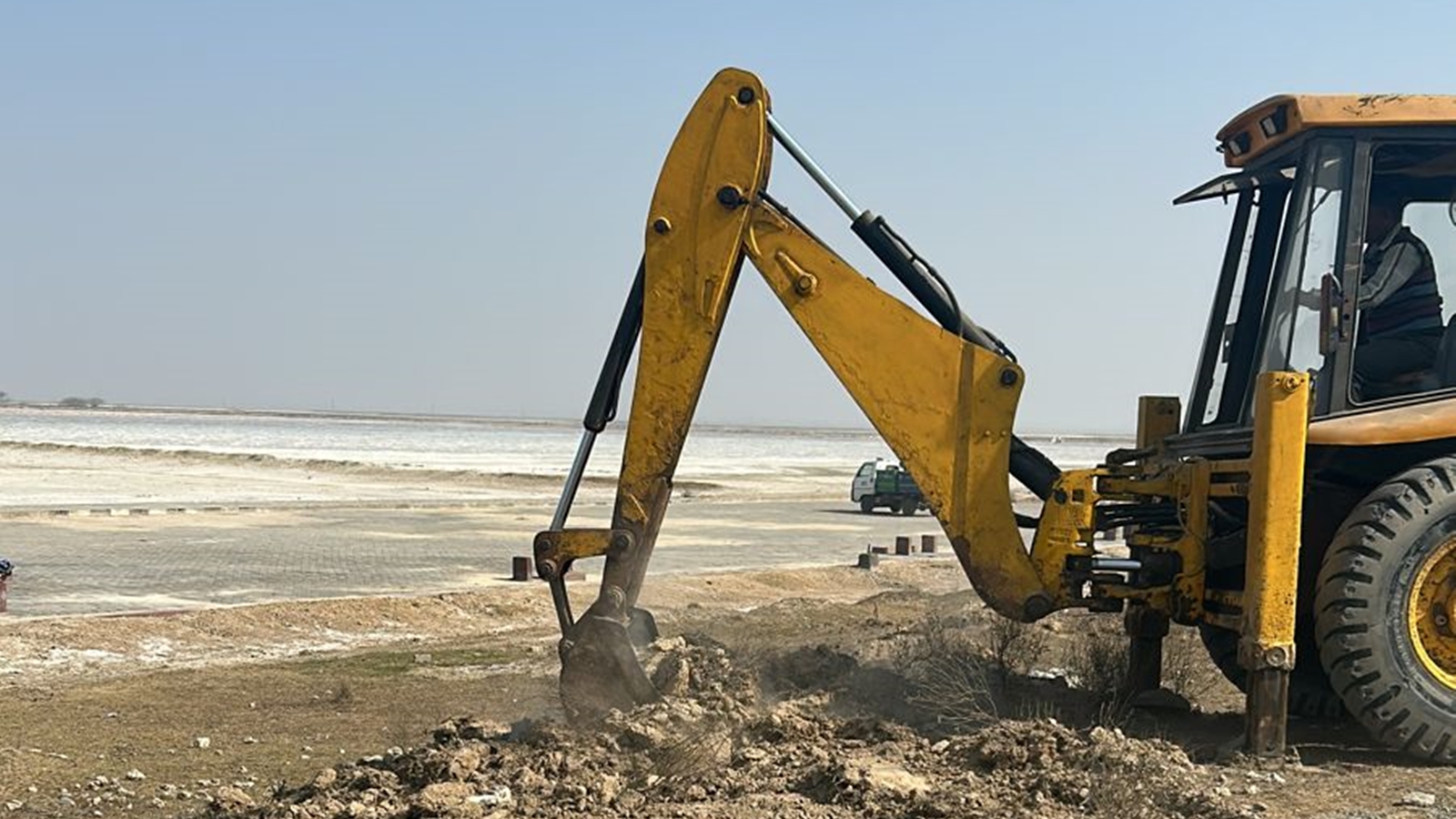
According to the application as mentioned in the order, these activities were depleting groundwater, altering salinity levels and affecting the lake's natural hydrological regime. (Express Photo)
The National Green Tribunal (NGT) has constituted a joint committee to inspect Sambhar Lake and submit a factual and action-taken following allegations of alleged encroachments, unauthorised salt pans, groundwater extraction and obstruction of natural water inflows at the Ramsar wetland.
Hearing an application filed by Rashid Noor Khan & others against the Union of India & others, the NGT’s Central Zone Bench, Bhopal, on September 28 observed that a substantial issue has been raised. It issued notices to the respondents, directing them to file their replies within six weeks. The matter will next be heard on December 9.
The applicant alleged that illegal salt pans had been constructed within the lake boundaries and that land recorded as lakebed, or ‘Samand’, had been encroached upon. It also alleged that brine and groundwater were being extracted through thousands of borewells installed within the wetland, using heavy machinery, pipelines and other unauthorised infrastructure.
According to the application as mentioned in the order, these activities were depleting groundwater, altering salinity levels and affecting the lake’s natural hydrological regime. It further alleged that feeder streams were being obstructed or diverted through illegal bunds, anicuts and irrigation practices in the catchment area, reducing the flow of rainwater into the lake.
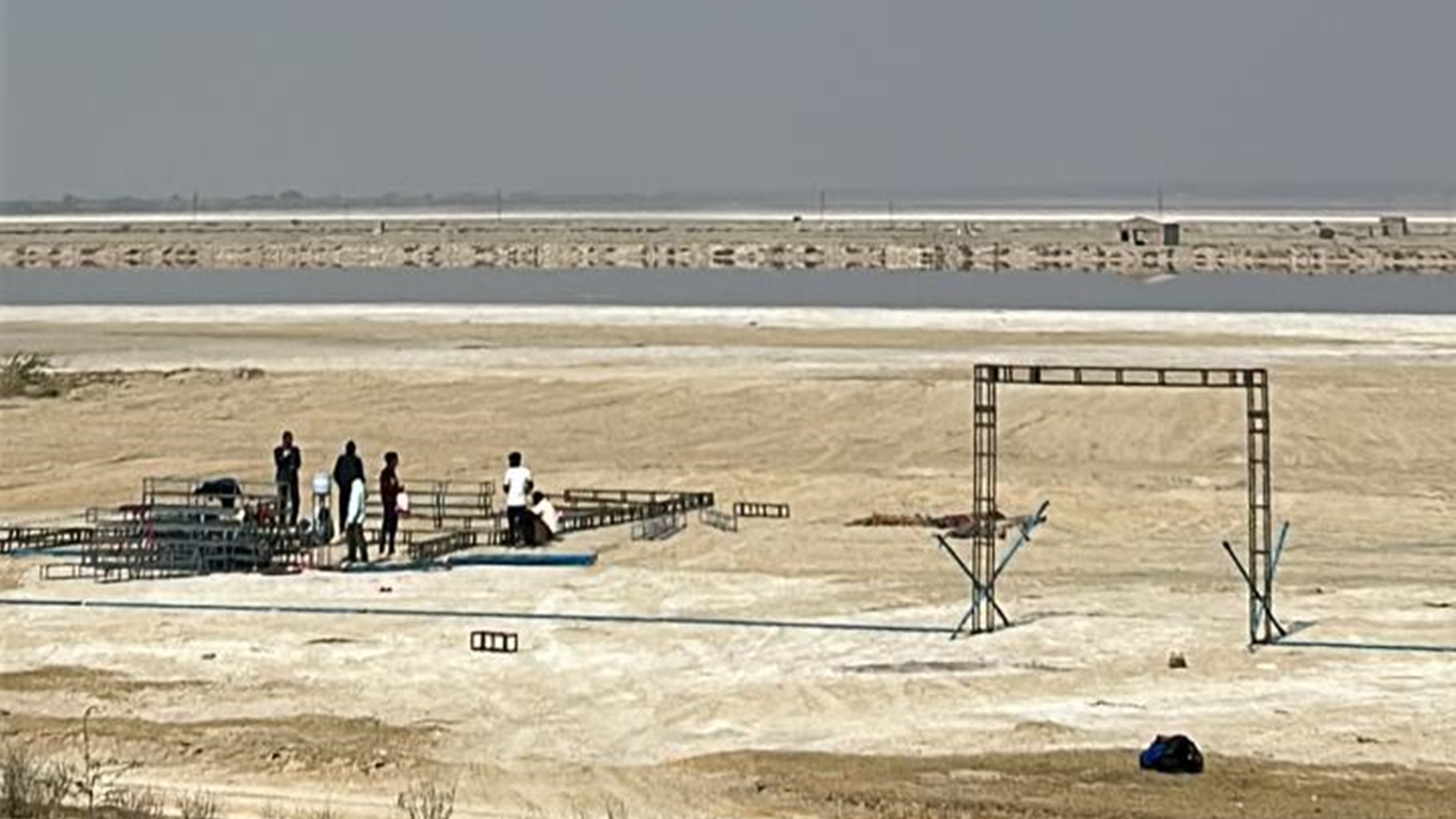 The applicant alleged that illegal salt pans had been constructed within the lake boundaries and that land recorded as lakebed, or ‘Samand’, had been encroached upon. (Express photo)
The application claimed that excessive groundwater extraction, reduced inflows and high evaporation had together contributed to the shrinking of the lake, increased hypersalinity and deterioration of water quality.
Taking note of the lake’s ecological significance, the tribunal observed that Sambhar is India’s largest inland saline wetland and an important habitat for migratory birds, including flamingos. It said the lake’s ecological character depends on a delicate balance involving river inflows, groundwater, evaporation and salinity.
The joint committee will comprise representatives of the Jaipur district collector, State Wetland Authority Rajasthan, Central Pollution Control Board and Rajasthan State Pollution Control Board. The committee has been directed to visit the site and submit its report within six weeks, with the state pollution control board designated as the nodal agency.
© The Indian Express Pvt Ltd

Parul Kulshrestha is a Principal Correspondent for The Indian Express, based in Rajasthan. A lawyer turned journalist, she brings a unique cross-disciplinary perspective to her reporting, blending legal precision with deep social inquiry to cover one of India's most culturally and politically vibrant regions. Expertise and Experience Legal-Journalistic Synergy: Parul’s transition from a legal background to mainstream journalism provides her with a distinct advantage in interpreting policy, legislation, and judicial impacts. This expertise allows her to "read between the lines" of government orders and court rulings affecting the public. Diverse Beat: With years of experience across both mainstream newsrooms and independent journalism, she has built high-level authority in several critical areas: Nomadic Tribes & Marginalized Communities: She is recognized for her sensitive and in-depth reporting on the struggles and rights of Rajasthan's nomadic populations, often giving a voice to those outside the traditional political spotlight. Gender & Social Justice: Parul focuses on the intersection of law and gender, covering issues ranging from women’s safety and reproductive rights to the socio-economic empowerment of rural women. Environmental & Political Reporting: She tracks Rajasthan’s complex political landscape—including electoral shifts and bureaucratic changes—alongside critical environmental concerns like water scarcity and land use. Academic & Professional Pedigree: Her background as a lawyer, combined with her rise to the rank of Principal Correspondent at a national broadsheet, establishes her as a senior voice in the media landscape. ... Read More
KioskNews shows a cleaned-up reading view extracted from the publisher’s page — the original always lives on their site, not ours.