8 Crime Books Better Than 'The Godfather'

Luc Haasbroek is a writer and videographer from Durban, South Africa. He has been writing professionally about pop culture for eight years. Luc's areas of interest are broad: he's just as passionate about psychology and history as he is about movies and TV. He's especially drawn to the places where these topics overlap.
Luc is also an avid producer of video essays and looks forward to expanding his writing career. When not writing, he can be found hiking, playing Dungeons & Dragons, hanging out with his cats, and doing deep dives on whatever topic happens to have captured his interest that week.
Mario Puzo's The Godfather is one of the most famous and foundational crime novels ever written, thanks in no small part to Francis Ford Coppola's movie adaptation. In fact, both the movie and the book are largely responsible for shaping our modern perception of Italian organized crime, popularizing and redefining terms like "Don" and "consigliere."
However, The Godfather is just one of many classics the genre has to offer, and it's arguably not even the best of them. Taste varies, of course, but the crime books on this list are hard to beat. Some offer sophisticated mysteries, while others descend into the darkest aspects of human behavior. From hard-boiled detective classics to chilling accounts of real-life murders, these eight books show just how ambitious crime literature can be.
'The Silence of the Lambs' (1988)
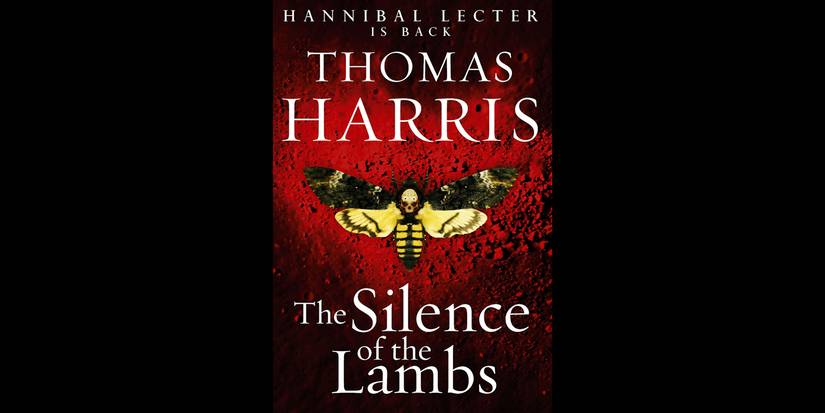
“When the Fox hears the Rabbit scream he comes a-runnin', but not to help.” The finest showcase of Thomas Harris' suspense mastery. The story follows Clarice Starling, a young FBI trainee assigned to interview Hannibal Lecter, a brilliant psychiatrist and imprisoned serial killer whose insights might help investigators capture another murderer known as Buffalo Bill. As with the stellar film adaptation, the main attraction here is the complicated psychological relationship between Clarice and Lecter.
Their conversations become elaborate contests of intelligence and manipulation, with Lecter demanding increasingly personal revelations in exchange for his assistance. He's a fantastic creation all around: urbane, witty, blisteringly smart, and deeply disturbed. Even without Anthony Hopkins' phenomenal performance, Lecter is one of crime fiction's greatest antagonists. Clarice is well-written, too: tough but also riven by real vulnerability and self-doubt, no cardboard cutout heroine.
'The Murder of Roger Ackroyd' (1926)

“The truth, however ugly in itself, is always curious and beautiful to seekers after it.” This Agatha Christie gem is a masterclass in misdirection. The story begins in the quiet English village of King's Abbot, where the wealthy Roger Ackroyd is murdered shortly after receiving information concerning a mysterious blackmail scheme. Fortunately, Hercule Poirot has recently retired to the village, although his plans to cultivate vegetable marrows are soon interrupted by the investigation.
From here, Christie arrays before us a colorful collection of suspects whose relationships, secrets, and potential motives become increasingly difficult to untangle. The brisk pacing keeps the reader occupied sorting through false alibis, allowing the true criminal to operate in broad daylight. Indeed, the third-act reveal was shocking on release and still hits pretty hard even now. It broke new ground for mystery writing, showing what was possible.
'The Daughter of Time' (1951)

“Truth is the daughter of time, not of authority.” Inspector Alan Grant becomes fascinated by the historical reputation of King Richard III while recovering from an injury in hospital. He begins questioning whether Richard really ordered the murder of his young nephews, the Princes in the Tower, as traditional accounts suggest. Stuck in bed, Grant enlists the assistance of friends and a young American researcher, piecing together evidence and reconsidering assumptions.
The Daughter of Time bucked a lot of genre conventions (especially for the early '50s) by focusing on a crime that took place centuries before the protagonist was even born. Author Josephine Tey turns this scholarly investigation into an unexpectedly gripping detective story, with competing historical interpretations serving much the same function as conflicting witness statements in a conventional murder mystery. It's a challenging gambit that she pulls off with style.
'The Big Sleep' (1939)

“Dead men are heavier than broken hearts.” The Big Sleep is one of the cornerstones of noir, a fantastic introduction to the character of Philip Marlowe. In it, he's hired by the wealthy General Sternwood to look into a blackmail scheme involving his daughter. But what initially appears to be a relatively straightforward assignment soon develops into a complicated investigation involving murder, pornography, gambling, and high society corruption.
While the plot is juicy and labyrinthine, the star of the show is Marlowe himself. With him, writer Raymond Chandler perfected the archetype of the cynical, wisecracking, yet deeply moral private investigator. Unlike the gentleman sleuths of an earlier era, Marlowe is a rugged, beer-drinking, chess-playing loner who operates in the shadows, a modern-day knight errant trapped in a tarnished world. Crucially, he never succumbs to the darkness around him.
'London Falling' (2026)

“In the early hours of November 29, 2019..." This is a work of nonfiction, but it's more intense and readable than most crime fiction. London Falling reconstructs the mysterious death of Zac Brettler, a middle-class 19-year-old Londoner who plunged from the balcony of a luxury apartment overlooking the River Thames. At first, it's assumed to be suicide, but then a startling discovery is made: Zac had been hanging out with shady businessmen, lying to them by claiming to be the son of a Russian oligarch.
From here, author Patrick Radden Keefe (who also wrote Say Nothing) slowly uncovers a disturbing story involving fabricated identities, rampant materialism, dangerous criminals, and the darker side of London's elite. It's a marvel of investigative rigor and psychological insight, serving as a character study, a family tragedy, a broader portrait of a city too mesmerized by wealth and power.
'The Maltese Falcon' (1930)

“When you're slapped, you'll take it and like it.” Great as The Big Sleep is, it would not exist without ideas established by Dashiell Hammett. Arguably his finest work is The Maltese Falcon, which sees San Francisco investigator Sam Spade getting ensnared in a conspiracy surrounding a priceless statuette. As the bodies accumulate, Spade finds himself navigating a collection of criminals whose competing schemes make it almost impossible to determine whom he can trust.
In what was a bold movie for the time, Spade isn't a spotless hero. His methods frequently involve deception, intimidation, and morally questionable decisions. Nevertheless, he operates by a strict personal code that distinguishes him from the lowlifes around him. All these qualities make him one of the blueprints for the modern antihero, and the bleak, relatively realistic plot would exert a massive gravitational pull on all the hard-boiled fiction that followed.
'Strangers on a Train' (1950)
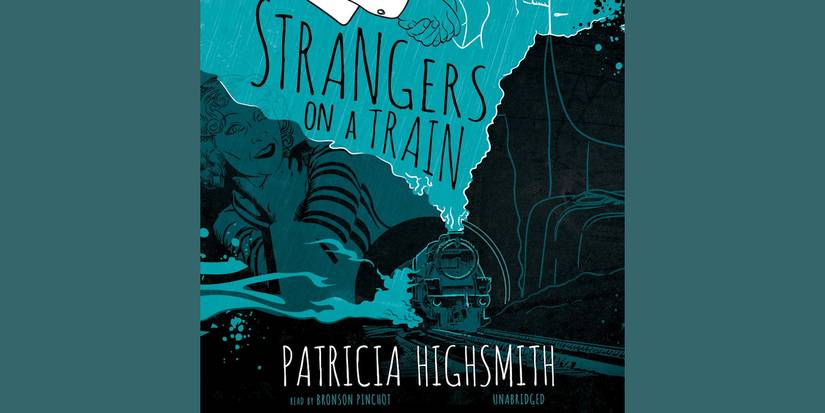
“Any kind of person can murder. Purely circumstances and not a thing to do with temperament!” The main character in this Patricia Highsmith classic is Guy Haines, an architect who crosses paths with a wealthy, unstable young man named Charles Bruno during a train journey. Bruno proposes an apparently foolproof arrangement: each man should murder someone the other wants eliminated, thereby ensuring that neither crime has an obvious motive connecting the killer to the victim.
Guy initially dismisses the suggestion, but Bruno becomes increasingly obsessed with their supposed agreement. Worse still, the latter's manipulation exposes aspects of Guy's personality that he would rather ignore. So begins a psychological nightmare that gradually consumes both men's lives. Through these two men, Highsmith explores the consequences of obsession and moral weakness, getting philosophically deep while always keeping the tension high.
'In Cold Blood' (1966)

“Imagination, of course, can open any door. Turn the key and let terror walk right in.” Practically all true-crime originates here. In this pioneering nonfiction novel, Truman Capote investigates and recounts the 1959 murders of the Clutter family in Holcomb, Kansas. He reconstructs the victims' lives in great detail, and then delves into the backgrounds of the two killers, Richard Hickock and Perry Smith. The result is a deeply unsettling but brilliantly executed meditation on human cruelty.
Capote's handling of character and psychology is especially impressive. For example, his treatment of Smith is particularly complex, exploring the man's traumatic childhood and mental difficulties without excusing his actions. Capote also captures the atmosphere of a small community whose sense of security is shattered by such a seemingly random, brutal act. It's all realized in controlled prose; Capote knows exactly when (and when not) to give us the frightening, gory details.
KioskNews shows a cleaned-up reading view extracted from the publisher’s page — the original always lives on their site, not ours.