Inside Santa's hometown: Discovering the Finnish traditions behind Gardens by the Bay's new Christmas show
There is one place in the world where Christmas never rolls around, because it is always Christmas. Here, the decorations never come off the tree, the gingerbread cookies are always freshly baked and there is an elf in a pointy hat everywhere you turn.
That place is Rovaniemi in Finnish Lapland, the official hometown of Santa Claus. Here, on the edge of the Arctic Circle, Santa maintains regular office hours daily at Santa Village, meeting visitors, spreading cheer and, presumably, finding time in between to get on with all the other administrative tasks he steadfastly refuses to outsource to AI on principle, like the reindeer roster, or making a list and checking it twice.
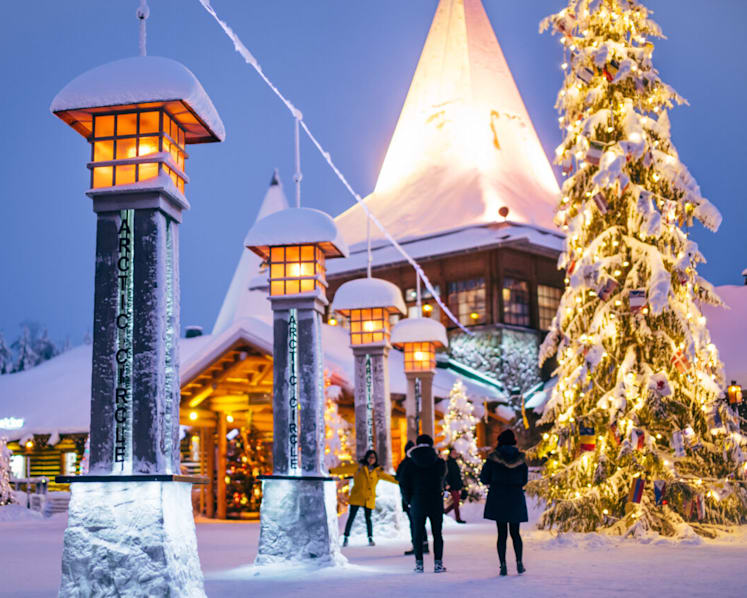
Far from being a giant souvenir gift shop, though, Rovaniemi is also a part of Finland where age-old traditions like rug-weaving and reindeer herding are carefully preserved, and nature can be enjoyed in all its Arctic splendour.
The Arctic Circle may be very far removed from equatorial Singapore – approximately 10,000km, to be exact – but this year, Gardens By The Bay is bringing Finland to Singapore for its Christmas Train Show, pervading the Flower Dome with the warm spirit of a frosty Lappish Christmas. It opens on Nov 20 and runs until Jan 3.
Year on year now, the folks at the Gardens have been transporting visitors to Christmassy scapes via horticultural displays and creative installations.
The event’s first edition in 2024 introduced the American Christmas train show tradition to Singapore while spotlighting Swedish railway heritage, with replicas of iconic landmarks such as Grand Central Terminal, the Empire State Building, the Statue of Liberty and the Brooklyn Bridge, alongside unique Swedish rail vehicles.
Last year’s show moved the focus to Danish Christmas landscapes with a 6.5m-long Lego Nyhavn Harbourfront, a 4.5m Lego Christmas tree, a Hans Christian Andersen carousel, and a Danish-style steam train display.
This year, “we're very happy to be working with Finland because it’s synonymous with Santa Claus, and Santa is very familiar to many of our visitors,” said Heng Juit Lian, Gardens by the Bay’s Senior Assistant Director (Planning, Design & Development), who served as the lead designer for this year’s Christmas Train Show. “Santa and trains appeal to all ages, and to the inner children in adults, maybe.”
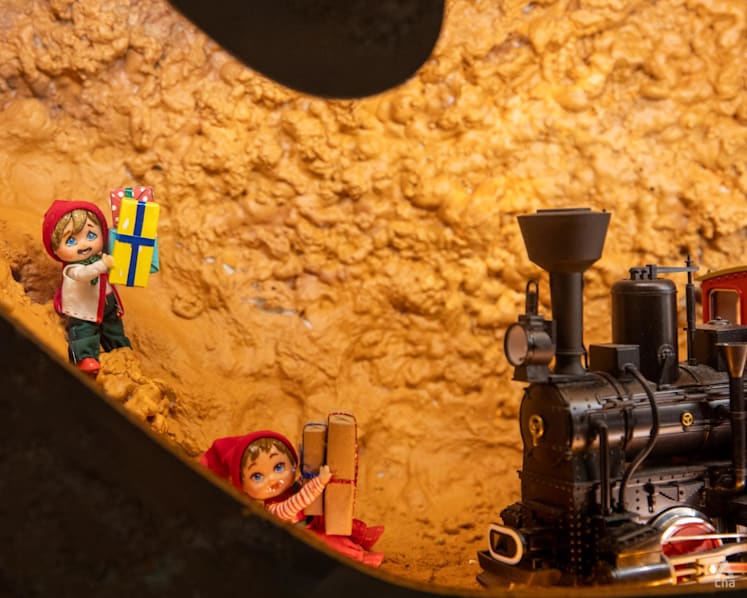
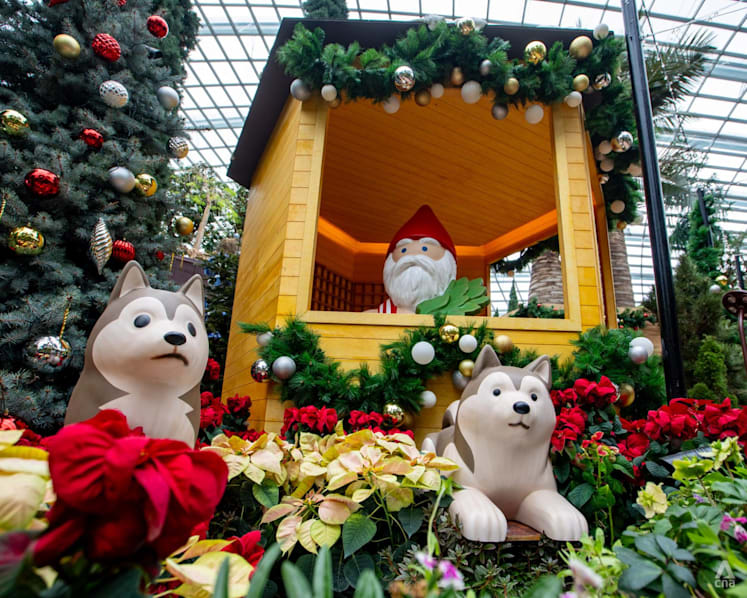
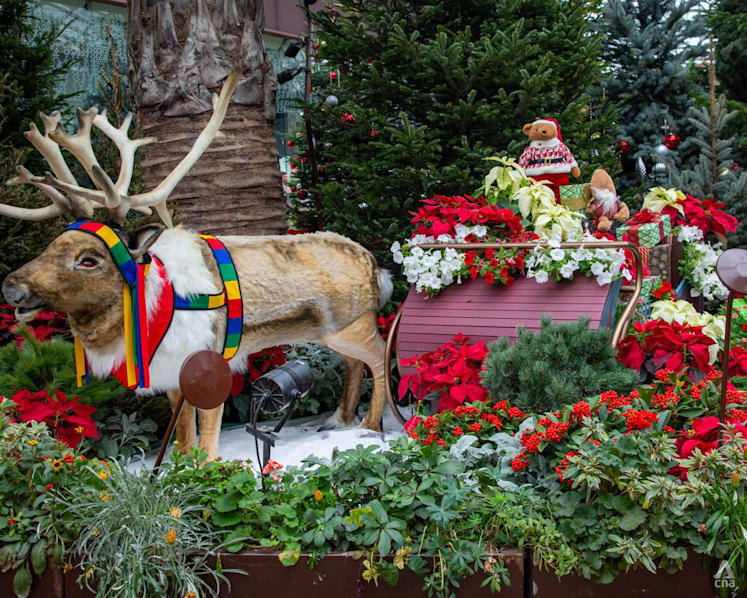
Through installations and miniature dioramas, visitors to the show can peek into Santa’s life, from his toy factory, office and reindeer sleigh to his relaxation time in a Finnish sauna. Meanwhile, a horticultural scape of Christmas trees, conifers and poinsettias adds to the festive atmosphere.
While “many of our visitors come to watch the trains”, an Arctic winter experience “has not been done in Gardens by the Bay before,” Heng said.
To see how a Finnish Christmas would be brought to life in Singapore, we journeyed along with her to Rovaniemi to load up on inspiration – and the magic of eternal Christmas.
WHERE CHRISTMAS IS A FULL-TIME JOB
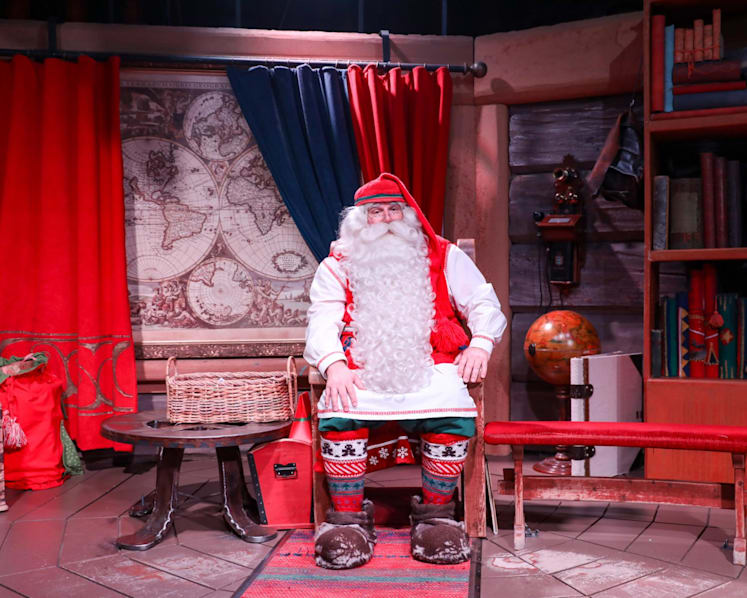
We started off at Santa Village with a meeting with the big man himself.
I have interviewed many celebrities in my career, but when I walked into his office and saw him twinkling kindly at me from behind his great white beard, I’ll admit, I was a little starstruck. Not because he had the red suit, the glasses and the shoes that looked like he was wearing Christmas puddings on his feet, but because he was just so nice.
Like a grandfatherly Nordic therapist with a penchant for monochromatic colourblocking, he instantly made me want to sit at his feet and tell him all my hopes and dreams.
He didn’t even mind when I started blabbering about chocolate chip cookies. In fact, he turned it into an opportunity to dispense some unexpected marriage advice. “Not only does Mrs Santa bake cookies for me, I bake them for her, too,” he said, explaining solemnly that a relationship should be based on mutual acts of love and service.
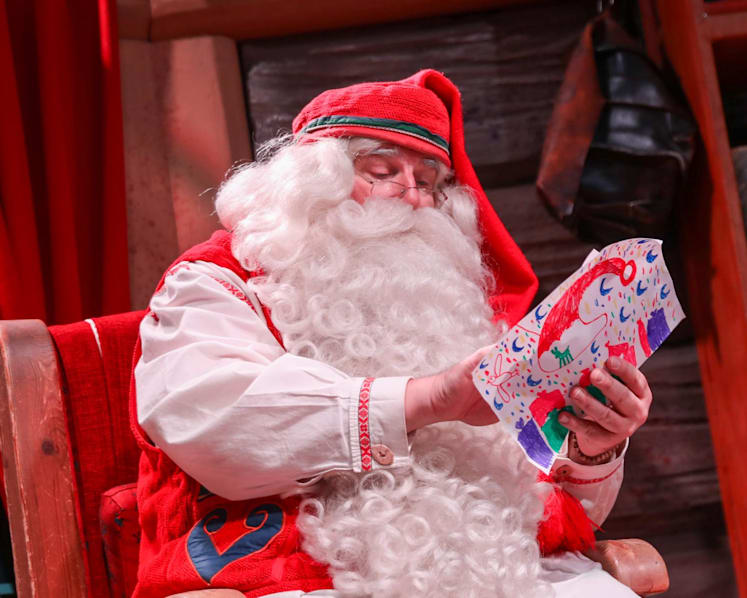
With Santa this committed, it’s no wonder that Rovaniemi has been attracting Christmas-loving visitors for nearly half a century.
“We’ve been officially the hometown of Santa Claus since 2010, which was when the European Union trademark was granted,” but, in reality, “we had already been working as Santa’s hometown for decades,” explained Visit Rovaniemi’s Managing Director Sanna Karkkainen.
“Santa’s office and Santa Claus Village, with Santa's Post Office, have been at the Arctic Circle since the 1980s.”
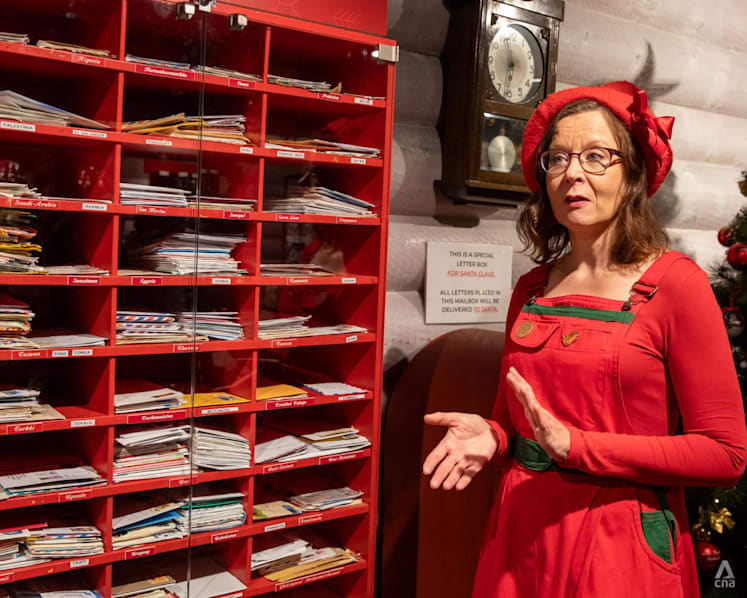
Any letter from around the world that is addressed to Santa lands up here at Santa Claus’ Main Post Office, and every article of mail sent from here is marked with a special Arctic Circle postmark. Santa receives more than a half million letters, cards and parcels yearly. And, when it comes to the proportion of nationalities who visit Rovaniemi, Singapore happens to be in the top 10, Karkkainen shared.
Here, “Christmas is every day. It's a mindset,” she said.
It’s not just about location or infrastructure. Everyone you meet here, whether it’s within Santa Village, where you can get a certificate for crossing the Arctic Circle and dine inside life-sized “gingerbread” houses; at subterranean theme park Santa Park (tagline: “Santa believes in you”), where you can attend “elf school”; or at Santa’s Secret Forest, where you can visit an elf workshop, is fully committed to the bit.
Of course there’s only one Santa – what do you mean? Of course you can meet Mrs Santa in her cosy living room. Of course the elves get paid in candy (they’re only in it for the sugar rush, not the annual leave or dental benefits). Of course Santa can be all over the world at once on Christmas Eve – here’s the time machine that helps him do it!
What’s it like living in a never-ending holiday? “I don’t need days off because I don’t work. This is my life,” Santa told me confidently. Guess it’s true what they say: Do what you love, and you’ll never work a day in your life.
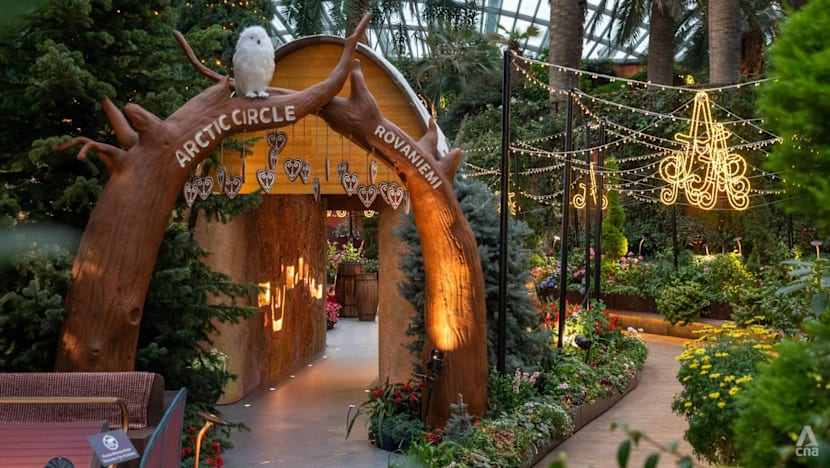
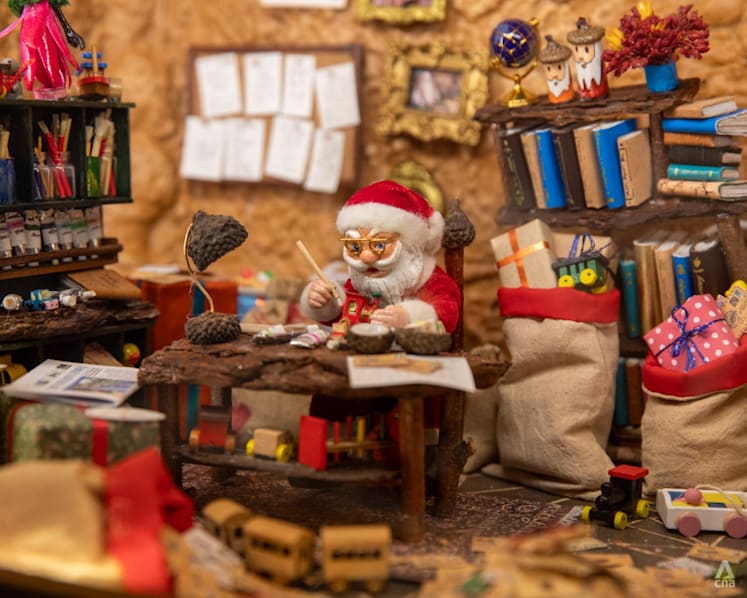
At the Flower Dome, you’ll see structures inspired by Santa Park’s distinctive Arctic Circle arch and cavern with northern lights projections on the ceiling. And, you’ll also get to see mini dioramas of Santa’s workshop, post office and toy factory – bringing the Christmas mindset into relief for the holidays.
BEFORE SANTA, THERE WERE REINDEER
Fun fact: Finland has its own pre-Christian Santa equivalent known as Joulupukki, the Christmas Goat – and even today, Finnish children call Santa Claus by that name. You can’t make these things up.
Other Lapland residents who existed long before Santa ever took up residence in the snowy north are the reindeer.
They are among Lapland's oldest native inhabitants, having roamed the northern landscapes for thousands of years. In Rovaniemi, you will find reindeer freely wandering along the roads, or frequently in people’s gardens eating their flowers. And, at the Flower Dome, you’ll find a life-sized one pulling a sleigh.
While we romped with the reindeer at Sieriporo, a family-run farm with more than 200 years of history, 22-year-old reindeer herder Niko Tervo explained to us that keeping a connection with the animals is his way of also connecting with the way of life of his ancestors, the indigenous Sami people of Lapland.
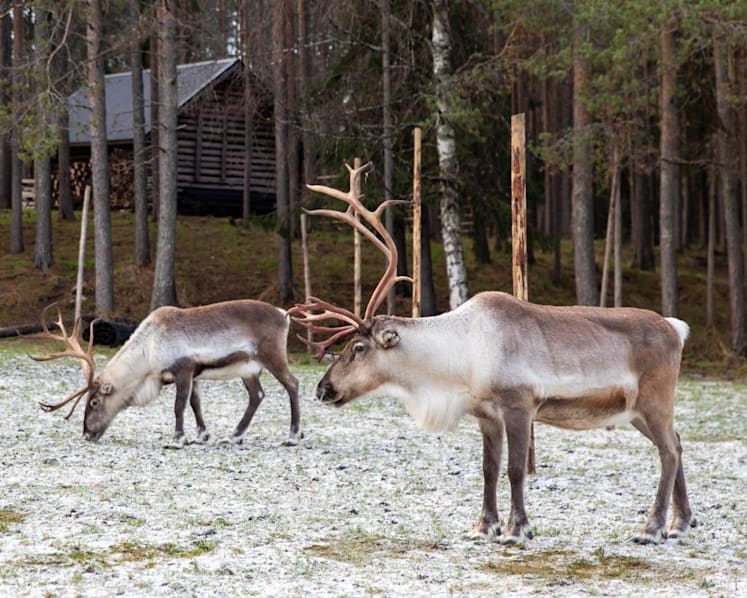
“Reindeer are one of the most important things in Sami culture. Without them, it would have been impossible to survive here in Lapland,” Tervo said. “You can't really grow anything here because the growing season is just a couple of months long.”
When an animal was hunted, not only the meat but every part except the stomach was used for food, while useful things were fashioned out of the skin and antlers. They were also essential for transportation.
These days, it is tourism that keeps reindeer sleighing, a very traditional mode of transportation, alive, he said. "Thanks to tourism, I still know how to train the reindeer. We train them exactly same way as they did 100 years ago. Without tourism, the whole reindeer sleighing culture would disappear.”
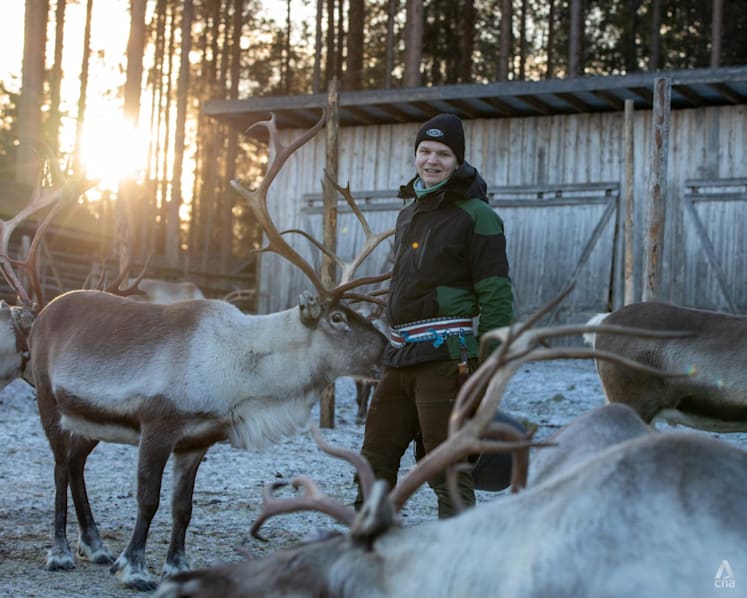
Can you tell if reindeer are happy pulling a sleigh full of tourists? “Yes, absolutely. You can tell if they enjoy it or not,” Tervo asserted. “Reindeer are like humans – if they don't want to work, they just put put the brakes on. We have to take really good care of them and not give them too much work, or they will get burnt out and stop working.”
Tervo himself owns just seven reindeer – acquiring one isn’t cheap, and their price goes up significantly if they have been trained – but caring for them is his way of fighting to preserve a fast-disappearing culture.
“It was such an important thing for the Lappish people’s survival that we can’t just forget our history of reindeer herding,” he said. “We have fewer and fewer reindeer herders each year. I want to be part of keeping the reindeer herding culture alive.”
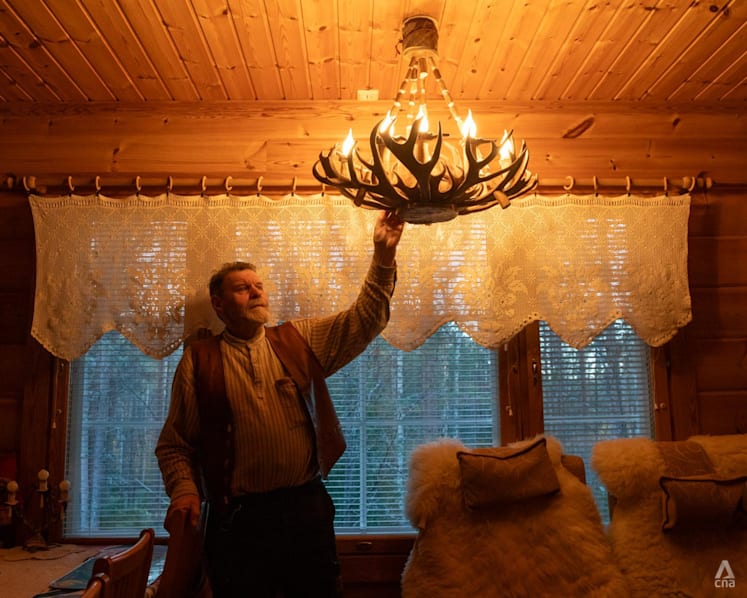
Meanwhile, artisans like married couple Irene and Ari Kangasniemi fashion art pieces and functional items out of reindeer antlers, bone and leather, sourcing all their natural materials sustainably.
You can see their handiwork at the Flower Dome: A custom chandelier made of reindeer antlers, which was carefully transported from Finland.
Fashioning one of these chandeliers takes one week with the help of a sanding machine that Ari custom-built himself from parts of a water pump and a snowmobile. From about 40kg of antlers, 20 are selected as beautiful and symmetrical enough to use for a lighting installation. The rest are put to other purposes.
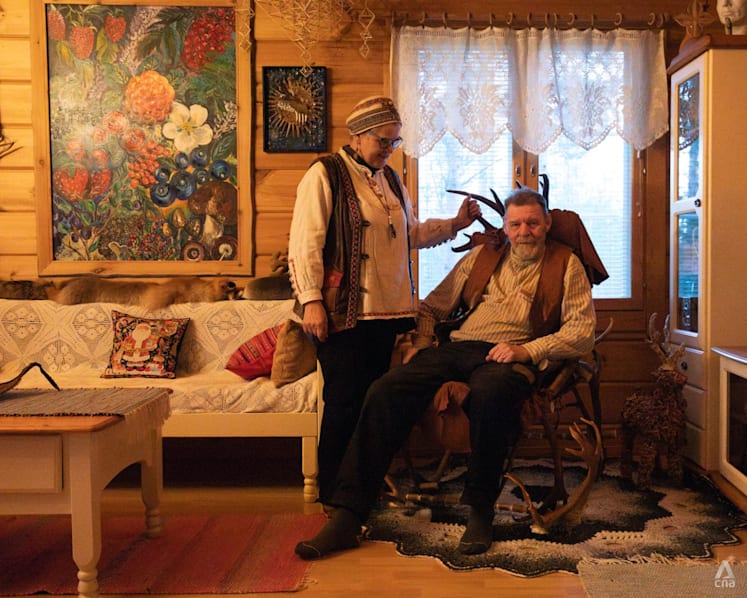
“In the arctic area, everything is useful,” Irene, 66, explained. Reindeer shed their antlers yearly in order to survive the arctic winter, and these can be turned into objects like knife handles, cups and bottle openers. “Reindeer have co-existed with the Lappish people for thousands of years, and, we don’t waste anything,” she said.
A similar one hangs in their home, a simple wooden cabin that Ari, 68, built with his own hands, furnished simply but warmly.
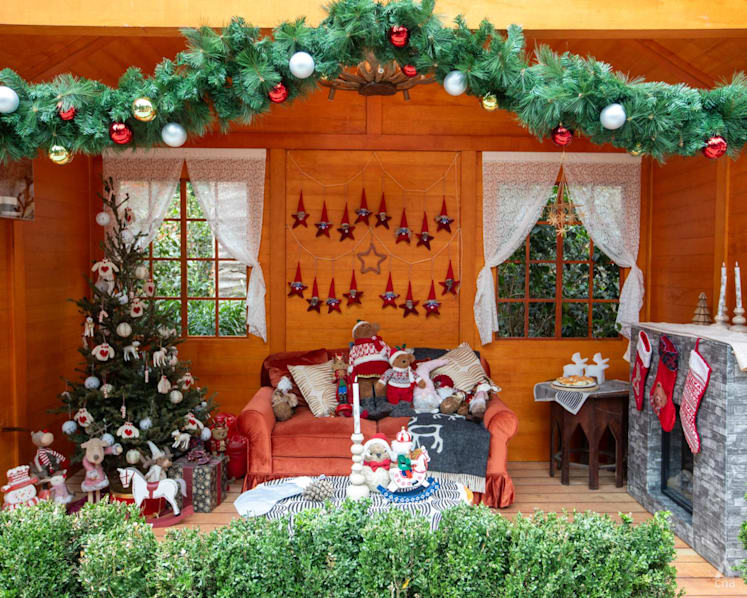
Their cosy living room has directly inspired a similar setup at the Christmas Train Show. “We want to create recreate that warmth and that feeling of being welcome in a Lappish home,” Heng said. “This little Lapland House is an opportunity for Singaporeans to imagine they are somewhere outside of Singapore, surrounded with beautiful Christmas trees, with a fireplace, in a very Finnish interior setting."
COLD NIGHTS, WARM SAUNAS AND THE FINNISH WAY OF LIFE
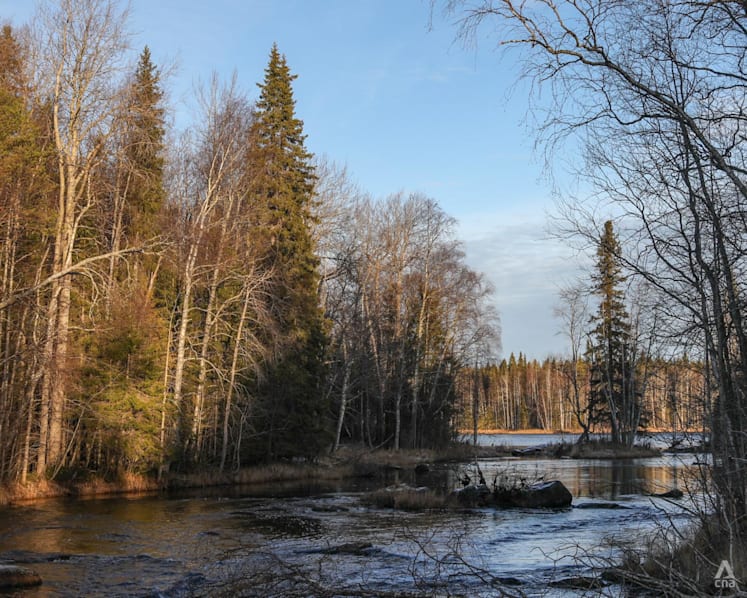
With its snug interiors, glasses of wild-foraged blueberry juice and legally-mandated coffee breaks, Finland, the country of Moomin, Nokia, Marimekko and Angry Birds, has been ranked the world's happiest country for the ninth consecutive year, according to the 2026 World Happiness Report. And access to nature is frequently cited as one of the major contributing factors.
One snowy morning walk along the Raudanjoki River in the Arctic Circle Hiking Area later, I could see why. Was it the rushing rapids? The fresh conifer forest? Or, the crisp, clean air?
Whatever it was, it’s so effective that in fact, it’s not uncommon for Finnish doctors to prescribe “a walk in the woods” for its curative effects, shared our guide.
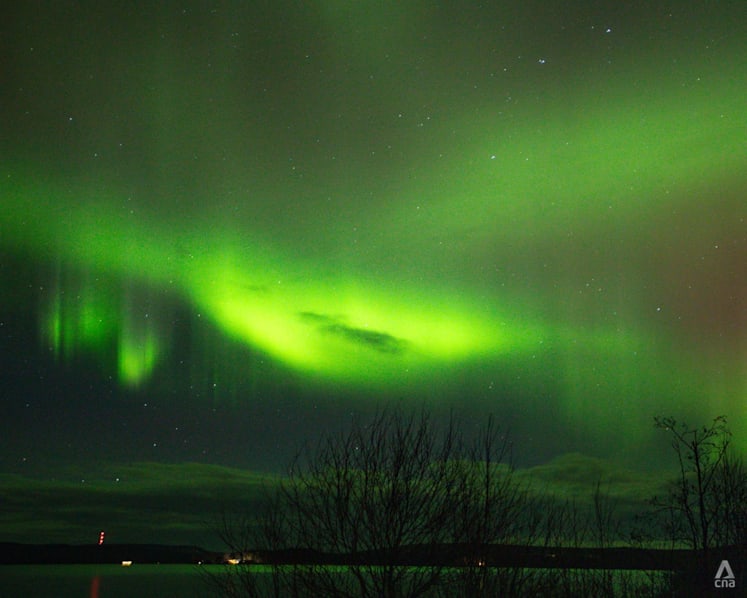
Of course, up here, nature is on another level altogether. Every single night in Rovaniemi, whether we were looking for them or not, we looked up to see the night sky suffused with the green, purple and sometimes red lights of the glowing, shifting aurora borealis. And, when we did drive out on an aurora hunting expedition with local adventure company Beyond Arctic, we got to enjoy the dancing lights around a crackling campfire.
Inside a cavern built for the Christmas Train Show, look up and you’ll see a tribute to the northern lights. This is a light projection, of course. But, what is real and breathing are the over-400 conifers brought in from Europe, including Norway spruce, mountain pine and Scots pine, decorated with crystalline icicles. Together with white birch tree trunks and a display of more than 2,500 poinsettias, the flower associated with Christmas, they turn the Flower Dome into a Nordic wonderland.
While the snow in here isn’t cold and the temperatures hover at a balmy 20-odd degrees, winter weather in Finland is most definitely sub-zero. So, it’s no wonder that the Finns’ national pastime is hanging out in the sauna.
The word "sauna" is Finland's most famous loanword and there are about 3.3 million saunas in Finland for a population of over 5.5 million people, according to UNESCO, which inscribed Finnish sauna culture on its Representative List of the Intangible Cultural Heritage of Humanity in 2020. There is even such a thing as “sauna diplomacy” among politicians, where negotiations, business deals and international relations are conducted amid steam, sweat and semi-nudity.
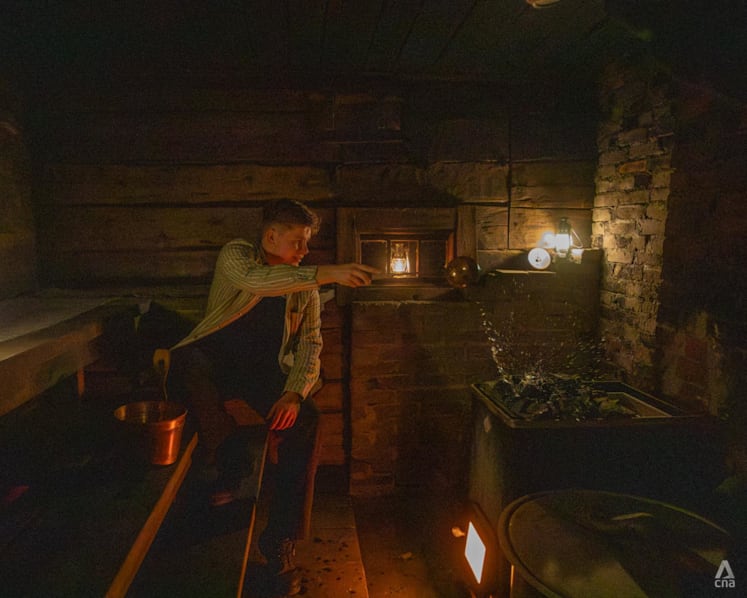
In Rovaniemi, we visited a sauna in a nearly 200-year-old log cabin at Raanupirtti, a cultural heritage destination. Sameli Saanio, whose grandmother was a famous artist and weaver of raanu or traditional striped rugs, is the fourth-generation owner of the property, where he works to keep his family’s legacy alive.
In its heyday in the 1960s, nearly 20,000 visitors a year came to Raanupirrti to admire and purchase raanu; people from as far away as Japan travelled to study and work there as summer employees; and important dignitaries were hosted here, Saanio shared. The sauna here has hosted more than its share of presidents and prime minsters from around the world.
“I would compare the sauna to something like a church for the Finns,” said Saanio, 24.
In the sauna, “you can just be yourself. You never take your phone.” And, “after a few hours, you will change into a nice guy”, he quipped. That, he said, is how former Finnish prime minister Urho Kekkonen used to “soften up” his international guests.
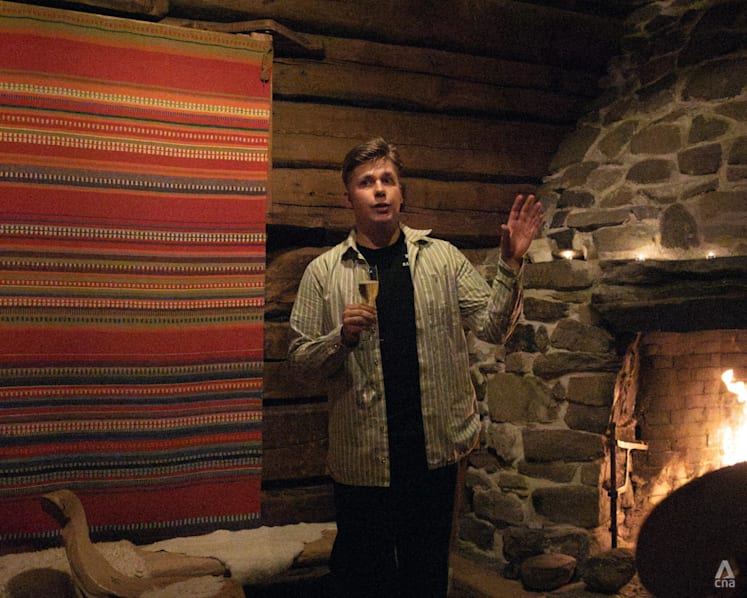
And, needless to say, “during the winter time, when it’s minus 35 degrees, it's quite nice to go inside and enjoy the steam and the heat of sauna.”
In addition to being a nearly-everyday indulgence, the sauna is also a key part of Christmas celebrations for the Finns.
“We start the day with Christmas rice porridge,” Saanio shared, and then, after chores like clearing snow, “we go to the sauna as a family, around four o’clock. We have something nice to drink, and maybe cheese or snacks, and we take our time. It’s an extremely important part of the day, because shifts the day from work and preparation to enjoyment, when you eat together with your family and maybe get some gifts, if you have been nice.”
ALL ABOARD FOR CHRISTMAS
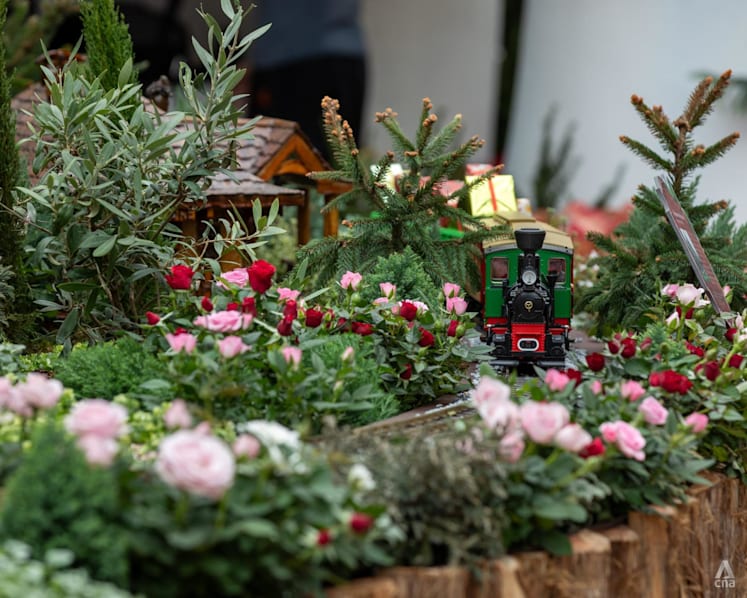
At the Christmas Train Show, you can follow the train tracks from Finland to the USA to Singapore, with a longer-than-ever overhead track.
There are more than 20 new models of railway stations and related structures from across the American West Coast, Midwest and East Coast, paying tribute to the origins of the Christmas train tradition in the United States.
There’s Hawaii’s former Lahaina railway station; Ohio’s Cincinnati Union Terminal, which inspired the Hall of Justice in the Super Friends animated series; and New Jersey’s former Central Railroad of New Jersey Terminal. The models use natural materials such as bark, twigs, seeds and pinecone scales.
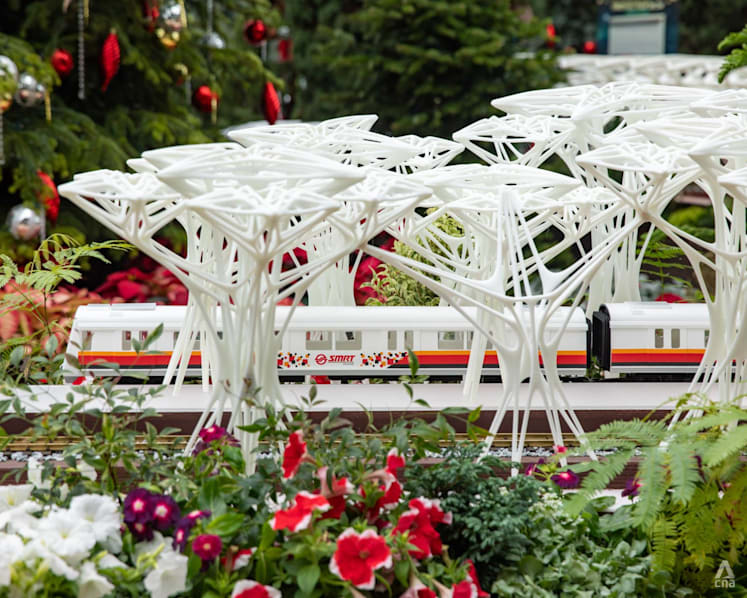
Meanwhile, this year’s expanded Singapore landscape features two G-scale model trains in SMRT livery running on separate tracks, alongside five models of three MRT stations reimagined by final-year NUS Architecture students.
The students were asked to reimagine Ang Mo Kio, Expo and Gardens by the Bay MRT stations as public spaces that could serve communities beyond their role as transport nodes, taking into consideration each location’s history, heritage and identity, alongside placemaking, environmental sustainability and practical operating requirements.
There is even more community involvement: Students from Temasek Polytechnic’s Integrated Facility Management course are gaining hands-on experience in model train maintenance and troubleshooting, special needs children have created Christmas ornaments for the display and local train enthusiasts have returned to share their knowledge.
From the snowy forests of Lapland to the tropical gardens of Singapore, the Christmas spirit, it seems, can travel wherever it’s welcomed with an open heart. As Santa told me in Rovaniemi: “Christmas is not about the snow or anything like that. It’s about what you think in your mind and what you feel in your heart. So, if you have happy thoughts, if you have Christmassy thoughts, if you love your neighbour, if you love your family — those things bring Christmas.”
The Gardens by the Bay Christmas Train Show runs from Nov 20 to Jan 3 at Flower Dome. Admission charge to Flower Dome applies. Visit www.gardensbythebay.com.sg/christmastrainshow for more details.
The show is presented in collaboration with the Embassies of Finland and the United States of America, and supported by SMRT, Bloomberg and Turkish Airlines.
CNA Lifestyle was in Finland at the invitation of Gardens by the Bay.
KioskNews shows a cleaned-up reading view extracted from the publisher’s page — the original always lives on their site, not ours.