10 Crime Books That Are Perfectly Written

Luc Haasbroek is a writer and videographer from Durban, South Africa. He has been writing professionally about pop culture for eight years. Luc's areas of interest are broad: he's just as passionate about psychology and history as he is about movies and TV. He's especially drawn to the places where these topics overlap.
Luc is also an avid producer of video essays and looks forward to expanding his writing career. When not writing, he can be found hiking, playing Dungeons & Dragons, hanging out with his cats, and doing deep dives on whatever topic happens to have captured his interest that week.
Sign in to your Collider account
Crime novels aren't known for having quality prose. Rather than serving up well-crafted sentences, they typically lean into juicy plots and grizzled, world-weary protagonists, along with a hearty helping of murder, betrayal, and sexual tension. There's nothing wrong with that; sometimes you just want a fun story to get lost in.
That said, there are a select few crime novels boasting genuinely strong writing that is just as compelling as the story itself. In the titles below, the word choices, sentence construction, and narrative flow are deliberate and impactful, adding to the book's mood or simply reeling us deeper into its world.
'Red Dragon' (1981)

"The reason you're here, Dr. Lecter, is that you know you're going to get caught." Though not as famous as its sequel, The Silence of the Lambs, Thomas Harris' Red Dragon is still a banger, certainly one of the best thrillers of the 1980s. In it, former FBI profiler Will Graham is drawn out of retirement to hunt a serial killer known as the Tooth Fairy. To understand the murderer, Graham reluctantly seeks advice from imprisoned cannibalistic killer Hannibal Lecter, leading to an unpredictable, unsettling relationship.
Obviously, Lecter is one of the finest villains in all of fiction, and his presence, limited as it is, greatly elevates the proceedings. However, Harris' writing also does a lot of heavy lifting, helping us get inside the characters' heads and just generally maintaining a tense, unnerving tone. Here, his prose is lean and focused, with virtually no wasted phrases, and the dialogue is especially strong.
'Thus Was Adonis Murdered' (1981)

"... clearing aside the tangled thorns of Error with the keen secateurs of Intellect..." In this witty gem, the notoriously impractical young lawyer Julia Larwood joins an Art Lovers’ excursion to Venice, only for the holiday to end in murder, with Julia herself as the prime suspect. She and her friends frantically set out to uncover the truth and clear her name... before the real killer can strike again.
Interestingly, the story is told from the perspective of side character Hilary, an academic, and much of the book is epistolary. The structure is inventive, and the writing style is enjoyably ornate, defined by long, flowing sentences and grand descriptions. It's also frequently funny, full of jokes, absurd situations, clever subversions, sarcasm, and wordplay. The result is a mystery that feels intellectually satisfying without sacrificing fun or momentum.
'Small Mercies' (2023)

"People carry old wounds longer than they carry old grudges." Penned by Shutter Island and Mystic River author Dennis Lehane, Small Mercies takes place in Boston during the turbulent desegregation crisis of the 1970s and centers on Mary Pat Fennessy, a tough working-class mother whose daughter disappears under suspicious circumstances. As Mary Pat searches for answers, she uncovers uncomfortable truths about her community, its prejudices, and the forces that control it.
While Lehane has written plenty of great books and scripts, Small Mercies may represent the peak of his craftsmanship. The book functions simultaneously as a mystery, a character study, and a portrait of a city in conflict, drawing on extensive research and the author's Boston roots. Each element strengthens the others, and the cumulative effect is a lot more emotional and moving than you typically find in this genre.
'Say Nothing' (2018)

"Everyone involved had their own version of the truth." This is a work of nonfiction, but it's as gripping as any hard-boiled thriller. In Say Nothing, author Patrick Radden Keefe examines one of the most infamous unsolved crimes of the Northern Ireland Troubles: the disappearance of Jean McConville, a widowed mother abducted from her home in 1972. From this starting point, the book expands into a broader exploration of political violence, memory, justice, and the human cost of conflict, built on extensive interviews and Keefe's stubborn pursuit of the facts.
The whole thing is remarkably tense, while also painting all of the people it describes in shades of gray. Refreshingly, Keefe refuses to reduce individuals to heroes or villains; instead, what we have is people shaped by impossible circumstances and difficult choices, not following a set plot but merely trying to go on. Thanks to his extraordinary skills, Say Nothing delivers both a suspenseful mystery and a masterful reconstruction of almost seven decades of history.
'The Murder of Roger Ackroyd' (1926)

"The truth, however ugly in itself, is always curious and beautiful to seekers after it." One of Agatha Christie's classics. When wealthy businessman Roger Ackroyd is murdered shortly after receiving a shocking piece of information, detective Hercule Poirot (perhaps second only to Holmes in fame) is drawn into an investigation filled with secrets, lies, and hidden motives. The suspects rapidly multiply, and the case becomes increasingly difficult to untangle.
The Murder of Roger Ackroyd is rightly famous for its legendary twist, but the plotting and narrative techniques are immaculate, too; they need to be to pull the twist off. Particularly impressive is the subversive way Christie uses point of view. Every clue serves a purpose and every piece of misdirection is carefully calibrated. Thanks to this well-planned writing, readers get all the information necessary to solve the mystery, yet few succeed on their first attempt.
'The Name of the Rose' (1980)

"Books are not made to be believed, but to be subjected to inquiry." Set in a remote Italian monastery in 1327, The Name of the Rose follows Franciscan friar William of Baskerville and his novice Adso as they investigate a series of deaths. Although the plot mechanics borrow extensively from the murder mystery tradition, author Umberto Eco ultimately turns it into an exploration of religion, knowledge, politics, and the power of ideas... as well as the dangers posed by those who seek to suppress them.
The book is rich, thoughtful, and dense with allusions. For instance, William being from Baskerville is a wink to Sherlock Holmes, while the blind librarian character named Jorge de Burgos is a reference to the writer Jorge Luis Borges, one of Eco's inspirations. The confinements of the monastery are both a blessing and a curse, and Eco brings them to life in stunning detail. The movie adaptation with Sean Connery and Christian Slater is great, too, and well worth checking out.
'The Talented Mr. Ripley' (1955)
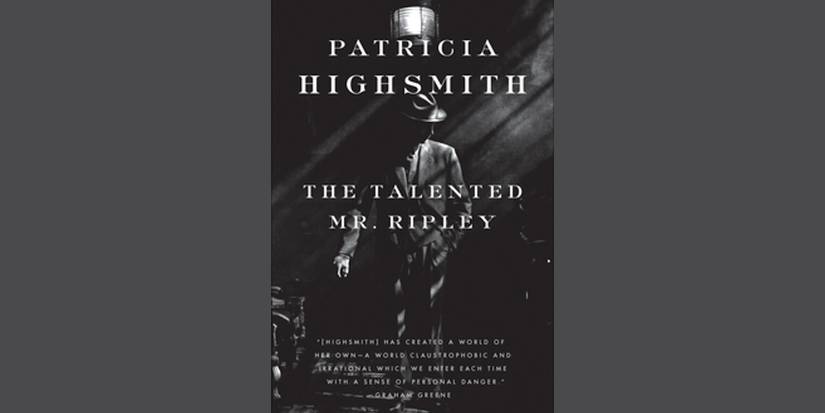
"I always thought it would be better to be a fake somebody than a real nobody." One of the most influential books of the 20th century, The Talented Mr. Ripley follows the titular con artist as he struggles to find his place in the world. When he is hired to travel to Italy and persuade wealthy playboy Dickie Greenleaf to return home, Tom Ripley becomes increasingly obsessed with the man's lifestyle and freedom, ultimately leading him down a dark, deadly path.
What takes the novel from simply good to great is the psychological precision of Patricia Highsmith's writing. Rather than focusing on a detective pursuing a criminal, the novel places readers inside the criminal's mind. Ripley is treated with enough complexity that we find ourselves occasionally sympathizing with him even as we are incredibly disturbed by him. Indeed, Ripley is a fascinating antihero: intelligent, insecure, manipulative, and strangely vulnerable.
'London Falling' (2026)

"It is easy to charm a person who talks too much: all you have to do is listen." Patrick Radden Keefe strikes again. While not as ambitious in its historical sweep as Say Nothing, London Falling is doubly addictive as a mystery. At the start of the book, we know only a few things: 19-year-old Zac Brettler has been found in the River Thames, security camera footage shows him jumping from an apartment window to the waters below, and local businessmen come forward saying that they knew Zac, but that he had told them he was the son of a Russian oligarch.
From here, Keefe digs incredibly deep, going even further than the police in his quest for truth. In the process, he paints a vivid, damning portrait of contemporary London, where wealth and crime are uncomfortably interlinked, and uncaring authorities frequently turn a blind eye to wrongdoing. It's sobering, occasionally harrowing, and always compelling.
'The Big Sleep' (1939)

"I was neat, clean, shaved and sober, and I didn't care who knew it." The Big Sleep is one of the archetypal hardboiled novels. Here, the iconic private detective Philip Marlowe is hired by the wealthy Sternwood family to deal with a blackmailer. But what appears to be a simple case quickly spirals into a labyrinth of murder, corruption, gambling, pornography, and deception, drawing Marlowe into one of the most complex investigations in crime fiction—so complex, in fact, that the author himself said he didn't know the solution to one of the subplots.
While the plot is famously intricate, the novel's greatness lies less in its mystery than in its atmosphere, dialogue, and voice. Marlowe, especially, stands out from most detective protagonists with his wit, intelligence, and unyielding moral code. He operates in a corrupt world yet refuses to become fully corrupted himself, making him an easy protagonist to relate to.
'In Cold Blood' (1966)

"There was no possibility of taking a walk that day." Arguably the most influential work of crime writing ever, Truman Capote's In Cold Blood is a nonfiction novel about the brutal 1959 murder of the Clutter family in rural Kansas. The book traces both the crime itself and the lives of the murderers, constructing an unusually detailed portrait of what happened. Back in the mid-'60s, it was groundbreaking stuff, effectively creating modern true crime.
Indeed, few books have ever delivered so much painstaking, meticulous, deliberately crafted investigation alongside such compelling, near-irresistible storytelling. Capote never loses sight of the victims, yet he also examines the perpetrators and their circumstances with real psychological depth. On the technical side, the prose is elegant and controlled, and every scene contributes to a larger understanding of the tragedy. Not for nothing, In Cold Blood is still read and studied the world over.
KioskNews shows a cleaned-up reading view extracted from the publisher’s page — the original always lives on their site, not ours.