How Jenseng Huang, now facing Chinese spy probe, pushed NVIDIA into a succession crisis
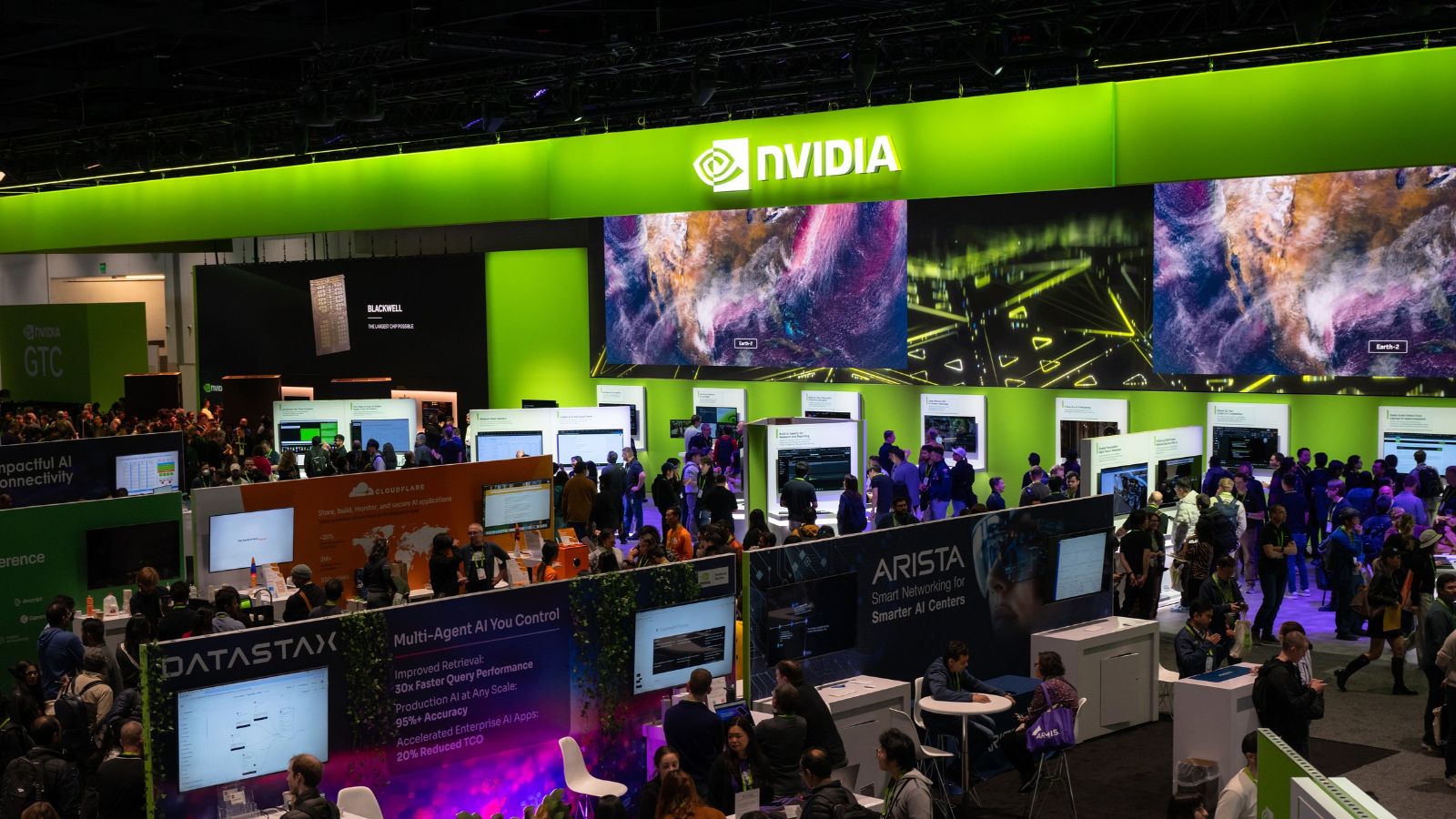
In 1993, Sequoia Capital and Sutter Hill Ventures led a $2 million funding round for Nvidia, a startup that made chips for video games. Mark A. Stevens, an investor at Sequoia, and Tench Coxe, an investor at Sutter Hill, then joined Nvidia’s board of directors. They watched the company struggle as it burned cash and its earliest products failed.
“It wasn’t clear if Nvidia was ever going to, sort of, have escape velocity,” Stevens recalled on a podcast in 2023. “We were very concerned about, are we going to lose this company or not?”
Three decades later, under the leadership of Jensen Huang, its co-founder and CEO, Nvidia is one of the most valuable companies in the world. Its chips are an essential component of the giant artificial intelligence projects that are driving the U.S. economy.
Now, Nvidia’s 10-member board of directors — a collection of early investors, longtime partners and other business executives — faces a daunting task: investigating their celebrity CEO. On Sunday, Huang admitted to an extramarital relationship with a businessperson whom U.S. intelligence agencies have determined was a spy for China.
(China has rejected the espionage claims. Alice Huang, the Chinese executive accused of spying for Beijing, has not responded to requests for comment.)
Nvidia’s board members are coming into this investigation with a track record of both loyalty and deference to Jensen Huang, exposing them to criticism that they were unprepared for him to become the Silicon Valley company’s biggest vulnerability.
“Substantial experience does not always translate to willingness to provide full oversight, especially if that long tenure has built strong connections to the CEO,” said Allison Henry, a clinical assistant professor of management and organizations at Northwestern University’s Kellogg School of Management.
Story continues below this ad
Nvidia does not appear to even have a succession plan for Huang, and it does not have an obvious internal candidate to replace him. Huang, 63, said in 2023 that he believed he could run the company for three or four more decades.
A class-action shareholder lawsuit against Nvidia and Huang was filed Monday in the U.S. District Court for the Northern District of California.
None of Nvidia’s board members responded to requests for comment Monday, and a company spokesperson declined to comment.
Setting up a succession plan for Huang was internally discussed over the years, former Nvidia executives said, but Huang resisted.
Story continues below this ad
“He didn’t like the idea,” said Rene Haas, CEO of chip design company Arm Holdings, who worked at Nvidia from 2006 to 2013. He discussed Huang’s management style in a 2024 interview. “He felt it would create competition among executives and be divisive.”
Many of Nvidia’s board members — with a combined 161 years of serving on the board — have a long history with Huang, who has shown that his big bets usually pay off for his company and the people backing him.
One of the first examples was Synopsys, a Silicon Valley company that supplied key software needed to design chips. Two former Synopsys leaders joined Nvidia’s board of directors in the 1990s: Harvey C. Jones, the software company’s onetime CEO, and A. Brooke Seawell, its former chief financial officer. The Nvidia shares of the two former Synopsys executives were worth a combined $1.86 billion as of June.
Huang is by far the largest individual shareholder in Nvidia, with a 3.56% stake, making him one of the wealthiest people in the world.
Story continues below this ad
Among other individual shareholders, Stevens and Coxe, his early investors and board members, are second and third on the list. When Stevens last sold shares in the company, in September, his stake was worth $6.22 billion. When Coxe last gave away shares, in November, his stake was worth $5.62 billion.
The other board members are:
— Dawn Hudson, the former chief marketing officer of the National Football League;
— Stephen C. Neal, the former CEO of law firm Cooley LLP;
— John O. Dabiri, an engineering professor;
— Aarti Shah, the former chief information officer at drugmaker Eli Lilly;
— Melissa B. Lora, the former president of Taco Bell;
Story continues below this ad
— Suzanne Nora Johnson, the former vice chair of Goldman Sachs.
Huang has viewed Nvidia’s board primarily as a governance requirement, rather than as an important part of the company’s strategy or execution, according to three former employees.
He has taken that same go-it-alone approach to building his executive team, emphasizing an anti-bureaucratic management philosophy designed to make big decisions quickly. He has more than 60 direct reports, putting him at the center of the company’s day-to-day operations, despite a hectic travel schedule that often takes him from California to Washington to Asia and back.
But Nvidia’s current predicament presents considerable challenges for a company so dependent on one man. Nvidia’s independent board members will choose an outside counsel to investigate. A company spokesperson said Huang would not be part of the selection process, but he will continue to lead Nvidia during the investigation.
Story continues below this ad
“The best way to weather this kind of storm in the world of public opinion is to have the CEO or whoever is caught out apologize publicly and cede control at least temporarily to another party,” said Jo-Ellen Pozner, associate professor of management at Santa Clara University’s Leavey School of Business.
Huang has also given his children substantial power and authority at Nvidia, according to five current and former employees.
His son, Spencer, is a director of product management and plays a leading role in Nvidia’s robotics efforts. His daughter, Madison, is a senior director of product marketing who also works on robotics, as well as communications and marketing. And his son-in-law, Nico Caprez, works on business development for the company. That has created the impression among some at the company that he is nurturing his children to eventually succeed him.
In an interview last month, when asked whether Madison was in line to succeed him, Huang said: “I don’t wish the job on her.”
Story continues below this ad
“If the CEO doesn’t do his job according to 12 or 15 board members, the CEO is let go,” Huang said in January. But, he added, “there will never be one like me, and the reason for that is because I was raised by the company.”
It wouldn’t be easy to pick a manager inside Nvidia that could temporarily run the company, said Jeff Christian, CEO of Christian & Timbers, an executive recruiting firm that frequently works with Silicon Valley companies.
Most current executives have responsibilities for specific products or technology areas, not broad responsibilities with thousands of people reporting to them. The question is, he said, is whether directors will at some point feel compelled to ask Huang to step aside.
“He’s such a big personality,” he said. “It’s almost like trying to fire the owner.”
KioskNews shows a cleaned-up reading view extracted from the publisher’s page — the original always lives on their site, not ours.