Ukraine talks begin, India pushes for safe Black Sea, quick end to war
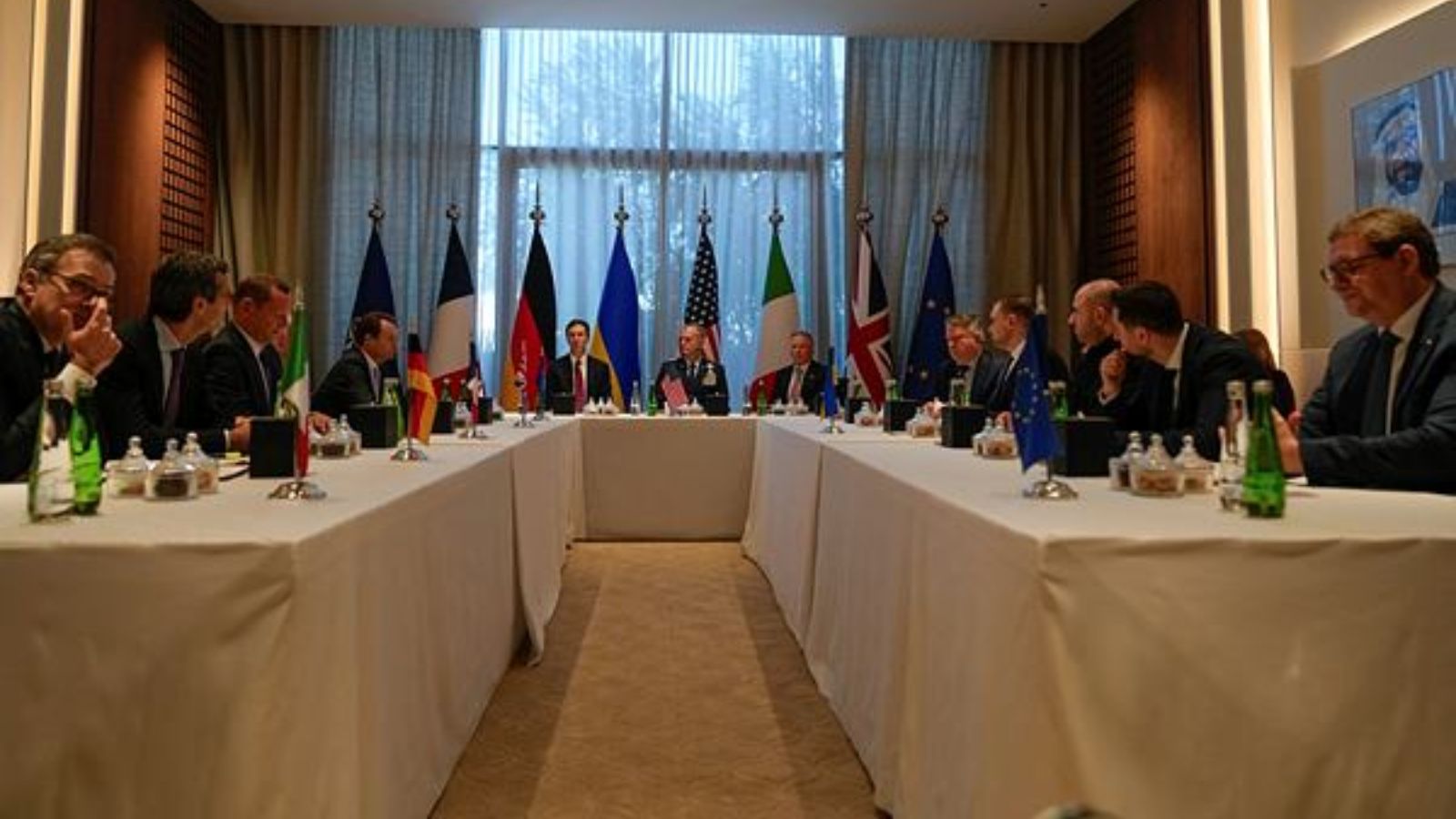
As US-brokered talks between Russia and Ukraine began in Abu Dhabi Tuesday to try and end the nearly five-year war, India said it was “in touch with both sides” and other “interested parties” to “contribute” towards the “return of peace” to the region.
Ahead of the talks, which were last held in February this year, Prime Minister Narendra Modi spoke to Ukrainian President Volodymyr Zelenskyy, who said India was ready to “mediate in establishing food corridors” in Ukraine. External Affairs Minister S Jaishankar, meanwhile, spoke to Russian Foreign Minister Sergey Lavrov.
India’s proposals revolve around easing the intense fighting since July around the critical Black Sea region – this will allow Ukraine’s agricultural produce to reach the world; Russia halting attacks on Ukraine’s energy infrastructure; and Ukraine refraining from attacking Russian positions along the line of contact.
Responding to questions at a media briefing, Randhir Jaiswal, spokesperson for the Ministry of External Affairs, said, “On the issue of the Ukraine conflict, India has consistently maintained that dialogue and diplomacy are the way forward. In recent months, the Prime Minister has expressed that ‘endless war must give way to end of war’. In keeping with this idea to bring peace, India has engaged both sides with certain ideas such as safety of shipping in the Black Sea, addressing immediate concerns of Russia and Ukraine on grain and energy exports, and non-attack possibilities.”
“Yesterday, the Prime Minister spoke with President Zelenskyy. They shared perspectives on the ongoing conflict, its humanitarian aspects and various efforts to restore peace. Prime Minister reiterated India’s firm commitment to contributing in every possible way towards a peaceful resolution,” he said.
Explained
Vital to trade and security
The larger Black Sea region is key to trade and security interests of both Ukraine and Russia. It is the grain export hub of Ukraine, a major agricultural exporter. Russia too exports significant volumes of grain through the Azov-Black Sea region, an area it considers vital for military power projection.
“Following this, the External Affairs Minister spoke with Foreign Minister Lavrov on the ongoing diplomatic initiatives focused on the conflict. On the issue of the food corridor, we have exchanged ideas. India remains in touch with both sides, as well as other interested parties, to contribute towards the return of peace to the region,” Jaiswal said.
Last month, Ukraine’s Foreign Minister Andrii Sybiha said India had put forward a “comprehensive” and “broad” proposal to end the war. Earlier, Russian President Vladimir Putin said Modi “constantly raises the question about putting an end to the conflict” and has “very good ideas”.
Story continues below this ad
Jaishankar too had said India was now a “little more involved beyond advocacy” and was having conversations with both Russia and Ukraine, trying to be “helpful” on the safety of shipping in the Black Sea, grain and energy exports and on “non-attack possibilities”.
Of particular interest in the proposal is the larger Black Sea region, a key grain export hub for the world. The fighting there could put at least 400 million people in Africa, West Asia and Asia at risk of food shortages, malnutrition and hunger.
Ukraine, in particular, is a major agricultural exporter. Russia has targeted Ukrainian port facilities and vessel operations around the Greater Odesa region on the Black Sea coast. Ukraine has three key deep-water ports there – Odesa, Chornomorsk and Pivdennyi – which handle around 90% of its agricultural exports.
Since mid-July, Ukraine has also stepped up attacks on grain vessels, maritime infrastructure and ports on the Sea of Azov and the vital Kerch Strait that connects it to the Black Sea.
Story continues below this ad
Russia exports significant volumes of grain through the Azov-Black Sea region – an estimated 42-44 million tonnes, or 77-81% of its total grain exports, is transported through this area.
This is why the trilateral talks in Abu Dhabi are being closely tracked. Last week, US President Donald Trump indicated that a broad deal was possible on ending the war in Ukraine and guaranteeing security in Europe.
Trump’s son-in-law Jared Kushner who, along with US envoy Steve Witkoff, is trying to broker a settlement, said he believed that there were “some good ideas how to bridge” the differences between the two sides. He told delegates that recent contacts with both sides had “really identified, narrowed the gaps”, and that Trump was committed to achieving peace.
“He really has asked us to put extra effort into trying to find a solution that hopefully ends the war but also leaves both sides in a much stronger position to start pursuing the full potential of what their two amazing countries have the ability to reach,” Kushner said at the start of the meeting.
Story continues below this ad
Ukraine’s chief delegate Rustem Umerov, in his opening remarks, said Kyiv was focused on achieving security guarantees and a lasting peace. Russian delegation chief Vladimir Medinsky said Moscow hoped for progress towards peace in the interest of the people of both countries.
India is also keen that the war in West Asia too comes to an end, and has called for free and safe navigation through the Strait of Hormuz.
Responding to questions on the Strait of Hormuz, Jaiswal said, “We continue to call for free and safe navigation through the Strait of Hormuz. We are in touch with all concerned parties to avoid attacks on civilian shipping and seafarers, including vessels under the Indian flag and Indian seafarers.”
Foreign Secretary Vikram Misri was in the UAE last week, and Delhi had been in touch with Iran, Israel and the US among others over the last several weeks.
KioskNews shows a cleaned-up reading view extracted from the publisher’s page — the original always lives on their site, not ours.