Iran, US trade threats over dirty bombs and first strikes as new war wave looms
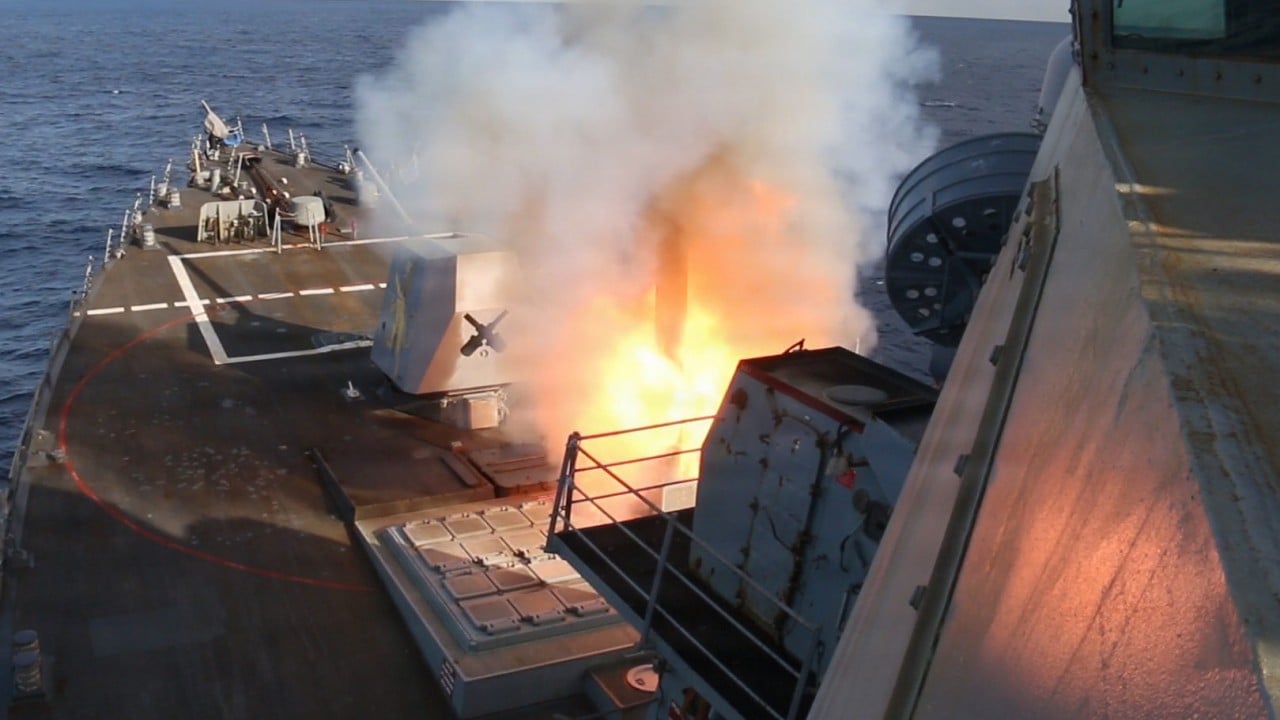
Iran has warned that it may attack the United States first if it decides that another widely feared escalation in the nine-month-old conflict cannot be avoided.
Mediation by regional states has produced no sign of a breakthrough, even as tit-for-tat strikes on Iranian and American air defence in the Gulf have become more frequent.
“The US may be seeking to buy time by abusing diplomacy, in order to prepare the ground for another attack,” Kazem Gharibabadi, Iran’s deputy foreign minister for legal and international affairs, told state television on Sunday.
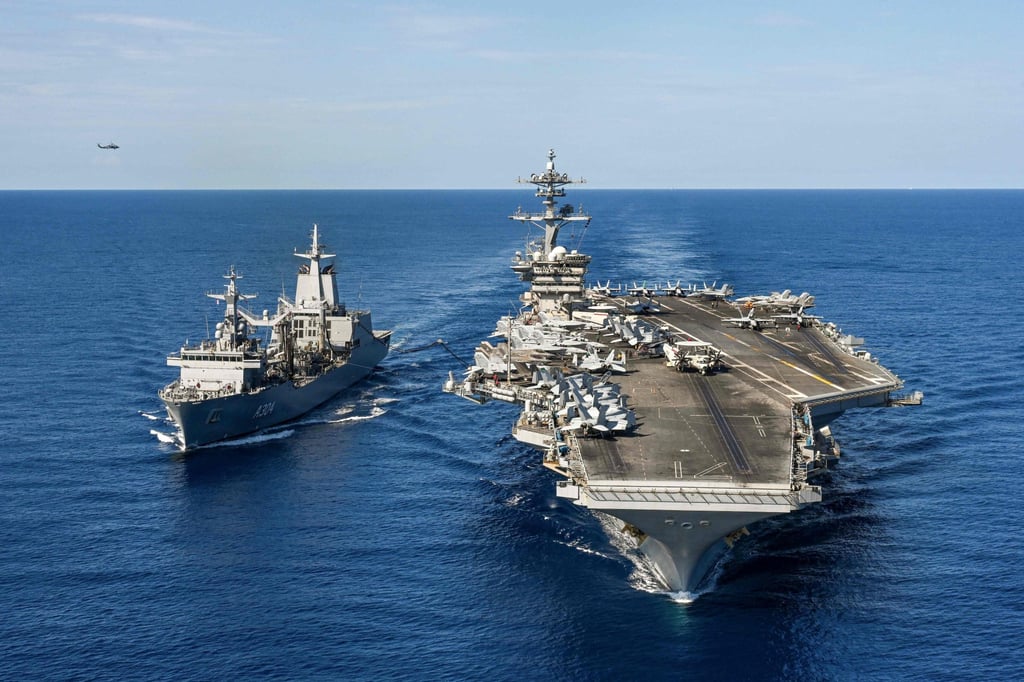
A third US aircraft carrier has arrived in the Arabian Sea, taking American force levels in the region to their highest of the war.
The military build-up comes ahead of US-China-Russia trilateral talks in Shenzhen, where the Iran war is expected to feature on the agenda, marking the contrast between diplomatic efforts and mounting threats of renewed hostilities.
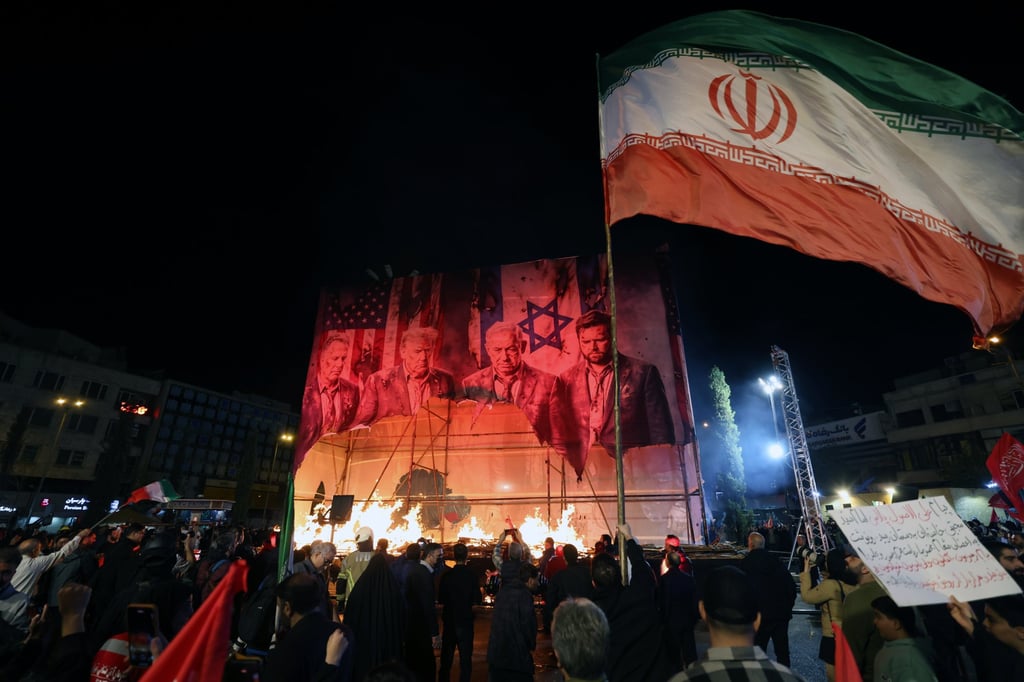
Iran has vowed to expand the scale and geographical scope of its retaliation if the US and Israel launch another wave of attacks.
Mohammad Bagher Ghalibaf, Iran’s parliamentary speaker and chief negotiator, warned on Sunday that it alone – and the “capabilities and determination” of its armed forces – would decide how far the fighting spreads, “not their [the Americans’] wishes or intentions”.
He told parliament that Tehran would not indefinitely accept a state of “neither war nor peace”, after the US in recent weeks intensified its economic blockade, including measures aimed at cutting off Iran’s trade with neighbouring countries.
Iran’s first strike schisms
According to Ali Alfoneh, a senior fellow at the Washington-based Arab Gulf States Institute and author of Political Succession in the Islamic Republic of Iran, the country’s leadership is divided over a pre-emptive strike – meaning an attack launched in anticipation of one expected from the enemy.
Foreign ministry officials have reportedly warned that such a strike would justify a harsher US response, while representatives of the Revolutionary Guards, Iran’s ideologically driven elite military force, argue that the element of surprise could succeed in inflicting greater costs on the US.
US President Donald Trump warned on Tuesday that Iran would “pay a price the likes of which no country has ever paid before” if it attempted a reported plot to detonate a “dirty bomb” – a weapon that combines conventional explosives with radioactive material – in Washington.
Alfoneh said Tehran, which has denied the dirty bomb plot, “cannot remain indifferent to the naval blockade and economic suffocation” being inflicted by the US and would eventually be forced to “raise the cost of continuing the blockade”.
Two other analysts who spoke to This Week in Asia judged it unlikely that Iran would unilaterally escalate a conflict that it did not start in the first place.
Barbara Slavin, a distinguished fellow at the Stimson Centre think tank in Washington, said Iran “will not do anything dramatic unless Trump and Israel mount a truly massive attack on Iranian infrastructure”. Otherwise she expected the recent tit-for-tat attacks to continue.
Farzan Sabet, a senior analyst at the Eurasia Group and former managing researcher at the Geneva Graduate Institute, agreed that Iran would only act first if it had “rock-solid evidence” of an imminent US or Israeli escalation.
Still, the analysts say Tehran has drawn up a list of targets meant to raise the political and economic costs of any fresh American assault. This list likely includes:
-
US bases in southeast Europe used to stage combat operations against Iran, which could be hit with medium-range ballistic missiles
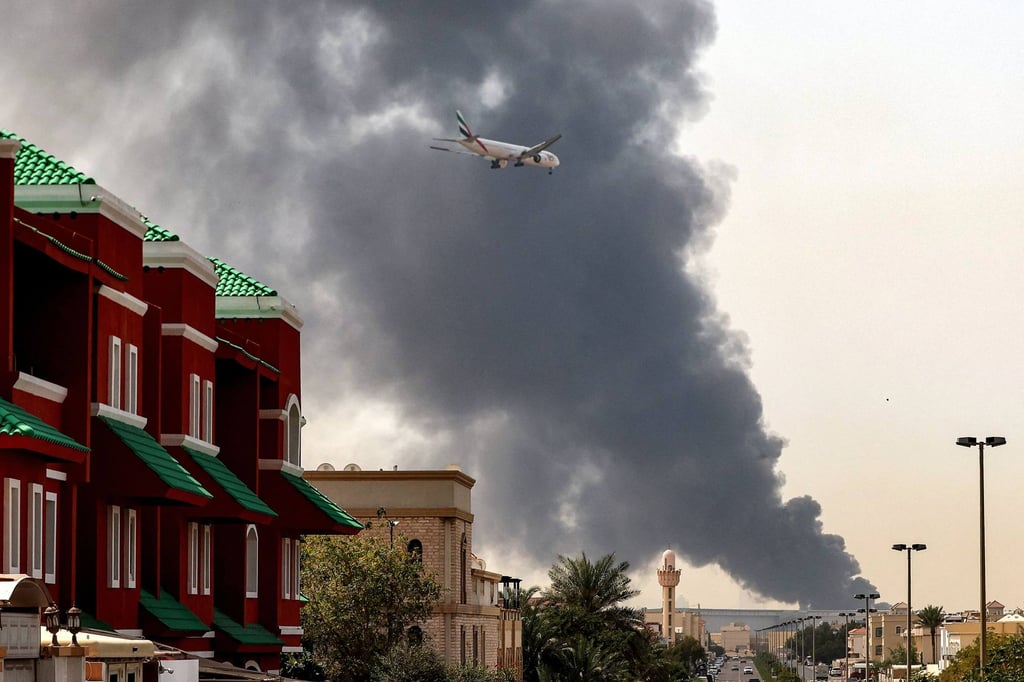
Alfoneh said Iran was most likely to hit energy and communications infrastructure, as well as desalination plants that supply drinking water, “with the cutting of internet cables as a new element”.
Slavin similarly forecast Iranian attacks on cables that would “cripple its neighbours’ economies” as well as missile strikes on US bases in Europe.
Media outlets controlled by the Revolutionary Guards have interpreted statements attributed to Supreme Leader Ayatollah Mojtaba Khamenei about expanding the war as a call to extend the range of Iran’s missiles.
That could put America’s European allies at greater risk, Alfoneh said, noting that a British airbase in Cyprus was hit in an Iranian-linked drone strike earlier in the war.
Washington also split
Trump has vacillated in recent weeks between saying US combat operations against Iran were almost over and threatening to destroy its economic infrastructure within three days.
US Vice-President J.D. Vance and America’s Gulf allies have been lobbying Trump against escalation. Republican neoconservatives, who support assertive US military action abroad, and Israeli Prime Minister Benjamin Netanyahu are meanwhile urging him to “finish the job”.
Vance told Fox News on Monday that the war would end relatively soon, “despite the fact that a lot of neoconservatives and a lot of other people want us to stay there forever”.
We are not going to allow this to become a 10- or 15-year commitment
“We are not going to allow this to become a 10- or 15-year commitment, or frankly, even a two-year commitment,” he said.
Democratic Senator Chris Murphy, speaking at the Middle East Institute in Washington on October 28, called the Trump administration’s war plans “insane”, after a military briefing for select members of Congress.
It “will lead, in my view, to a prolongment [sic] and an escalation of this war that will be devastating for our security interests”, he said.
‘Iraq war-style propaganda’
Two recent US media reports have drawn comparisons in Tehran with the false claims about weapons of mass destruction that preceded the 2003 invasion of Iraq by American forces.
CNN reported on Monday that new US intelligence “indicates that Iran is developing plans to target senior Trump administration officials by detonating a so-called dirty bomb or a chemical weapon in Washington”.
The New York Times, also on Monday, suggested that Iran’s network of more than 533 dams and water-transfer projects might have been built, at least in part, to give its underground military bases and fortified missile silos their own water and power.
Iranian Foreign Minister Abbas Araghchi called both reports “RUBBISH” in a social media post, saying: “Spare us the Iraq War-style propaganda, especially with Israeli fingerprints all over it. Nobody is buying it.”
Asked in the Philippines on Tuesday whether the dirty-bomb report was true, Trump said: “I hope it’s not, but we take it very seriously because they [the Iranians] happen to be crazy.”
Alfoneh called a dirty-bomb attack “fantastical”. “Neither the regime in Tehran nor the individuals in charge of it are suicidal,” he said, adding that Iran’s aim was to survive and deter future attacks, “not to provoke a US nuclear bombardment of Tehran”.
Analysts who spoke to This Week in Asia agreed that a brief new US and Israeli offensive would not break Iran’s resistance.
Sabet said he did not think a short campaign “would be sufficient such that it would shift the Iranian political calculus and force it into a capitulation”. Once attacked, he said, Tehran would want to “drag out the conflict … and strike back” to raise the cost of aggression and discourage future rounds of strikes.
Iran’s so-called missile cities, a term for its underground silos, were buried deep beneath the mountains, Slavin said. Its command structure was also decentralised, so launches would continue even if contact with its top leaders were lost, she said.
Slavin questioned the underlying logic of escalation “when there is no likelihood that it will bring a better result”.
“The only solution is a diplomatic one, but Trump still appears unwilling to make the kind of concessions necessary to end the war he so foolishly started,” she added.
KioskNews shows a cleaned-up reading view extracted from the publisher’s page — the original always lives on their site, not ours.