Country diary: An ancient bridge, laid low by one storm after another | Sara Hudston
Fog cloaked the combe as we walked down to the River Barle, and for the first time in months I wished I were wearing gloves. A red kite wheeled overhead, the dull copper colour of its underparts matching the autumn leaves still clinging to the oaks. Red kites are still fairly uncommon on Exmoor, though their numbers have increased recently as the species pushes west. Several pheasants whirred past, calling loudly in alarm: they are also more numerous now, due to the spread of game-shooting estates.
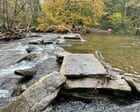
We were heading for Tarr Steps, the longest clapper bridge in Britain, an ancient footbridge nearly 55 metres long, with 17 arches braced across the Barle. It is constructed of pillars of piled rock set about two metres apart, spanned by huge, flat gritstones weighing up to two tonnes each. The whole edifice is held together by bulk and weight, without the aid of mortar, cement or ironwork. Its exact age is uncertain, but the existing structure is considered to be a medieval improvement of a simpler bronze age crossing.
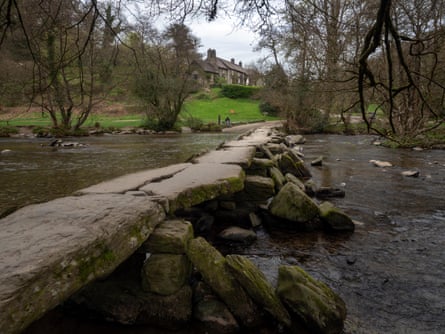
It has always been prone to washing away in extreme weather. The most dramatic occasion was during the ice floods of January 1940, when the river froze solid before melting rapidly, releasing ice floes into a torrent that battered out the central section.
But damage has become more frequent this century, with floodwater dismantling it five times in the last nine years, most recently during storms Austen and Boelo. More than eight centimetres of rain fell overnight, and the river rose by nearly two metres. Visiting a week later when the water had subsided, the damage was evident. The middle part had gone completely, with massive rock slabs jumbled across the riverbed, their rough-hewn ends poking up like the heads of crude dinosaur models. Heaps of fallen trees and timber, swept downstream in the rush, were caught against the bank; torn branches smashed and wedged in the remaining piers.
Bridge and ford are closed for the immediate future. With winter coming on, it will be some time before the blocks – all numbered – can be hauled back into place.
KioskNews shows a cleaned-up reading view extracted from the publisher’s page — the original always lives on their site, not ours.