‘BYD effect’: electric vehicle boom becomes unexpected tool to combat inflation
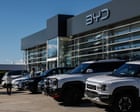
Electric vehicle sales are surging in Australia, powering a transition that goes beyond fuel savings to become an unexpected tool to combat high inflation.
The abrupt shift away from petrol and diesel vehicles, accelerated by elevated fuel costs caused by the Iran conflict, is being supported by an influx of cheaper EVs that is reducing associated costs such as insurance.
Chris Dickman, senior portfolio manager at fund manager Australian Ethical, describes the trend as the “BYD effect”, referring to the low-priced Chinese vehicles which he says are an unexpected disinflationary force.
Dickman says that by helping drivers use less petrol, and bringing down the cost of new and used cars, EV uptake is blunting the impact of high oil prices across the economy.
“There are more and more consumers who are trying to unplug themselves from the oil shock,” Dickman says.
He says the rise of EVs is an example of how newer, cleaner technology eventually outcompetes incumbents on pure economics as they gain popularity and market size.
Virtually all of the EV cost impediments of a few years ago – including high sticker prices, inadequate charging networks, elevated insurance premiums and expensive servicing, battery and parts replacements – are reversing as Australia’s market matures.
NRMA’s car ownership report found that there are now at least five EVs priced around or below the $30,000 mark, all of which are Chinese brands.
Fuelling the shift
While EVs and hybrids have been gaining traction for years, the US-Israel war on Iran and subsequent oil price spike accelerated demand in March, and it has continued largely unabated.
Battery EV sales now account for almost 25% of new vehicle sales, according to Federal Chamber of Automotive Industries data. About half of all new sales are either EVs or hybrids, and more EVs were sold last month than petrol-only cars.
The EV-focused Chinese brands BYD, GWM, Chery, Geely and MG were all in the top 10 biggest selling automakers in Australia in September. Three years ago, only MG featured in that list.
Adam Triggs, co-founder at economics consulting group Mandala Partners, said the next step towards protecting Australia from oil shocks was to electrify diesel-dependent freight networks.
after newsletter promotion
“When we look at light commercial vehicles, those are the little trucks that sort of fly around the streets, they already have a total cost of ownership that is very competitive against their fossil fuel counterparts, and we would expect those to be the first to go electric,” he says.
Diesel prices have now surpassed $2.80 a litre at many petrol stations, while unleaded has pushed past $2.40/L in most state capital cities, according to Australian Institute of Petroleum data.
The high fuel prices are rattling the Australian economy, elevating costs across nearly all goods and services and overshadowing the deflationary effect of the EV transition.
Last month, the Reserve Bank lifted its key interest rate to 4.6%, its highest level since 2011, and warned of further hikes as the unending Iran conflict pushes prices “permanently higher”.
Triggs says there’s a role for the government to help offset the upfront costs of electrifying Australia’s freight networks.
“What’s happened over time is once you’ve got a critical mass, you end up seeing costs fall dramatically,” Triggs said.
“It’s the same for trucks. There are some practical things for the government to do over the next five to 10 years to start getting the freight fleet electrified, and then the market will take over from there.”
KioskNews shows a cleaned-up reading view extracted from the publisher’s page — the original always lives on their site, not ours.