US military expands Pacific cyber hub to counter risks to undersea cable networks
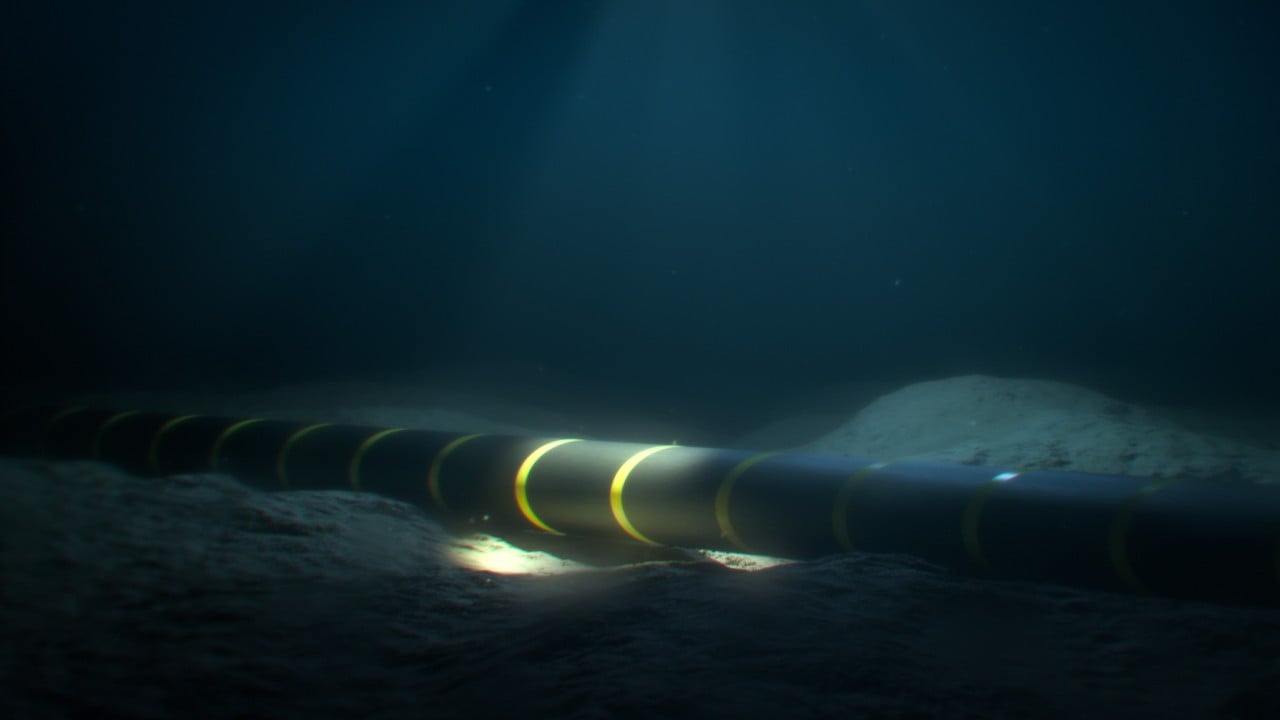
The US military has expanded its cybersecurity presence in Hawaii and set up a regional centre to better detect threats and disruptions to its Pacific communications networks.
The new initiatives come amid US accusations of Chinese cyber operations targeting critical infrastructure, including on Guam, and concerns about the security of undersea cables linking the Pacific to the US mainland.
Neither initiative has been explicitly linked to China.
Brigadier General Michael Smith, US Pacific Command’s director for command, control, communications, computers and cyber, said last week that personnel had been relocated from Maryland to Hawaii to provide “a level of additional cybersecurity defence here in this theatre” under an initiative known as Cyber Defence Forces Pacific.
The personnel, whose exact number was not disclosed, have been assigned to the Defence Information Systems Agency’s (DISA) Pacific command, which last month also established a regional centre for monitoring military communications networks.
The centre is designed to help identify problems ranging from damaged undersea cables and electromagnetic spectrum problems to service outages originating in the US that affect operations in the Pacific.
Most intercontinental internet traffic is routed through undersea cables and damage to these can disrupt communications or force data onto alternative routes.
The cables may also be targeted by hostile forces that try to tap into them to intercept information.
Colonel Michael Hlad, head of DISA’s Pacific field command, said an assessment last year had found US forces were “not necessarily postured right” to meet regional requirements, adding that the new centre would increase the number of personnel at command headquarters by about 20 per cent.
A recent study by the China Strategic Risks Institute for the US-China Economic and Security Review Commission said that most damage to undersea cables worldwide resulted from accidents or natural events, but warned that China was developing capabilities to disrupt this critical infrastructure.
The study, released in September, said connections between the US mainland, Hawaii and Guam were particularly susceptible to disruption because there were limited alternative routes.
02:14
Japan-US hold joint military drills including cyberwarfare training as concerns about China grow
Washington has separately increased scrutiny of undersea communications infrastructure, including moves by the Federal Communications Commission to tighten submarine cable rules. Among them are curbs that make it harder for Chinese companies to provide equipment.
Previously, the US has accused a group known as Volt Typhoon, with alleged links to the Chinese state, of compromising critical infrastructure networks, including on the US overseas territory of Guam.
In a 2024 advisory, cybersecurity and intelligence agencies in Washington said the hackers were preparing for “disruptive or destructive cyberattacks” in the event of a major crisis or conflict with the US.
Beijing has repeatedly dismissed allegations of state-sponsored hacking. In August, foreign ministry spokesman Lin Jian accused Washington of smearing China after the US authorities seized domains allegedly used by Chinese hackers.
Meanwhile, Beijing has raised its own concerns about the vulnerability of undersea infrastructure.
In August, an article in the official Science and Technology Daily by researchers at the National Defence University warned of the threat from inexpensive uncrewed systems.
Two years ago, Beijing also accused Washington of using undersea cables for surveillance and espionage.
Late last month, Hlad told a security conference in Honolulu that US forces and their allies used 18 separate networks to exchange military information, making secure communications more difficult.
To overcome this, DISA was seeking to “tie our partners together” by developing a common system to be used by all countries involved in joint operations ranging from warfare to disaster relief.
Hlad added that the new Cyber Defence Forces Pacific initiative had been tested during Keen Edge, a joint US-Japan command-post exercise that brought together network operators and specialists trained to detect and counter cyberattacks.
On the same day Hlad spoke in Honolulu, the US and Japanese defence ministers also agreed to step up joint efforts to prevent “malicious cyber activities”, advancing broader allied efforts to reinforce the communications needed to coordinate military operations across the Pacific.
KioskNews shows a cleaned-up reading view extracted from the publisher’s page — the original always lives on their site, not ours.