Nearly three years after Oct. 7, Israeli donations keep climbing as philanthropy shifts to recovery
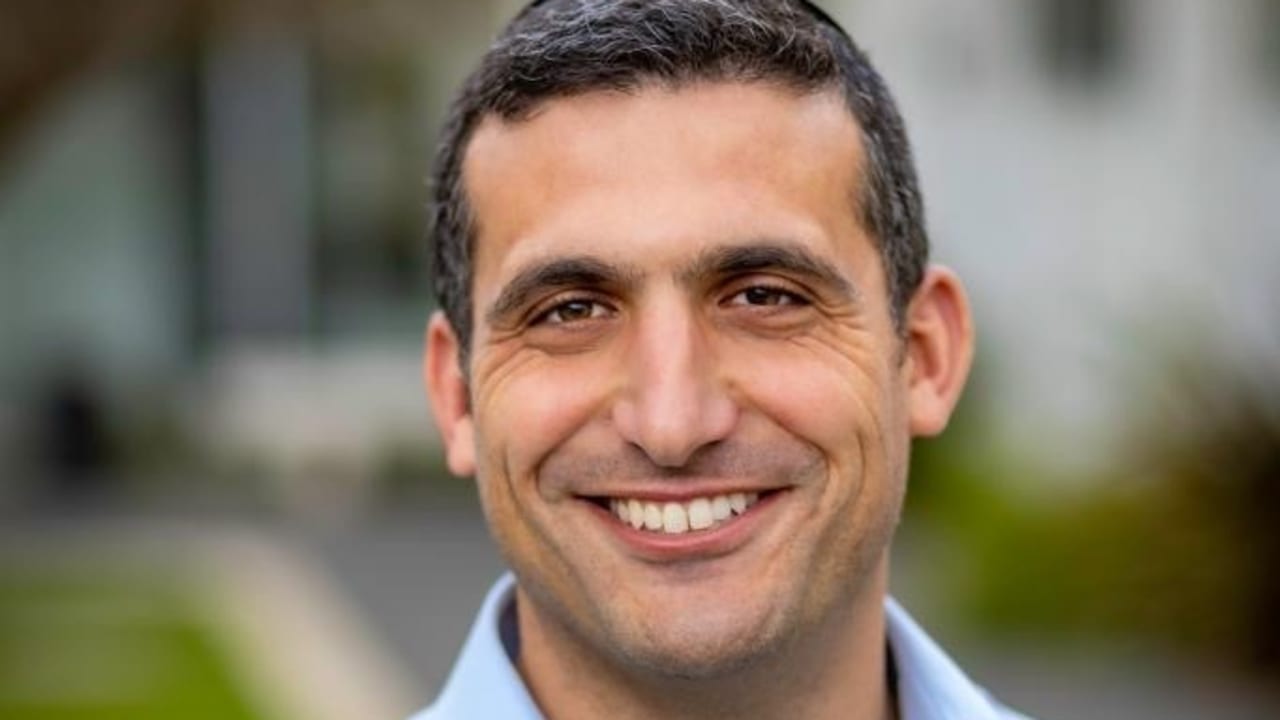
Nearly three years after the Hamas-led October 7, 2023 massacre, Israel’s philanthropic sector is showing signs that the surge in charitable giving triggered by the attack has become more than a temporary emergency response. According to Ori Ben-Shlomo, CEO of Israeli donation platform JGive, donations have continued to rise even as the country has moved from immediate wartime relief toward long-term rehabilitation.
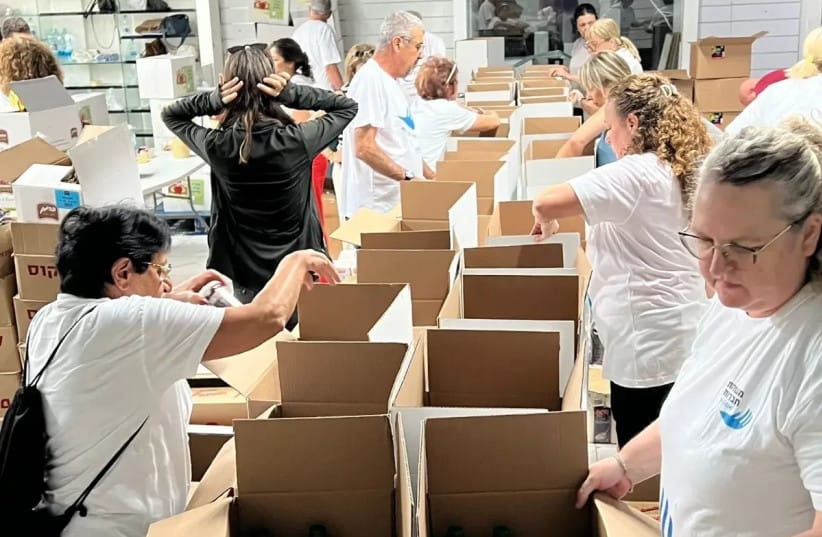
In the days after October 7, normal life across Israel was upended. Soldiers were called into reserve duty, hundreds of thousands of Israelis were evacuated, families sought assistance, nonprofits scrambled to identify urgent needs, and private citizens stepped in as state systems struggled to respond.
At the same time, an unprecedented wave of donations began flowing into Israel. Israelis and Jews abroad sought ways to quickly support evacuees, soldiers, affected families, and organizations providing food, equipment, housing, and other emergency assistance, turning digital fundraising platforms into a central part of the civilian response.
Nearly three years later, the questions facing the sector have changed. Diaspora Jewish communities are balancing support for Israel with mounting needs at home, emergency fundraising has increasingly given way to rehabilitation, and Israelis themselves appear to have developed a different relationship with philanthropy.
Ben-Shlomo said JGive’s figures indicate that the shift has endured.
“I think it tells the story of Israeli society through our eyes,” Ben-Shlomo said. “In the year before October 7, 2023, around NIS 160 million passed through our platform. When October 7 came, that rose to something like NIS 330 million in donations. We are talking about hundreds of thousands of donors a year.”
The initial increase was dramatic, but JGive executives did not know whether it would last. During the first months of the war, most donations went toward immediate needs, including food, supplies, assistance for evacuees, and support for soldiers.
“At a certain point, when the immediate emergency began to subside, we thought perhaps the burst of generosity, from Israel and abroad, would also fade,” Ben-Shlomo said. “But the numbers continued to rise.”
He said the platform finished last year with close to NIS 400 million in donations, while the amount passing through JGive this year has already increased further.
“We saw a significant change in Israeli society’s attitude toward donations, solidarity, and the understanding that this is genuinely important for our resilience,” he said.
Israelis increasingly choose direct donations
Although Israel received substantial financial support from Jewish communities abroad following October 7, Ben-Shlomo said most of the money processed through JGive still comes from Israeli donors.
“It is true that during the war the balance changed and more money came from abroad, mainly from the United States,” he said. “But the bigger picture is that most still comes from Israel.”
The trend suggests that the post-October 7 solidarity story was not solely one of Diaspora Jews supporting Israel. Israelis themselves also increased their charitable giving.
At the same time, Ben-Shlomo said the war strengthened financial and emotional links between Israel and Jewish communities overseas, although those relationships have also become more complex.
One major change has been the rise of direct giving.
“In the past, central institutions and organizations had much more power,” he said. “Today, people like to give directly. If you want to donate to a specific nonprofit, you do not necessarily need an intermediary.”
Ben-Shlomo compared the shift to broader consumer behavior, in which people increasingly seek direct access instead of working through middlemen.
The change is particularly visible in the United States, he said, where donors can use digital tools to select a specific Israeli organization or project rather than automatically routing their contribution through established communal institutions.
“That does not mean the federations do not have a role,” he said. “They still have a very significant role, especially in philanthropy and large donations. But alongside that, there is now much more direct giving.”
Emergency fundraising gives way to rehabilitation
Immediately after October 7, JGive concentrated on helping nonprofits raise money as quickly as possible.
“When everything happened on that day, we understood that we needed to do two things,” Ben-Shlomo said. “One was to give nonprofits the time and tools and help them raise as much money as possible, as quickly as possible.”
The organization established an emergency operation to assist nonprofits using its platform. At the same time, JGive began receiving inquiries from donors around the world asking where their money was most urgently needed.
“We received calls from literally all over the globe asking, ‘How can we help?’” he said. “Then we understood there was a serious problem. Many donors simply did not know where to give. They wanted to donate, including companies, but they did not know where the money should go.”
That led to the creation of a national emergency fund intended to rapidly distribute money to organizations responding to needs on the ground.
“We were distributing money every evening,” Ben-Shlomo said. “Our approach was that the funds needed to reach many organizations because there were many needs.”
Nearly three years later, however, the definition of “need” has changed.
“At the beginning of the war, everyone stopped donating to routine causes, culture, education, health, everything that happens in ordinary life,” he said. “Almost everything stopped, and donations moved toward the emergency.”
Those initial needs were often basic, including food and assistance for evacuees. Over time, traditional areas of charitable giving began to recover, while an entirely new rehabilitation sector emerged around the consequences of October 7 and the war.
“There are many organizations that were established for needs created by October 7, and there is now an entire world moving toward rehabilitation,” Ben-Shlomo said.
Mental health, wounded soldiers drive new philanthropic needs
Ben-Shlomo said rehabilitation now includes wounded soldiers, mental-health care, civilian recovery, and long-term assistance for communities and families affected by the war.
“There are a great many needs,” he said. “There is the rehabilitation of soldiers, which is a very complicated event. There is mental health, and there is the civilian rehabilitation of many people following everything that happened.”
“The world of rehabilitation is a new chapter,” he added. “It is also bringing many good people into this field who were not part of it before.”
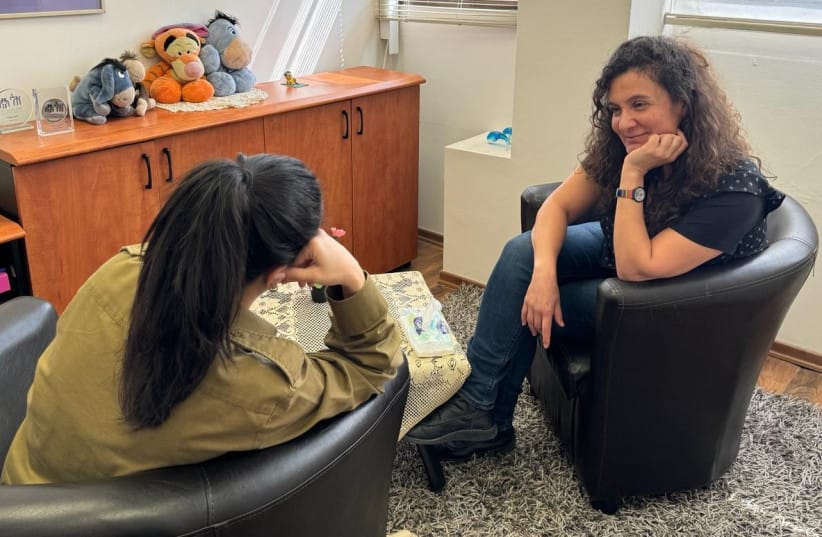
One notable development, he said, has been the arrival of professionals who previously had little involvement with nonprofits.
“You see organizations being established by doctors, psychologists, or other professionals who were not previously part of the nonprofit world,” he said. “It is very refreshing because people recognize a need and come with their professional expertise.”
The transition comes as Israel continues to face significant psychological consequences from the war, with health organizations reporting sustained demand for mental-health services.
Diaspora communities balance Israel support with needs at home
Ben-Shlomo described the relationship between Israel and Diaspora Jewry since October 7 as increasingly important but also increasingly complicated.
“I think it is a very complex situation,” he said. “The connection to Israel is more important than ever.”
He said rising antisemitism and security concerns around the world have strengthened some Diaspora Jews’ sense of connection to Israel.
“Because of everything happening around Jews in the world today, antisemitism and all of these terrible phenomena, it strengthens many people’s connection to Israel,” he said. “Israel is also a kind of more stable and secure anchor that they want to strengthen their connection with.”
At the same time, Jewish communities abroad are facing growing local expenses.
“Their local challenges are becoming more and more significant,” Ben-Shlomo said. “They need to invest more in protecting people, strengthening their own communities, and building resilience.”
“That makes philanthropy a more complicated issue,” he added. “But the willingness of Diaspora Jewry to create a strong connection with Israel and support important causes is still there.”
Younger donors want to know where their money goes
Donor behavior is also changing, Ben-Shlomo said, reflecting broader developments in philanthropy rather than October 7 alone.
“The new generation goes much further into the details and is interested in where its money goes,” he said. “It is not very different from the way people behave in the investment world.”
Donors increasingly expect transparency and want to understand how their money is being used.
October 7 accelerated that process by exposing many Israelis, particularly younger people, to nonprofits and volunteer activity for the first time.
“If, before October 7, we saw the world of donations as something that was nice to do, something reserved for a particular group, one of the changes we have undergone is that today everyone understands that it is essential and critical,” Ben-Shlomo said.
He recalled a conversation with a friend serving on the board of a business who described how social involvement had become part of professional identity.
Before board members even began discussing business, she told him, participants began describing the nonprofits where they volunteered or served in leadership positions.
“It naturally became a form of self-identity,” Ben-Shlomo said. “Many people feel they need to say that they are involved, whether through donations or volunteering.”
Nearly 90,000 donations in one holiday month
One figure that particularly surprised Ben-Shlomo was not a single major philanthropic contribution, but the sheer number of individual donors.
“In the last holiday month, there were almost 90,000 donations in one month, totaling NIS 60 million,” he said.
“That is one of the figures that always amazes me. It is not one major philanthropist giving a significant amount. It is a huge number of people donating, including small amounts.”
Many of JGive’s donors are young Israelis, he added.
“That really proves something about the Israeli DNA,” Ben-Shlomo said.
The larger question now is whether the solidarity that emerged after October 7 can be sustained during ordinary times.
“In an emergency, there is no question,” he said. “We saw that it happens.”
“The thing that concerns me more, and that we are working on a great deal, is how we take all the enthusiasm that existed during the emergency and turn it into something that happens in ordinary life,” he said. “That requires a great deal of work.”
Ben-Shlomo said the long-term goal should be to make social responsibility a permanent feature of Israeli life.
“I think our mission over the coming decades is to make Israel a social superpower as well,” he said. “There should truly be solidarity and a culture of mutual responsibility in which every person takes action, even if only in their own small area around their home, to look after the people there and those who need help.”
KioskNews shows a cleaned-up reading view extracted from the publisher’s page — the original always lives on their site, not ours.