Opinion: Opinion | Kazakhstan Is Trying Something Different As The Muslim World Stands Divided
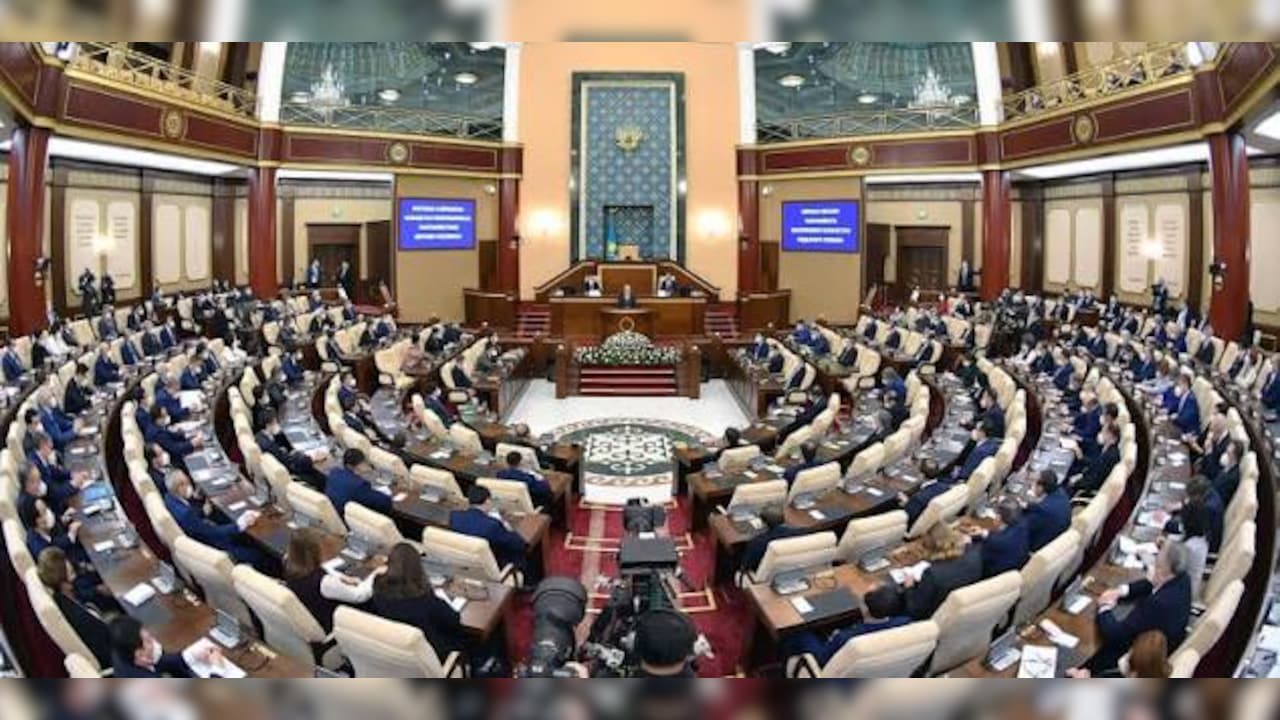
Recent events around the hijab ban in Azerbaijan, or the execution of a Bangladeshi couple by Saudi authorities on grounds of committing "immoral acts" in the precincts of the holy mosque in Mecca, all point essentially to the same thing: all the old anxieties around religion are once again surfacing. The major wars in India's neighbourhood have always been framed in religious terms, though economic reasons underpin their core. Periodic cliché pronouncements on Kashmir notwithstanding, the Organisation of Islamic Cooperation (OIC) is being torn apart from inside between apparent irreconcilable differences between member-states: Sunni against Shia, Sunni vs Sunni, and so on.
Against this backdrop, Central Asia as a region and Kazakhstan as the largest country in particular may have an important message for the world. But why is Central Asia important? Because, simply put, it is a new emerging power centre, a powerful block, that has so far kept itself aloof from international affairs but is increasingly participating in global affairs. And it is difficult to ignore what it offers.
Advertisement - Scroll to continue
A strategically significant region, occupying 4,003,451 sq.km., with a population of approximately 77 million, Central Asia is rich in natural resources, including oil, gas, metals like gold, silver, aluminium, bauxite, copper, uranium, etc., with an aggregate GDP of $543 billion to $566 billion, with Kazakhstan leading with $306 billion. Five per cent of the world's natural gas reserves are found here. It occupies a major geo-politically strategic position - landlocked, extending from the Caspian Sea in the west to the border of western China in the east. The five (former Soviet) republics of Kazakhstan, Uzbekistan, Tajikistan, Kyrgyzstan, and Turkmenistan lie sandwiched between the Russian Federation, Iran, and the People's Republic of China. Three of them share direct borders with Afghanistan. The strategic significance of these states cannot be emphasised enough - the very reason India is increasingly engaging with it, as seen in Prime Minister Narendra Modi's visit to two of them this year, and as seen in the visit of Kazakh President Kassym-Jomart Tokayev to Delhi this year.
The countries are overwhelmingly Muslim, but the years of Soviet experience have left a deep secular imprint on society and polity. Simultaneously, the countries have faced terrorism, trafficking, and jihadi insurgency, much of it a spillover from Afghan jihad. Along with economic development and navigating their way between Russia and China, they have also had to counter missionary inroads by countries like Saudi Arabia, Kuwait, Turkey, Pakistan, and Iran. The task for these countries has thus been not only to stave off undesired foreign influence but to keep the countries secular, while also allowing the people to enjoy and exercise the right to freedom of religion. As one learned member of the clergy explained to me once in the Kazakh capital Astana, "We want to preserve the spirit of Islam, rather than the form.”
Advertisement - Scroll to continue
In this direction, countries in the region have been taking steps to preserve their unique way of life and cultures. Hence, while the hijab and other headgear are allowed, the burkha or niqab - alien to the local culture - are not allowed. Foreign funding, mosque building, and Friday sermons are monitored so that extremist ideas are not spread.
Kazakhstan, however, has gone a step further. It is actively pursuing and promoting "spiritual diplomacy", an endeavour to complement traditional forms of diplomacy with the promotion of spiritual, faith-based dialogue, understanding, and coexistence. The country has a long history of using mediation to mitigate conflict; now, it has added another much-wanted dimension to it. In 2003, under former President Nur Sultan Nazarbayev, it initiated the Congress of Leaders of World and Traditional Religions in Astana. The forum brings together global religious figures (Islam, Christianity, Judaism, Buddhism, Hinduism, and others) once every three years in the country's capital, Astana. This year, at the secretariat meeting, for instance, it was heartwarming to see representatives of Iran sitting together with representatives of the Baha'i faith, which remains banned in Iran. The aim is to foster interfaith dialogue, prevent the exploitation of religion for conflicts, counter extremism and terrorism, and protect sacred and cultural heritage sites
Kazakhstan has to reconcile a hundred ethnic groups and 18 religious denominations that live on its territory, with traditional Islam and Christian Orthodoxy dominating. Though Muslims outnumber the Christian population, the nation has made conscious choices and taken decisions to further secularism and pluralism. For instance, the new constitution that the country adopted this year underscores the state as a secular one. The capital city houses Central Asia's largest mosque, but it has also made provisions for the construction of the region's largest church.
The Congress of Leaders of World and Traditional Religions is one more step in this direction at an international level. It has gained support from countries across the world, as also from India, which has participated in all the congresses and was present at the secretariat meeting this year, which furthered the agenda for the next Congress to be held in 2028.
Kazakhstan's initiative, however, is not simply about platitudes and feel-good events. It has taken concrete steps to implement theory into practice, extending beyond traditional interfaith dialogue to touch on issues of global security, sustained development, and cybersecurity. Thus, for example, the last Congress held in 2025, which was attended by more than 60 countries, adopted the Astana Peace Declaration, which laid great emphasis on conflict prevention, combating extremism, and the protection of religious sites and heritage. This is a concern that nations in Asia have grappled with, especially after ISIS destroyed precious, centuries-old heritage sites in both Syria and Iraq, much of it to do with religious sensitivities.
This year, at the working meeting of the secretariat to help prepare the agenda and draft documents for the next Congress, two documents were produced. The first was addressing climate change through faith traditions. The second document included 11 principles for the ethical use of artificial intelligence in religious contexts. Once again, both are timely interventions as the world grapples with climate change disasters (think of the floods and landslides in Nepal and Tibet this year), as well as the unbridled algorithm-driven use of AI to spread hate speech, religious divides, extremist ideas, and terrorism in the world. The final documents of the Congress are circulated at the UN General Assembly sessions, reflecting the geographical outreach and international legitimacy of these documents.
This year at Astana, another unique document was unveiled - a charter protecting the rights and dignity of children with incurable diseases. It was presented jointly by Yerzhan Ashikbayev, Kazakhstan's first deputy foreign minister, and a representative of the Vatican.
Explaining these initiatives, Kazakhstan's Vice-President, Yerlan Karin, underscored that "Spiritual diplomacy does not, of course, replace political negotiations, but it complements them and helps keep channels of communication open when diplomatic dialogue becomes difficult. This helps build trust and reminds us of the value of human life." In this, religious leaders have an important role to play as they are at the heart of the movement and can jointly issue non-political appeals calling for an end to violence and the pursuit of peaceful solutions.
In a world currently being torn apart by conflict over resources, ethnicities, and religion, it is young Kazakhstan's unique way of showing a path ahead out of the chaos. Resolutely and diligently, the country has been keeping such diplomacy alive, unwavering in the face of great challenges, but determined to make a change. And that change is slowly but surely taking place.
KioskNews shows a cleaned-up reading view extracted from the publisher’s page — the original always lives on their site, not ours.