Kusi Adomako calls for road crashes to be declared a public health emergency
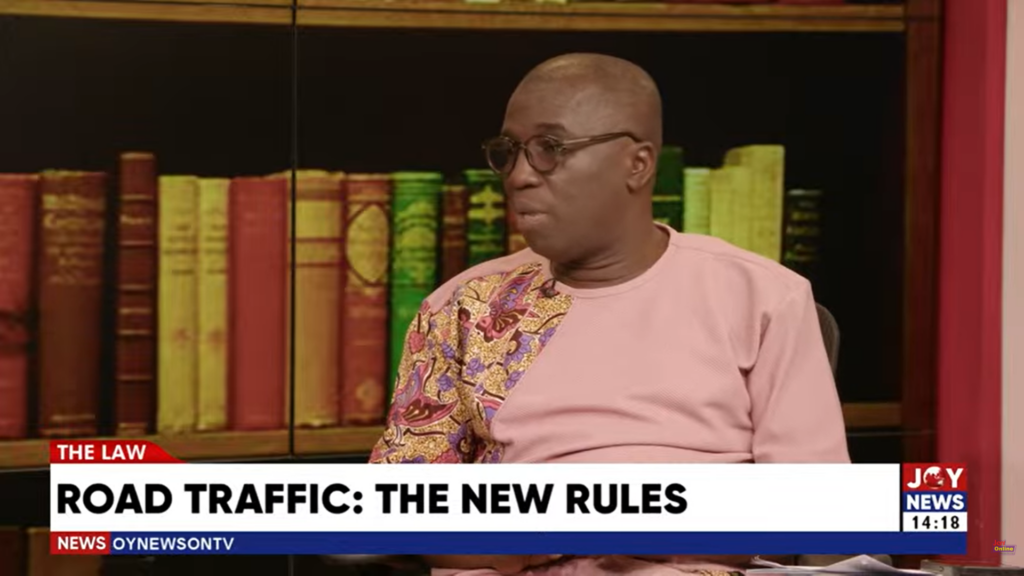
Director of the West Africa Regional Centre of CUTS International, Appiah Kusi Adomako, has called on the government to treat road crashes in Ghana as a public health emergency, arguing that the scale of deaths on the country’s roads warrants the same urgency applied to the COVID-19 pandemic.
Speaking on JoyNews’ The Law on Sunday, Mr Adomako said the persistent loss of lives through road crashes had reached a level that could no longer be treated simply as a transport or law-enforcement problem.
He said more than 2,500 people died in road crashes in Ghana last year, describing the daily toll as a serious national crisis that required a much stronger response from the state.
“For me, we have even been saying that government should declare road crashes a public health emergency,” he said.
According to him, an average of about eight Ghanaians losing their lives in road crashes each day should compel the government to adopt emergency measures and devote significantly more resources to preventing road deaths.
Mr Adomako compared the road safety situation with Ghana’s response to COVID-19, noting that the country mobilised substantial resources and introduced extensive measures to control the pandemic when the number of deaths was considerably lower.
He argued that the disparity in the level of attention and investment given to the two crises raised questions about Ghana’s priorities in addressing preventable deaths.
“When COVID came, Ghana had less than 1,000 people dying from COVID within the period of 2020 and 2022 when we stopped the protocols,” he said.
He noted that the COVID-19 response involved extensive public expenditure, restrictions, public education and enforcement measures, while road safety had not received a comparable level of investment despite the continuing loss of lives.
Mr Adomako therefore called for a fundamental shift in the way road safety is approached, stressing that reducing road deaths would require sustained investment rather than relying largely on enforcement after accidents had occurred.
He particularly highlighted the need for a stronger police presence on the roads, saying visible enforcement could help deter dangerous driving and improve compliance with traffic regulations.
“If we want to enhance road safety, we need to see the police presence on the road,” he said.
He also welcomed provisions in Ghana’s new traffic legislation that introduce automated enforcement of traffic offences.
According to him, the use of technology to identify and sanction traffic violations could strengthen enforcement and reduce the pressure on police officers to monitor every road user manually.
He said the introduction of automated traffic offences represented an important innovation because road safety enforcement should not depend exclusively on the physical presence of law enforcement personnel.
Mr Adomako, however, stressed that technology and policing alone would not solve Ghana’s road safety challenges.
He argued that road safety should be regarded as a shared national responsibility involving motorists, pedestrians, government agencies, law enforcement authorities and other stakeholders.
“I think road safety should be everyone’s responsibility, not only the police, not only NRSA, not only DVLA,” he said.
His comments come amid continuing concerns over road crashes and fatalities in Ghana, with road safety authorities and other stakeholders repeatedly urging motorists to exercise greater caution and comply with traffic regulations.
The National Road Safety Authority (NRSA), the Driver and Vehicle Licensing Authority (DVLA) and the Ghana Police Service have traditionally played central roles in road safety through driver regulation, public education, vehicle-related enforcement and traffic policing.
He suggested that the scale of the problem requires a broader national response in which road safety is integrated into public health, transport planning, infrastructure development, law enforcement and community behaviour.
Such an approach, he indicated, would also require government to invest more deliberately in preventive measures, including enforcement, technology and interventions designed to reduce the likelihood and severity of crashes.
DISCLAIMER: The Views, Comments, Opinions, Contributions and Statements made by Readers and Contributors on this platform do not necessarily represent the views or policy of Multimedia Group Limited.
Tags:
DISCLAIMER: The Views, Comments, Opinions, Contributions and Statements made by Readers and Contributors on this platform do not necessarily represent the views or policy of Multimedia Group Limited.
KioskNews shows a cleaned-up reading view extracted from the publisher’s page — the original always lives on their site, not ours.