HBO’s 8-Part Crime Thriller Masterpiece Is Lovecraftian Without Horror

Dhruv is a Lead Writer in Screen Rant's New TV division. He has been consistently contributing to the website for over two years and has written thousands of articles covering streaming trends, movie/TV analysis, and pop culture breakdowns.
Before Screen Rant, he was a Senior Writer for The Cinemaholic, covering everything from anime to television, from reality TV to movies.
After high school, he was on his way to become a Civil Engineer. However, he soon realized that writing was his true calling. As a result, he took a leap and never looked back.
Not all horror is Lovecraftian, but Lovecraftian storytelling is almost always horrifying. Yet, there is one rare crime thriller series that seems to completely defy this in its first 8 episodes. Its season 1 unfolds as a typical procedural thriller, focusing on the complex dynamic of its two detective protagonists. The HBO crime thriller in question even gets incredibly bleak, but it never falls into horror territory.
Despite its lack of explicit horror elements, the show, True Detective, is one of the most Lovecraftian dramas out there in season 1. Like any other detective thriller out there, it begins with a murder mystery. The more it progresses, though, the more it becomes suggestive about how there is more to its story than meets the eye.
Most representations of Lovecraftian horror in movies and shows feature some kind of mysterious monsters or overarching supernatural forces. True Detective season 1 never really crosses that line and remains grounded in realism. Still, it reeks of Lovecraftian cosmic indifference, especially when it centers its storyline on the constant battle between the light and dark.
True Detective Season 1 Is A Procedural Thriller With Subtle Lovecraftian Shades

True Detective season 1 does not explicitly feature any "Eldritch" Lovecraftian monsters like Hastur or Cthulhu. Instead, it makes more of a metaphor out of them by capturing the systemic rot, institutional decay, and human malice that runs in the darkest corners of the world.
In its early moments, its Lovecraftian existential dread comes purely from its visuals and its main character's pessimistic philosophies.
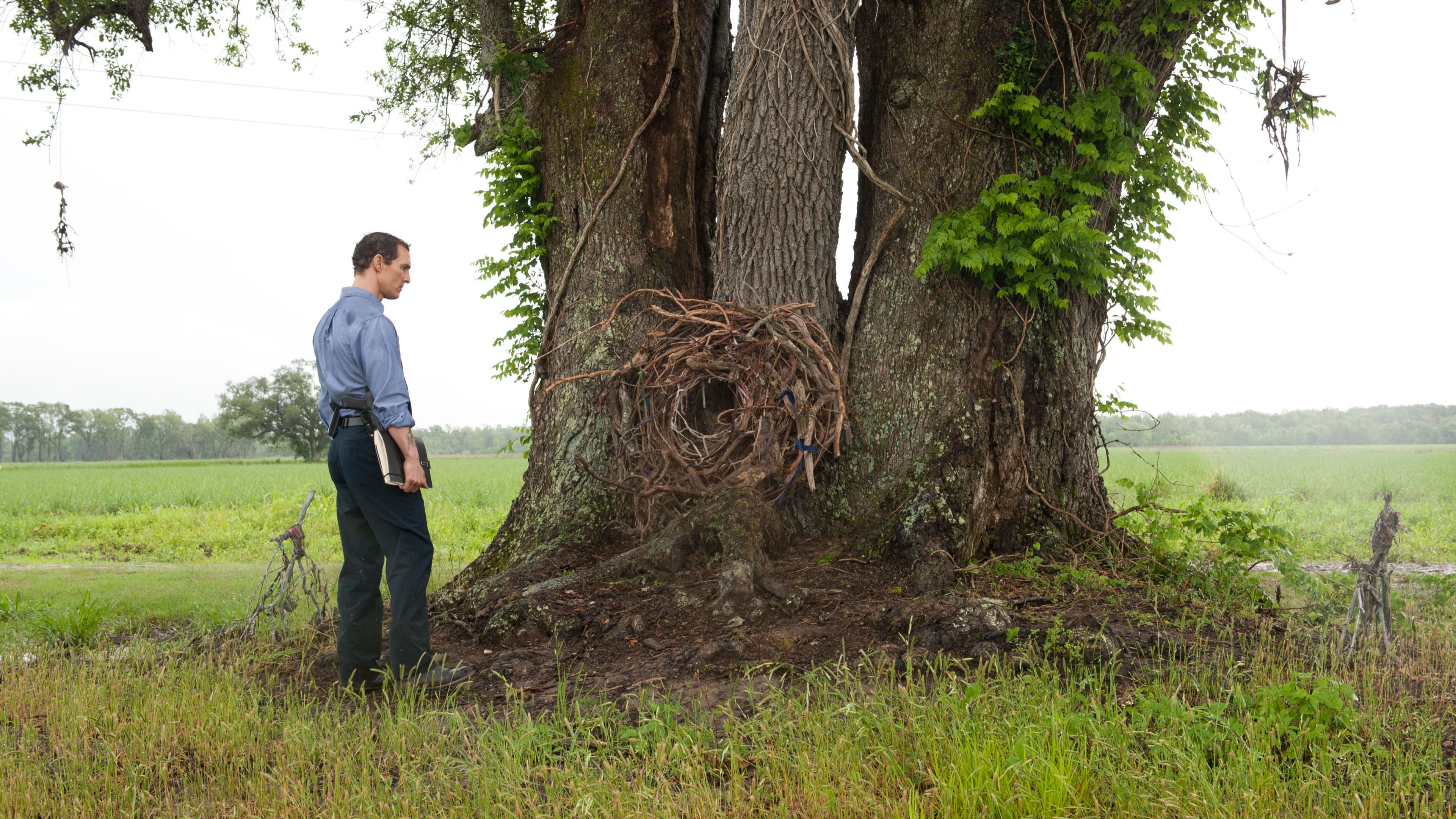
It features desolate backdrops of coastal Lousiana, marred by industrial wastelands, forgotten crimes, and ignored victims. Matthew McConaughey's Rust Cohle adds a bleak and mystical layer to these by highlighting how the region looks "like somebody's memory of a town." Even the very institutions in the area, like the church, built to protect humanity are portrayed as indifferent or even complicit in crimes.
A common trope in Lovecraftian horror walks through the disintegrating sanity of a protagonist who learns a little too much about the vast, indifferent universe. Rust Cohle is cursed by the same forbidden knowledge in True Detective. He appears insane to those like Woody Harrelson's Marty Hart when he preaches about how "human consciousness is a tragic misstep in human evolution."
True Detective season 1 also features direct references to Ambrose Bierce’s An Inhabitant of Carcosa and Robert W. Chambers’ The King in Yellow, which were massive influences on H.P. Lovecraft's stories.
Unlike Lovecraftian characters, though, it isn't the exposure to a monster or godly entity that makes Rust who he is. The monster, in Rust's case, is a tragic past that forced him to have extreme philosophical clarity, reminiscent of the writings of Thomas Ligotti and Arthur Schopenhauer.
Other than jumping back and forth between two timelines, True Detective season 1 is fairly linear. But through Rust Cohle, it highlights how time in itself "is a flat circle." This, too, establishes the existence of a greater cyclical evil that can never cease to exist. Whether one sees this "greater evil" as a Lovecraftian god or an active system that allows the powerful to escape is open to interpretation.
True Detective Season 4 Struggled To Recreate Season 1’s Magic, But Season 5 Can Do Better
There are some intriguingly scary moments in True Detective season 1 where Rust Cohle notices spiral symbols appear out of nowhere. In one scene, he sees a flock of birds from the spiral. In another, he sees a full-fledged vortex emerge inside a cave. The show cleverly avoids making these scenes seem explicitly supernatural.
It intentionally leaves them ambiguous and metaphorical by suggesting that they could be mere projections of Rust's fractured mind.
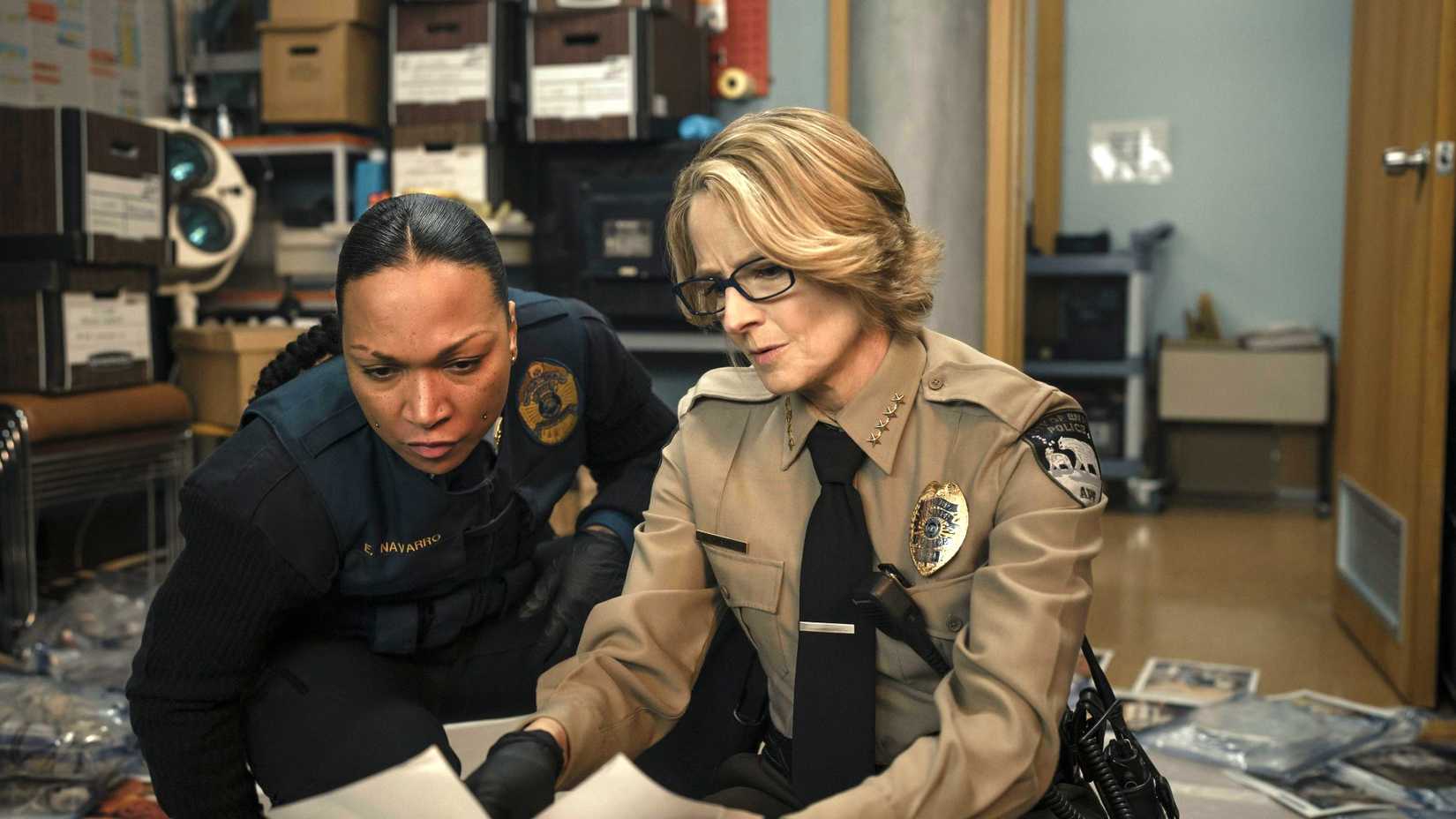
True Detective season 4 tried to create season 1's magic by drawing references to everything from Rust Cohle to the spirals and the Tuttle cult. However, instead of keeping its Lovecraftian elements subtle, it went a little too overboard with its horror. The HBO show was never the same after season 1, but season 4 is when it truly lost its undertones of cosmic dread.
Season 5 now has the opportunity to bring back everything that made True Detective season 1 so special. With a talented horror staple like Nicolas Cage cast as one of season 5's leads, the HBO crime thriller has already taken one step in the right direction to reclaim its lost Lovecraftian identity.
True Detective
- Release Date
- January 12, 2014
True Detective is an anthology series exploring intricate criminal investigations through multiple timelines. Each season examines dark personal and professional secrets revealed during the course of solving complex cases, highlighting the impact of crime on individuals both within and outside the law enforcement community.
- Network
- HBO Max
- Cast
- Matthew McConaughey, Colin Farrell, Mahershala Ali, Woody Harrelson, Vince Vaughn, Stephen Dorff, Michelle Monaghan, Rachel McAdams, Carmen Ejogo, Michael Potts, Taylor Kitsch, Scoot McNairy, Tory Kittles, Kelly Reilly, Ray Fisher, Chris Kerson, Ritchie Coster, Christopher James Baker, Afemo Omilami, James Frain, Abigail Spencer, Jodie Foster, Kali Reis, Fiona Shaw, Finn Bennett, Isabella Star LaBlanc, Christopher Eccleston, John Hawkes, Dana Gourrier, Madison Wolfe, J.D. Evermore
- Showrunner
- Nic Pizzolatto
- Directors
- Cary Fukunaga
- Writers
- Nic Pizzolatto
- Main Genre
- Drama
- Creator(s)
- Issa López, Nic Pizzolatto
- Seasons
- 4
- Story By
- NIC PIZZOLATTO
- Streaming Service(s)
- Hulu, MAX
- Where To Watch
- M
KioskNews shows a cleaned-up reading view extracted from the publisher’s page — the original always lives on their site, not ours.