Taiwan in Time: A history of riots at Hsinchu Juvenile Prison
Mass unrest took place at the facility in 1982 and 1996, pushing the oft-criticized youth correctional system toward lasting reforms
By Han Cheung / Contributing Reporter


Nov. 16 to Nov. 22
Flames and smoke billowed through the Hsinchu Juvenile Prison on the night of Nov. 19, 1996 as hundreds of inmates set objects on fire, banged on metal windows, shook their beds and shouted in protest.
It took two days and the intervention of regular and military police, who used force and tear gas, to put down the riot, one of the largest in Taiwan’s prison history.
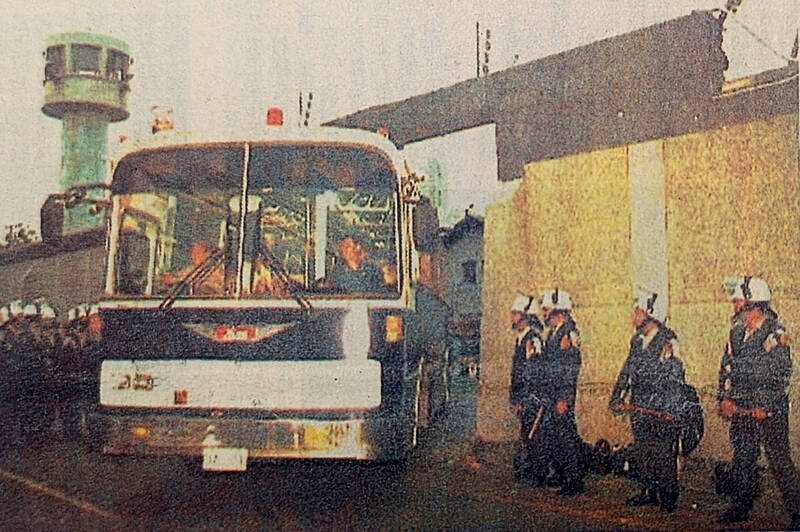
After their arrest, rioting prisoners at Hsinchu Juvenile Prison are transported to other prisons on Nov. 20, 1996.
Photo: Hsing Ting-wei, Huang Min-chien, Taipei Time
According to a petition by six inmates, they planned the incident to alert the public to a number of longstanding grievances, including harsh treatment by prison staff, long working hours and excessive workloads in the prison workshops, and vocational training that inmates felt did little to improve their job prospects after release.
It was not the first time such unrest had occurred at the prison. In March 1982, inmates rioted twice in response to persistent allegations of mistreatment and physical abuse by prison officers.
But meaningful systemic change would not come until after the 1996 incident.
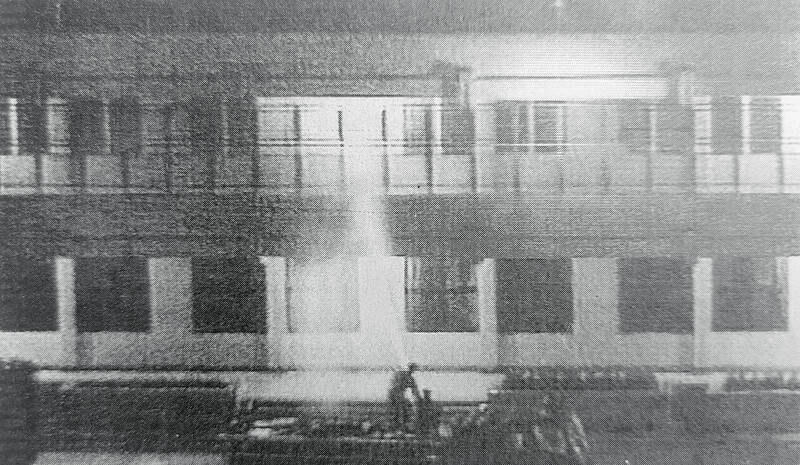
A photo of police spraying the Hsinchu Juvenile Prison cells with water cannons during the 1996 riot.
Photo: File
FIRST RIOTS
The Japanese colonial government in 1922 converted Hsinchu Prison into a juvenile institution, primarily housing offenders under 18. The prison moved to its present site in 1926 and reverted to a regular prison after World War II, before again becoming a juvenile facility in 1948.
Although several reformatories and detention centers were established over the years, Hsinchu remained Taiwan’s only juvenile prison.
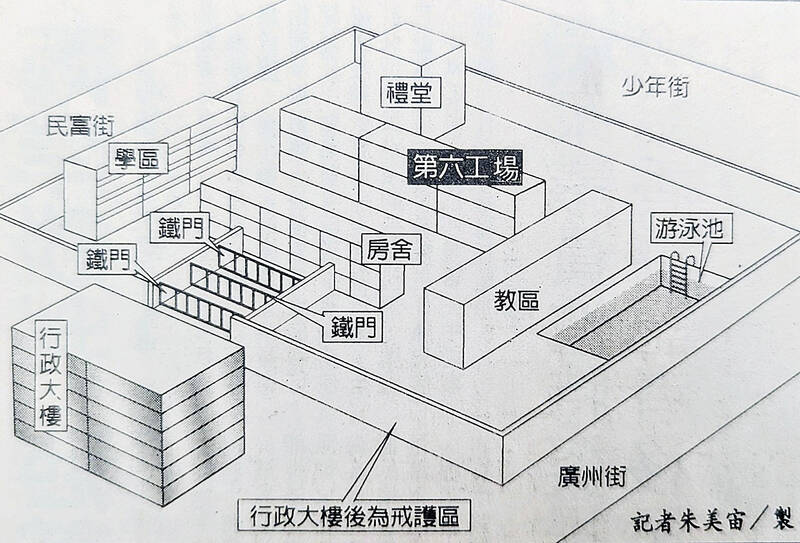
A diagram of the Hsinchu Juvenile Prison published in the Liberty Times on Nov. 20, 1996.
Graphic: Chu Mei-chou, Taipei Times
On March 8, 1982, inmates rioted in what the United Press International described as the “first jail riot ever in Taiwan.” The Taiyuan Prison Incident in 1970 was more of an armed uprising by political prisoners that aimed to overthrow the Chinese Nationalist Party (KMT) (see “Taiwan in Time: Prison break to nationwide revolution?”, Feb. 5, 2023).
The report described the prison as housing 1,476 inmates, about 1,000 of whom were teenagers. The inmates reportedly broke the doors and windows to their cells, “seized two buildings, set fires and confronted security forces for five hours” before being subdued by tear gas deployed by troops sent in to reinforce the guards.
The immediate trigger was an impending punishment for five inmates. The prison initially told the press that the men were to be sent to solitary confinement for coercing other prisoners into sexual activity. Several inmates, however, told the United Daily News that guards were about to beat the men for homosexual behavior.
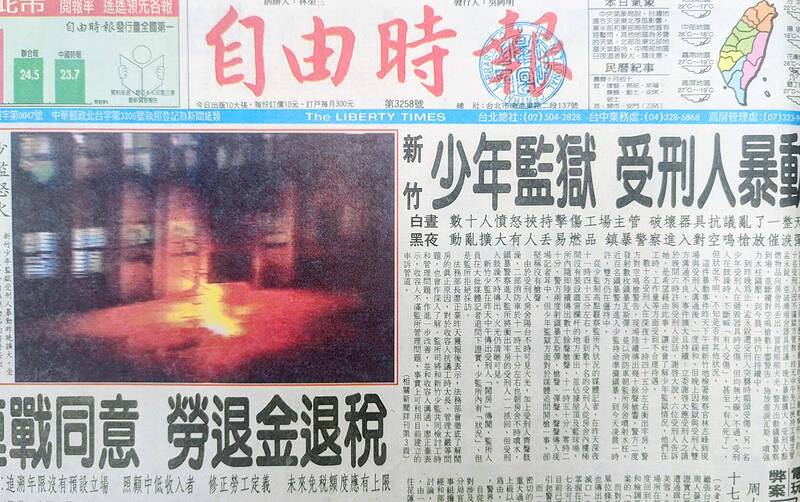
The Hsinchu Juvenile Prison riot is shown on the Nov. 20, 1996 front page of the Liberty Times.
Photo: File
They also said the unrest arose from longstanding arbitrary discipline and physical abuse by guards. One inmate said he and several others had previously attempted suicide because of mistreatment, describing how guards often found excuses to beat prisoners, sometimes ganging up on one person. They also complained that guards had recently begun cracking down particularly harshly on smoking, as well as exorbitant prices at the commissary. Not all inmates wanted to riot, they said, but some were pressured into participating.
A dispute between an inmate and guard sparked another disturbance on March 29, when inmates again occupied buildings, set fires and threw bricks at guards from the roof. Several tried to escape amid the chaos but were quickly recaptured.
The prison largely blamed the incidents on what it considered overly lenient treatment of inmates, including lax security measures and the decision to house adult prisoners alongside juveniles.
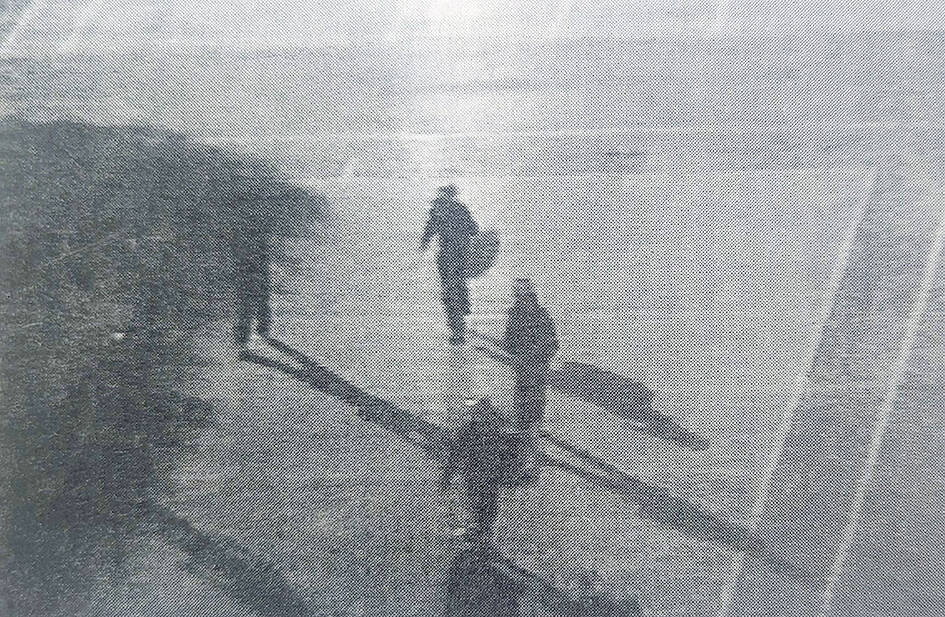
Riot police are seen heading toward the Hsinchu Juvenile Prison cell blocks during the 1995 riot.
Photo: File
But by 1996, adult inmates serving short sentences were still housed in the juvenile prison due to overcrowding.
TWO-DAY UNREST
On Nov. 19, 1996, several adult inmates unhappy with treatment attacked the workshop manager and other staff, eventually taking the manager hostage and locking themselves inside the workshop. They incited the 86 inmates working there to join the riot.
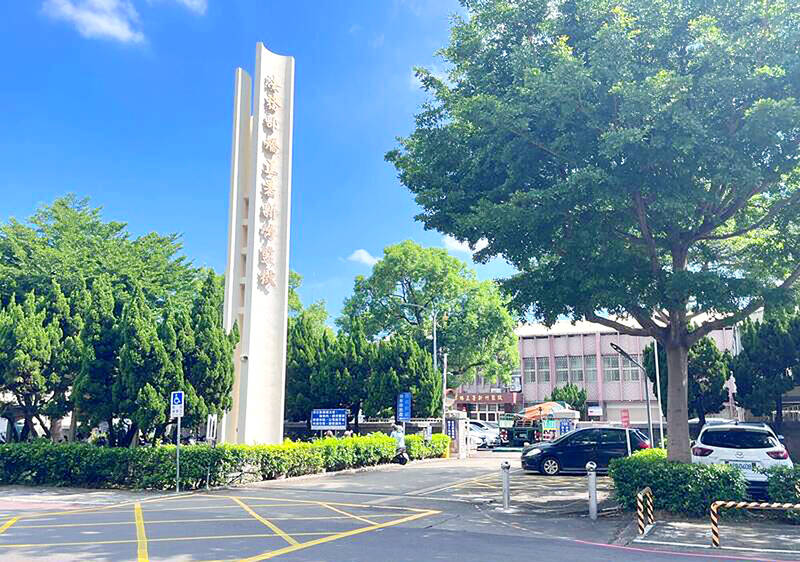
The present-day Hsinchu Prison still bears the same entrance marker as it did when it was a juvenile facility.
Photo: Huang Mei-chu, Taipei Times
Prison officials that night met with six inmates to negotiate. The inmates outlined their grievances and demanded to see legislator Hsieh Chi-ta (謝啟大), whom they reportedly saw as a mother figure. Hsieh was unable to arrive promptly because she was attending a meeting. Finally, they handed their petition to a prosecutor, and were allowed to speak with another inmate they trusted. They then released the manager, according to the United Daily News.
Hsieh soon arrived to meet with the inmates, but it didn’t seem to calm them down. Around 11pm, prison officials switched off the televisions, which had been showing news coverage of the riot, prompting inmates to start banging on their beds and shouting again. An estimated 600 inmates eventually joined in.
Although more than 50 riot police arrived and deployed tear gas, the situation only worsened. Inmates burned clothes, newspapers and sheets and threw them out of windows. Police then deployed more tear gas, fired shots into the air and stormed the building, arresting 90 inmates and promptly taking them to Taichung Prison.
Meanwhile, there were also reports of unrest in other prisons, allegedly in support of the Hsinchu inmates.
Unrest flared up again the following morning, more intense than the day before. Reinforcements were called in, and a total of 380 police officers and 30 military police barged into the building again, arresting the remaining 482 inmates involved in the riot. They were sent to Chiayi Prison.
One 16-year-old inmate was found unwell and rushed to hospital, where he died. The official cause of death was heart failure, but his family and an Amnesty International report questioned the claim.
LASTING CHANGE
There was disagreement over who was to blame, with the warden warning that the inmates’ “demands would be endless” if they got their way. But there was broad agreement that change was needed, prompting renewed scrutiny of Taiwan’s juvenile correctional system.
Hsieh and other critics argued that the prison system was ill-equipped to rehabilitate young offenders and called for a shift from punishment toward education. The Ministry of Education and Ministry of Justice agreed to work together toward this goal.
In 1997, the Legislature passed a law establishing juvenile correctional schools. In 1999, Hsinchu Juvenile Prison reverted to its former role as an adult prison and resumed the name Hsinchu Prison, while two new institutions were established: Chengjheng High School (誠正中學) in Hsinchu for juveniles receiving reformative education, and Mingyang High School (明陽中學) in Kaohsiung for those serving prison sentences.
Taiwan in Time, a column about Taiwan’s history that is published every Sunday, spotlights important or interesting events around the nation that either have anniversaries this week or are tied to current events.
KioskNews shows a cleaned-up reading view extracted from the publisher’s page — the original always lives on their site, not ours.