Petrol pump dealers threaten cash-only payments over ₹5 UPI charge above ₹2,000
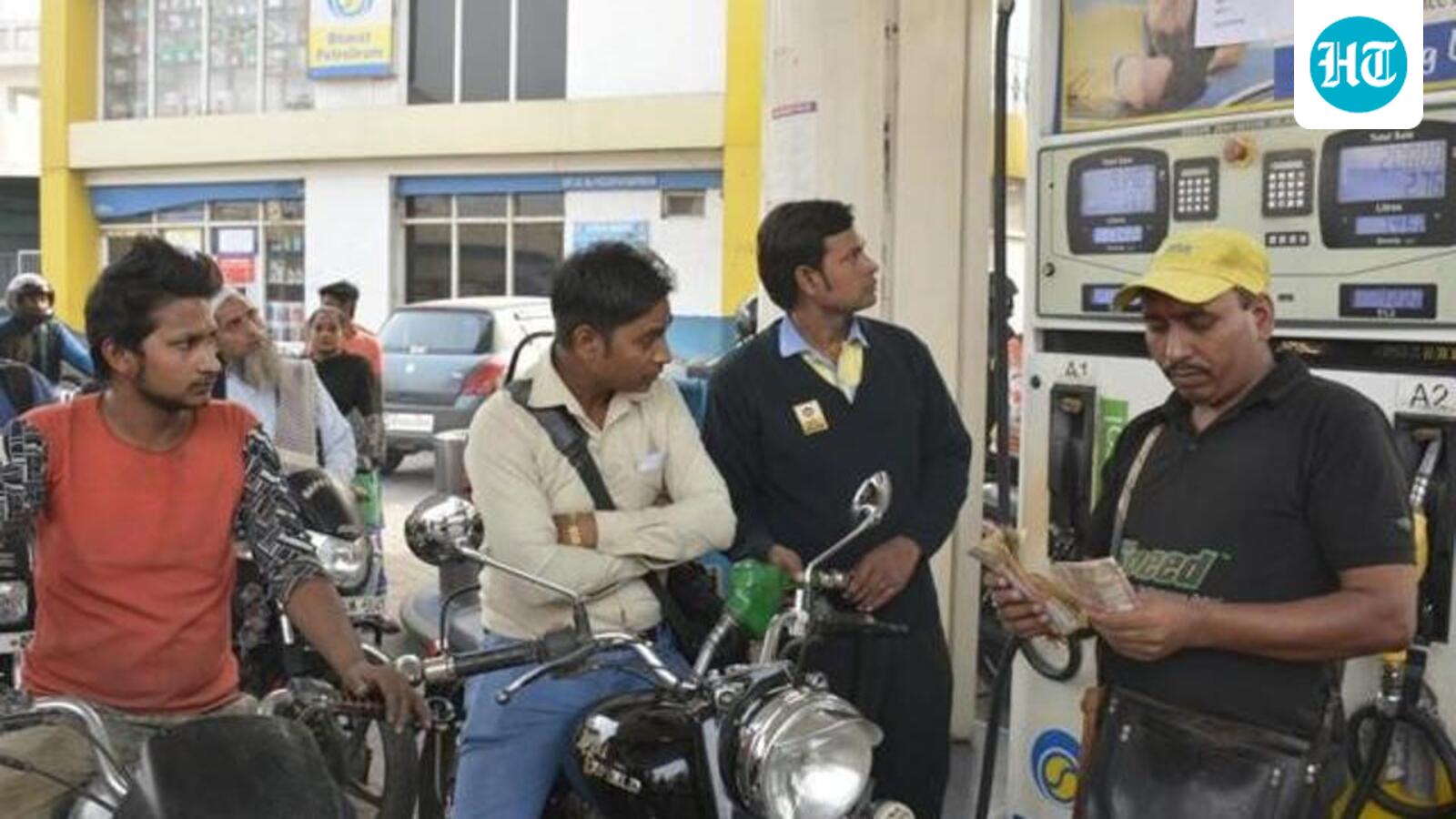
Petrol pump dealers across India have threatened to stop accepting unified payments interface (UPI) payments of ₹2,000 and above and switch to cash if they are required to pay a flat merchant discount rate (MDR) of ₹5 per transaction, saying the charge would further squeeze their wafer-thin margins.
Dealers from Delhi National Capital Region (NCR), Punjab, Uttar Pradesh, Mumbai, Karnataka and Rajasthan told HT that MDR in any form is an additional burden on their wafer-thin margins of around ₹2.40-3.40 per litre, which are also determined by the government through its oil marketing companies (OMCs). Most of the individual dealers requested anonymity, fearing reprisals.
Also read: Rahul Gandhi asks PM Modi to roll back 'UPI tax' immediately, invokes Indira
“We may have to stop accepting UPI payments of ₹2,000 and above if exemption is not allowed to fuel retailers,” Federation of All India Petroleum Traders (FAIPT) spokesperson Monty Sehgal said.
There are 1,03,023 petrol pumps across the country as of April 2026. While more than 90% of pumps are operated by three state-run OMCs – Indian Oil Corporation (IOC), Bharat Petroleum Corporation Ltd (BPCL) and Hindustan Petroleum Corporation Ltd (HPCL) – the balance are owned by private oil firms such as Nayara, Jio-BP and Shell.
In a letter to the Union government and state-run OMCs, the Akhila Karnataka Federation of Petroleum Traders (AKFPT) asked for an exemption on the basis that petroleum retail outlets cannot be compared with ordinary retail businesses.
“The selling prices of petrol and diesel are determined by the respective Oil Marketing Companies, and petroleum dealers operate on a prescribed dealer commission and margin structure. A dealer does not have the freedom to increase the Retail Selling Price of petrol or diesel merely because the cost of accepting a particular digital-payment mode increases,” it said. A copy of the letter was reviewed by HT.
Uttar Pradesh-based dealer Hemant Sirohi, who is a member of the Empowering Petroleum Dealers Foundation (EPDF), said: “A quick calculation of available official UPT transaction data shows that country-wide petrol pumps undertake 23.9 million such payments worth ₹1,573 crore. About 20% of such transactions are above ₹2,000, having a financial implication of ₹230-250 per day on a petrol pump. This will hurt dealers because of mounting burdens on them.”
Two dealers – one based in Mumbai and another in New Delhi – asked for the complete withdrawal of MDR charges for petrol pumps. Even shifting the responsibility to OMCs is not a solution because oil companies often collaborate with payment solution providers and promote cartelisation, they said. This had been faced by dealers in the past. Private service providers often blocked payments during weekends to benefit from accrued interest, they added.
Email queries on the matter sent to the ministries of petroleum and finance, and to the three state-run OMCs did not elicit any response.
Also Read: Pump dealers seek SOP and tools for ethanol-blended petrol testing
Frequently asked questions (FAQs) released by the National Payments Corporation of India (NPCI) on Tuesday explained how MDR would work for fuel purchases at petrol pumps via UPI. “Fuel purchases made at petrol stations via UPI qualify for the flat concessional rate of ₹5 for payments over ₹2,000. The flat ₹5 fee protects petrol pump operators from high processing fees on tank refills. For all fuel payments under ₹2,000, the MDR remains at 0%, ensuring everyday commuter refuelling is completely charge-free, while fuel station operators are not subject to any MDR on such transactions,” it said.
In a letter dated September 16, the All India Petroleum Dealers Association (AIPDA) asked the government for a complete exemption for petrol pumps from MDR on UPI transactions above ₹2,000. “Petrol and diesel are essential commodities, and fuel purchases are inherently high-value transactions. Consequently, payments exceeding ₹2,000 are routine at petrol pumps, making UPI one of the most widely used digital payment modes by customers,” it said.
Industry experts say that the move could affect the proliferation of digital payment systems. “Consumer surveys have already flagged concern that merchants outside protected categories may pass some of this cost onto customers, despite the explicit rule that MDR is a merchant side charge. If enforcement is weak, even a well-designed framework can erode public trust in digital payments, particularly among first time and price sensitive users. For a country still building trust in digital finance, that risk deserves serious attention from regulators and banks alike,” BimaPay CEO Hanut Mehta said.
KioskNews shows a cleaned-up reading view extracted from the publisher’s page — the original always lives on their site, not ours.