KLIA to get AI body scanners, K9 relocation under new 17-point security plan to curb drug smuggling
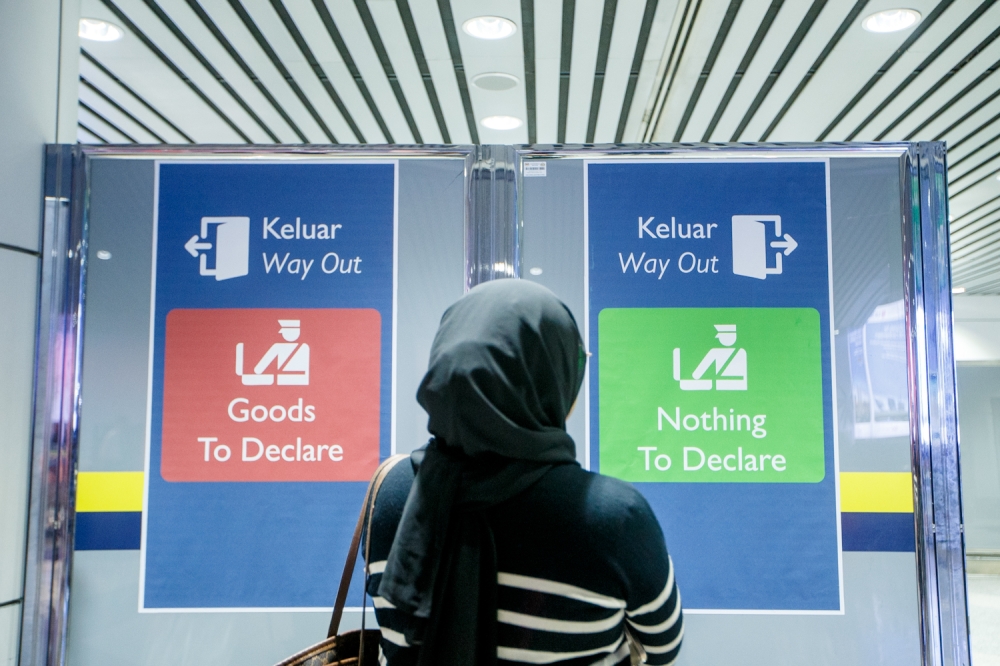

A traveller stands in front of the Red Lane (Goods to Declare) and Green Lane (Nothing to Declare) exit signage at the Kuala Lumpur International Airport (KLIA) January 26, 2026. — Picture by Raymond Manuel
By Malay Mail
First Published: Friday, 06 Nov 2026 9:35 AM MYT
KUALA LUMPUR, Nov 6 — The government has approved a phased security enhancement plan for Kuala Lumpur International Airport (KLIA) that includes 17 substantive recommendations to curb drug smuggling.
The Cabinet approved a joint memorandum from the Home Ministry and Transport Ministry on August 19, according to the official parliamentary reply published yesterday.
The reply was issued in response to Kota Melaka MP Khoo Poay Tiong, who asked the Home Ministry about steps to strengthen security protocols at KLIA following a six-fold surge in drug seizures at the airport to RM108.35 million in the first seven months of 2026.
The action plan is based on three core security pillars: aviation security, national and border security, and physical security and protection.
“Phase 1 of the short-term recommendations focuses on optimising the closing of control gaps using existing powers, personnel, and assets,” the reply stated.
This first phase includes tightening the e-Vetting screening for security passes, enforcing random drug tests on pilots and flight crew, and increasing the omnipresence of police personnel.
It also covers the proposed relocation of the police K9 Narcotics Unit and the Customs Department at special departure zones and risky baggage areas.
The medium-term phase, running from six to 24 months, focuses on building new capacities and procuring high-tech strategic assets.
These include the supply of high-powered baggage scanners and body scanners, as well as the installation of CCTV with artificial intelligence analytical capabilities.
The long-term phase, exceeding 24 months, is committed to modernising national security systems comprehensively.
This includes replacing baggage and body scanners with new-generation AI technology across all entry points, and modifying terminal and cargo infrastructure based on risk levels.
It also involves establishing the National Immigration Command Centre (NICC) as the national intelligence hub, and expanding uniform, integrated security control standards across all air, land and sea entry points in the country.
The government acknowledged that Malaysia’s strategic geographic position and extensive transport network have made it a potential transit route for international drug syndicates.
KioskNews shows a cleaned-up reading view extracted from the publisher’s page — the original always lives on their site, not ours.