Chris Selley: If we’d prefer drug-free prisons to ‘safe snorting,’ we need a system rethink
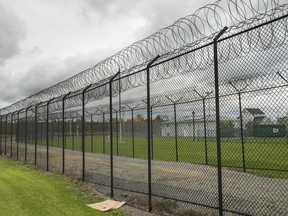
It’s the biggest paper-straw controversy since … well, I guess there has only ever been one until now. It was when Justin Trudeau’s government felt it worthwhile to spend time foisting these usually useless things upon us as a matter of law. But now paper straws are the MacGuffin in the latest war against “harm reduction.” We learned this week that Corrections Canada has approved a “safe snorting” program in federal prisons for inmates to reduce “the risk of internal nose cuts that could occur from homemade or plastic straws and reduce infections from diseases such as hepatitis B and C,” which doesn’t sound entirely implausible.
Sign In or Create an Account
But at the same time, they’re just paper straws. So if we’re OK with needle exchanges, which at last report were in operation at 11 of 12 federal facilities, this shouldn’t seem like something to get hung up on.

Columnist Jesse Kline keeps you up to date with what’s happening in Israel and the effects of antisemitism on life here in Canada. Friday mornings.
By signing up you consent to receive the above newsletter from Postmedia Network Inc.
A welcome email is on its way. If you don't see it, please check your junk folder.
The next issue of Channel Israel will soon be in your inbox.
We encountered an issue signing you up. Please try again
But of course, people are angry about the paper straws. They hate the needle exchange, too, but that’s just not currently on the front burner.
Never mind the fatal overdose risk. Spare a thought, perhaps, for the inmates trying to keep it on the straight and narrow, who would rather not live in a population riven with various hepatitises, viruses including HIV, and lord knows what other maladies. Spare a thought for the wider Canadian community, yourself included: Most of these people are going to get out someday, and especially if they served a federal sentence they may not be the most … civic-minded when it comes to public-health behaviour. They may instead be the sort of person who would skip out on a TB test because he suspected he had TB.
Conservative Leader Pierre Poilievre, like so many politicians before him, vowed to keep drugs out of prison. There would be “zero tolerance for drugs,” he said Sunday. “Drug criminals must undergo regular drug tests to earn release, and (there should be) isolation for prison drug kingpins,” Poilievre averred. “Drug-free prisoners will focus on skill-building & rehabilitation so they can be good citizens on release.”
Those are fine ideas. But as I say, politicians have been vowing to keep drugs out of prison, at random intervals as news dictates, as long as I can remember reading news. There is no evidence of any wholesale lasting success, or even progress. It’s not a small undertaking. Denmark has a problem with drugs in prisons. Biker gangsters reportedly run the smuggling racket serving Finnish prisoners. Iceland has a problem, for God’s sake! You would think they could keep drugs off the whole island ( … he says, before remembering the power of addiction, commerce and human ingenuity).
These are countries that, say what else you will about them, generally run a pretty competent and diligent civil service. They’re the sorts of places you would expect to find much high dudgeon at reports of this kind of soft corruption (not that it always involves employees, obviously) and persistent demands for change. And they can’t accomplish this objectively simple task.
Prison systems that don’t have any problem to speak of at all, isolated incidents aside, include Japan and Singapore. And that’s intuitive when you look at their prisons. Japan’s are run like a military boot camp when prisoners aren’t spending most of their time locked in their cells. Singapore’s prisons, as you would expect from a country with such a renowned tough-on-crime ethos, generally operate much the same. There are elements of each system one could easily imagine Canadian courts swooning over in shock.
So, OK. Suppose we go for something like that. (Maybe minus making inmates sleep on the floor — that’s just begging the courts to fire a bazooka.) But a wholesale philosophical overhaul takes money, and a lot of government resources from various departments, and there’s the rub: Canadian politicians have learned that the only expenditures on prisons that won’t blow up in their faces are building more jails.
Our various ongoing criminal justice scandals frustrate and infuriate people: sentencing discounts for ethnicity and immigration status, the monsters being transferred to wholly insecure facilities, the worst of the worst being released from prison against all sense and reason. But it doesn’t seem to coalesce as a priority issue for many of us. (I didn’t even mention crime: carjackings, home invasions, gang warfare.)
An Abacus Data poll in September last year found just 20 per cent of Canadian respondents chose “crime and public safety” as one of their top three issues. I have no idea how to make more people care about it and hold their politicians and civil servants responsible for the results.
National Post
cselley@postmedia.com
Join the Conversation
This website uses cookies to personalize your content (including ads), and allows us to analyze our traffic. Read more about cookies here. By continuing to use our site, you agree to our Terms of Use and Privacy Policy.
KioskNews shows a cleaned-up reading view extracted from the publisher’s page — the original always lives on their site, not ours.