The types of extreme pornography that will be banned from Friday
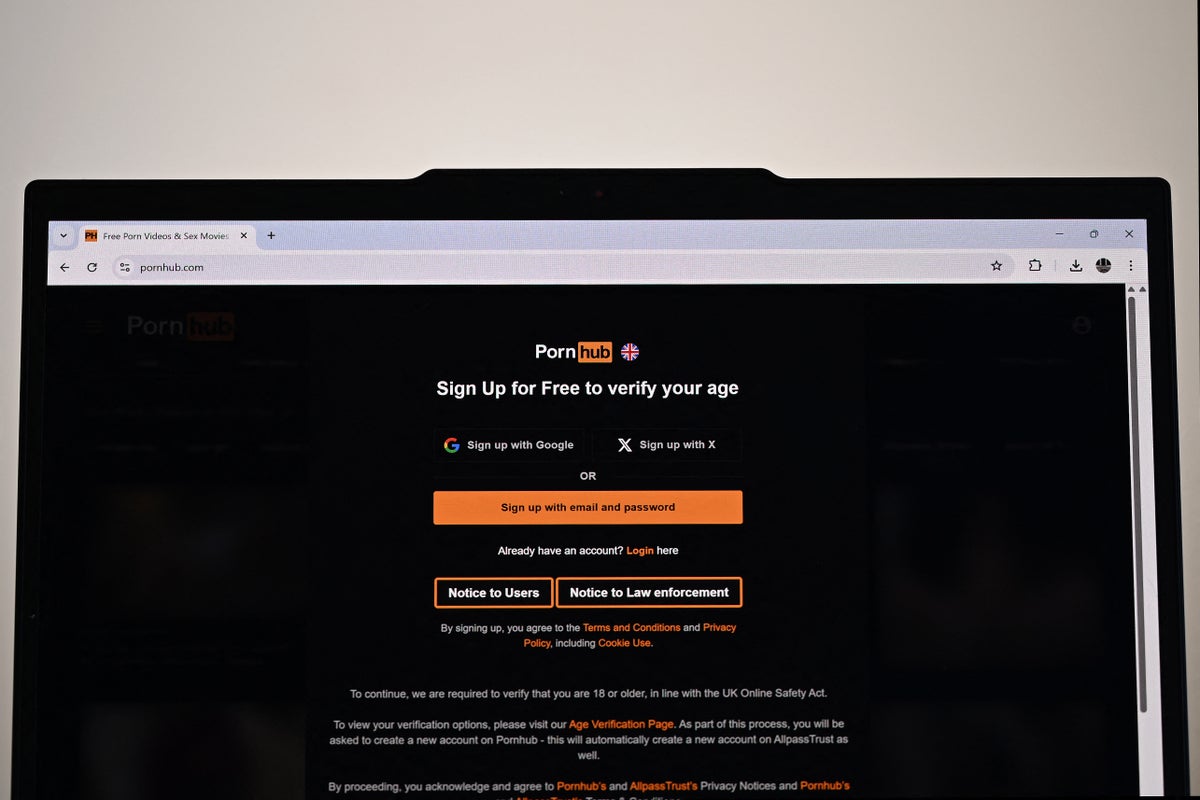
Certain types of pornography, which have been accused of normalising violence against women and girls, will be banned from Friday this week.
It was last month that particular content would be banned from 6 November, after cross-party pressure about the negative impact on women and girls led ministers to announce the new laws earlier this year.
So what is going to be banned, and why? And what will the punishments be for breaking the law?
The types of pornography that will be barred
Pornography depicting strangulation or suffocation, sex between people who are related or pretending to be related, or when somebody is pretending to be a child under 16, will be made illegal.
Justice Minister Alex Davies-Jones said: “This government has a commitment to halve violence against women and girls in a decade. For many people, it is still easy to access harmful pornography online.
“From November 6, it will be illegal to possess or publish pornography showing strangulation or suffocation, sexual activity between certain relatives, or adults roleplaying as children under 16.
“This isn’t about criminalising harmless sexual preferences. But porn can shape what people think a healthy relationship looks like, especially young people.
“Content that normalises, or even glorifies, violence against women is dangerous and can blur the line with what is acceptable in real life.”
What will the consequences be of ignoring the ban?
Disobeying the ban will be a criminal offence, with consequences ranging depending on the type of violation.
Possessing or publishing pornography that depicts strangulation or suffocation, or penetrative sex between relatives carries a penalty of up to two years’ imprisonment.
The maximum sentence for someone possessing or publishing pornography depicting sexual activity involving a person who is, or is pretending to be, under 16 is three years’ imprisonment
The Ministry of Justice clarified that the ban would only apply to individuals a “reasonable person” would believe appear to be real people.
Why these types of pornography specifically?
Conservative peer Baroness Gabby Bertin made the recommendations in her review into pornography regulation, which was reported in 2025.
She said the news came “not a moment too soon”, after previously saying strangulation in porn had become “totally normalised”.
Lady Bertin’s report found pornography which shows women being choked can have “devastating” real-world consequences.
It highlighted “disturbing” role-play, including incest and adults portraying children. Both will be banned.
A study by the Institute for Addressing Strangulation in 2024 found more than a third of 16 to 34-year-old adults had reported being strangled or choked at least once during consensual sex.
A survey by the same group last year found 43 per cent of 16- to 17-year-olds, who are sexually active, said they had been subjected to it.
In her report, published in February 2025, the Conservative peer said there had been a “total absence of government scrutiny” of the pornography industry.

Lady Bertin previously said that strangulation had “gone into the bloodstream” of society and it should be “wiped out of the culture”.
Non-fatal strangulation is already an offence in its own right, but it is not illegal to show it online.
”It is very good news these offences will come into force, and not a moment too soon,” she said.
“This change in law alongside better enforcement and stronger regulation will send the unequivocal signal not only to the companies that host and facilitate porn but also to wider society that extreme and violent content that encourages real-life harm is not acceptable.”
Ms Davies-Jones said: “Young people especially deserve better examples of what healthy relationships look like. Real intimacy is built on respect and trust, not abuse.
“If you’ve got this material, delete it. If you’re sharing it, stop.
“It’s not as harmless as you may think, and after 6 November it is criminal.”
KioskNews shows a cleaned-up reading view extracted from the publisher’s page — the original always lives on their site, not ours.