Andhra Student's Braille Printer Makes Top 20 For James Dyson Award 2026
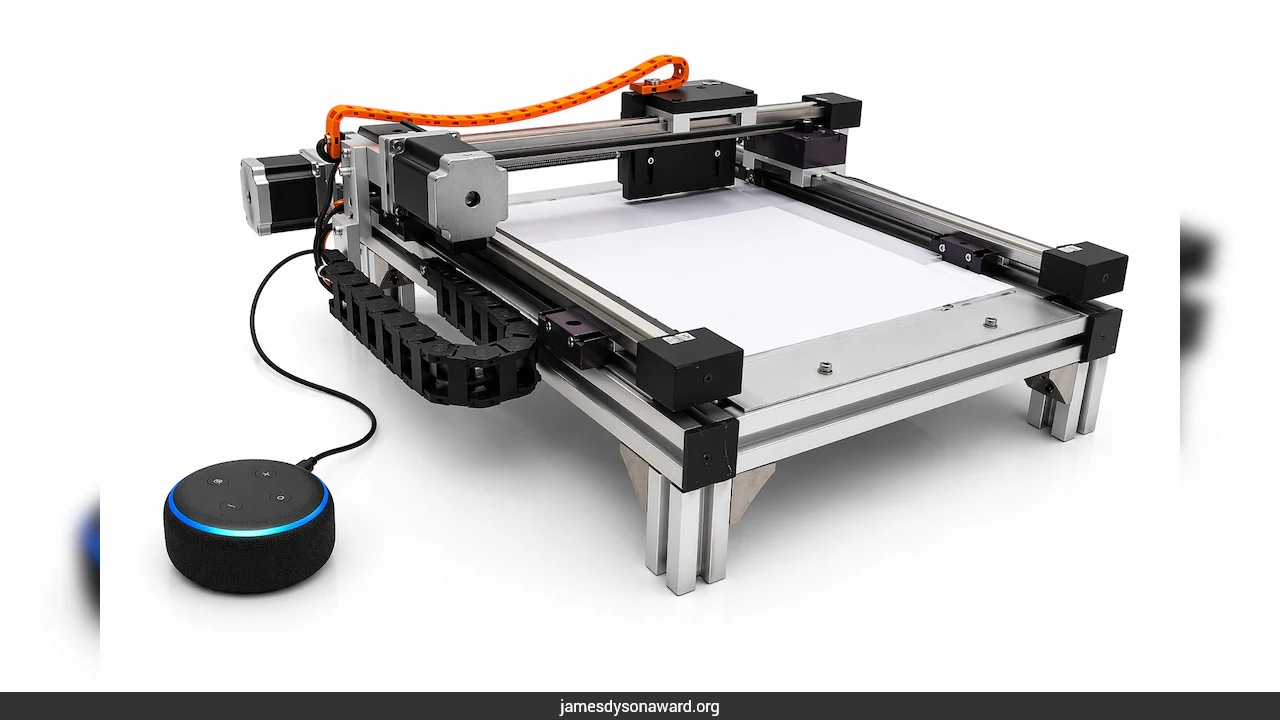
Lingampalli Himaja, a 20-year-old engineering student from Andhra Pradesh, has secured a spot on the global Top 20 shortlist of the James Dyson Award 2026 for developing RUDHRA, a voice-controlled Braille printer that enables visually impaired people to create documents independently.
Himaja, from West Godavari district, is a student at Shri Vishnu Engineering College for Women in Bhimavaram.
Her innovation was selected from entries submitted worldwide by a panel of 12 Dyson engineers, who evaluated projects on functionality, originality, design process and commercial viability.
RUDHRA converts spoken words into embossed Braille characters, allowing users to create notes and printed reading material without manually entering each character using conventional Braille writing tools.
The device aims to reduce the effort involved in traditional Braille writing and make document creation easier for students and other visually impaired users.
The system uses Alexa to convert speech into text, while a Raspberry Pi processes the text and generates corresponding Braille patterns. Stepper motors position the printing mechanism, and a solenoid embosses raised dots onto paper. Users can also edit and store notes before printing.
The idea was born during Himaja's visit to a school for visually impaired students as part of a college outreach programme. After observing the challenges students faced with traditional slate-and-stylus writing, she developed an initial prototype using push buttons. Feedback from a student, who suggested speaking instead of typing, led her to incorporate voice input.
RUDHRA is among 20 international finalists advancing to the final stage of the competition. British inventor Sir James Dyson will select the global winners, who are scheduled to be announced on November 4, 2026. Each winning invention will receive £30,000 to support further development.
Himaja hopes to make RUDHRA more compact, affordable and accessible. She also plans to improve automation and explore its use in schools for visually impaired students, examination settings and homes.
KioskNews shows a cleaned-up reading view extracted from the publisher’s page — the original always lives on their site, not ours.