Courts can’t suggest custodial quizzing, says Supreme Court
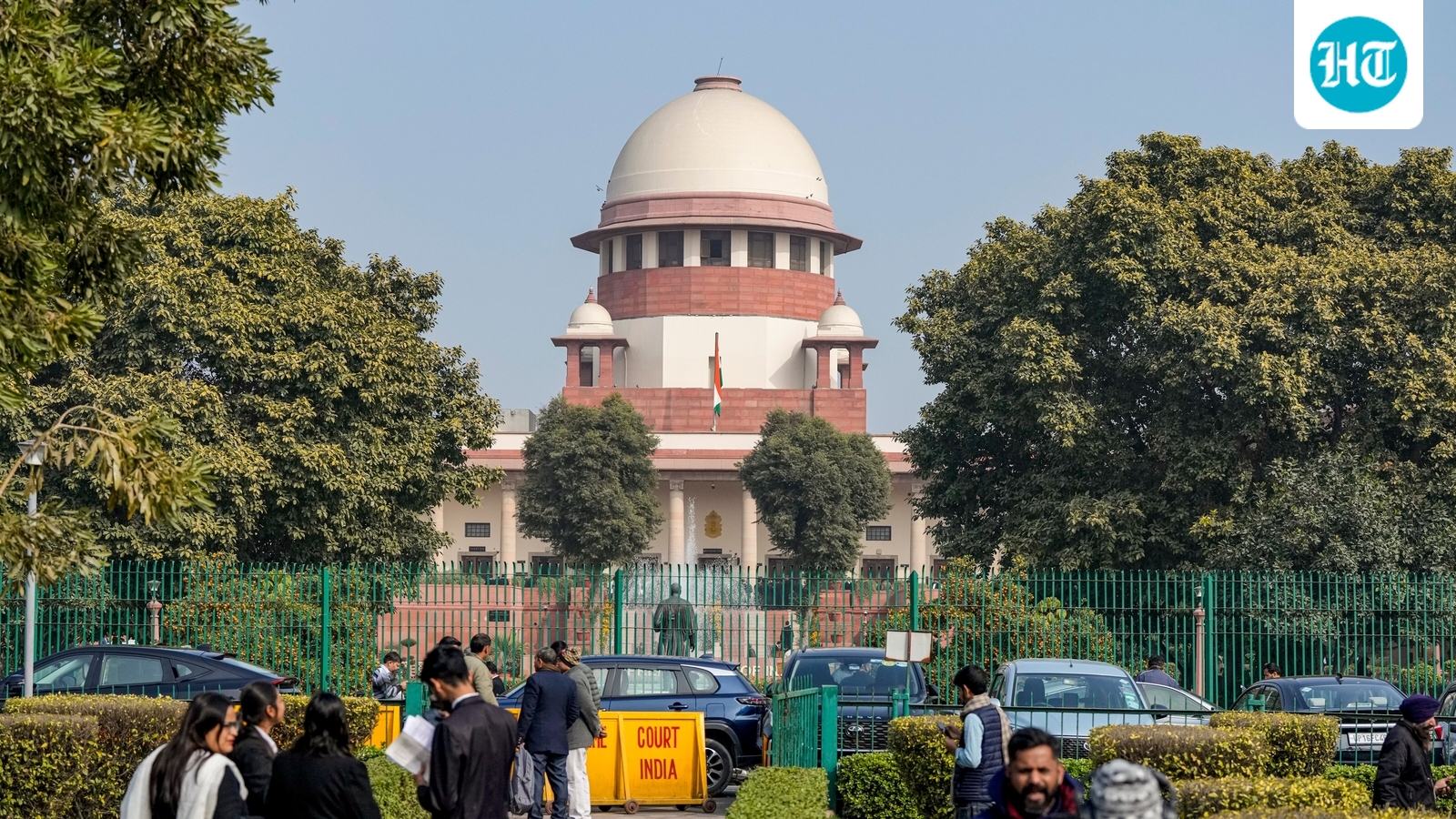
The order is significant for the distinction it draws between the investigating agency’s discretion in deciding the manner of interrogation.

 Prefer HTon Google

Courts cannot suggest to investigating agencies that an accused or suspect should be subjected to custodial interrogation, the Supreme Court has held, cautioning that sweeping observations on the need to take people into custody can jeopardise their liberty.
A bench of justices Ujjal Bhuyan and Atul S Chandurkar underlined it is for the investigating agency to seek custodial interrogation or otherwise, and not for courts to suggest or dictate the nature of custody or questioning required in a case.
Also Read I SC directs mother to take 7-year-old daughter back to US by December 31 in custody dispute
Interrogation vs arrest
“We are of the firm view that it is not for the high court to suggest any form of interrogation of an accused. This should be best left to the discretion of the investigating agency,” said the bench in a recent order, while adding that any “sweeping observation” about the custody of other accused or suspects in the case ought to be avoided.
The order is significant for the distinction it draws between the investigating agency’s discretion in deciding the manner of interrogation and a court’s role while considering a plea for protection from arrest. It made clear that a court assessing whether an accused deserves protection cannot, in the process, prescribe a particular mode of interrogation or make sweeping findings about the custody of other suspects.
The court made the observation while granting anticipatory bail to a retired school principal and his wife in a case registered in Gujarat over alleged manipulation of the principal’s service records to extend his tenure by a year to June 2023 and allegedly draw over ₹10.75 lakh in salary and service benefits.
It noted that the allegations against the couple were based on documents and, therefore, custodial interrogation was not necessary. More significantly, it took exception to the Gujarat high court’s observation that “custodial interrogation of not only the applicant, but all other suspect/s is therefore imperative to unearth the truth”.
The case arose from an FIR registered at Visavadar police station in Junagadh district against Miteshgiri alias Mulrajgiri Sevagiri Goswami, former principal of Shri Secondary School, Vekaria, and his wife, Ilaben M Goswami, president of the school’s governing body.
Tampered birth date
According to the prosecution, Goswami initially recorded his date of birth as June 19, 1964, which meant he was due to retire on June 30, 2022. It was alleged he subsequently tampered with records to show his date of birth as June 19, 1965, to continue in service for another year.
The prosecution alleged that forged documents and signatures of government officials were used in the process, resulting in an alleged unlawful gain of ₹10,75,487 from government funds. The allegations also included a second attempt to obtain pensionary benefits under a different name.
Also Read I Supreme Court to hear case on race in middle school admissions
The court stayed the arrest of the couple on the condition that they cooperate with the investigation. It consequently set aside the high court’s order and made its earlier interim protection from arrest absolute.

Utkarsh Anand is the National Legal Editor at Hindustan Times, where he leads the newspaper's coverage of the Supreme Court, constitutional law, the judiciary and the Union law ministry. He joined Hindustan Times in 2020 after stints at Press Trust of India (PTI), The Indian Express and CNN-News18, and has over two decades of experience reporting on law, governance and public policy. His work has focussed on some of India's most consequential constitutional and legal developments, including the Supreme Court's judgments on Article 370, marriage equality, decriminalisation of homosexuality, the Babri Masjid dispute, electoral reforms and judicial appointments. He specialises in making complex legal proceedings and judgments accessible to readers while examining their wider social and political impact. Beyond daily reportage, Utkarsh has led investigative projects and enterprise reporting that have shaped public debate and prompted institutional responses. His work has received several journalism awards, including the Ramnath Goenka Excellence in Journalism Award. As National Legal Editor, he has also played a key role in expanding Hindustan Times' legal journalism footprint, mentoring reporters and strengthening coverage across platforms. A Chevening South Asia Journalism Programme Fellow, Utkarsh regularly writes analyses on the judiciary and constitutional issues, and his reporting is widely followed by lawyers, judges, policymakers, academics and readers seeking clarity on India's evolving legal landscape.Read More

KioskNews shows a cleaned-up reading view extracted from the publisher’s page — the original always lives on their site, not ours.