CDC monitoring flu epidemic status
DOWNTREND? The CDC decided against announcing an end to the epidemic period, as there were still more than 100 severe flu cases last week and fatalities had not dropped
By Lee I-chia / Staff reporter


Weekly case numbers of flu-like illnesses have declined for seven consecutive weeks, but the flu epidemic period has not ended, as 103 severe flu cases and 38 flu-related deaths were reported last week, the Centers for Disease Control (CDC) said yesterday.
Influenza viruses have still been the most common respiratory pathogens in the past four weeks, with influenza A(H1N1) virus accounting for 94.7 percent of tested cases, CDC Epidemic Intelligence Center Deputy Director Lee Chia-lin (李佳琳) said.
There were 91,879 medical visits for flu-like illnesses last week, a decline of 6.4 percent compared with the previous week, and 9.3 percent among them were at emergency departments, she said.
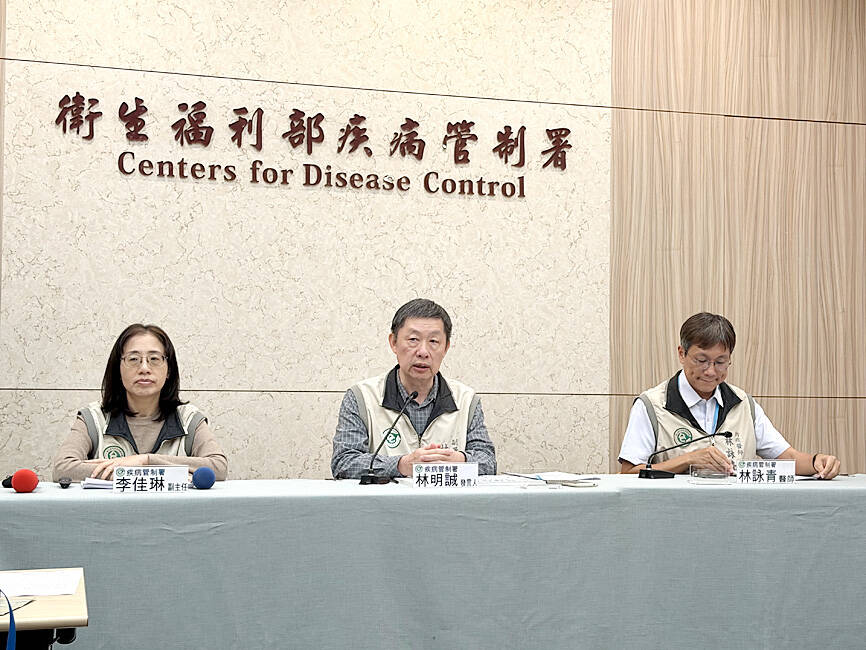
Centers for Disease Control officials hold a news conference in Taipei yesterday.
Photo: CNA
However, there were 103 severe flu cases and 38 flu-related deaths reported last week, and altogether, 645 severe cases and 124 deaths have been confirmed from Oct. 1 —the beginning of this flu season — to Monday, Lee said.
Weekly case numbers of flu-like illnesses have been declining for seven consecutive weeks, and the percentage of emergency medical visits have dropped below the epidemic threshold for two consecutive weeks, CDC Deputy Director-General and spokesman Lin Ming-cheng (林明誠) said.
The CDC had planned to announce an end to the flu epidemic period, but as there were still more than 100 severe flu cases last week, and the numbers of weekly severe and death cases have not steadily declined, the centers decided to hold off on an announcement and observe the flu situation for two more weeks, he said.
The centers would continue to observe the trend of weekly severe cases and other indicators, before determining whether to announce an end to the epidemic period, he said.
It encouraged people to take preventive measures against infection and get vaccinated as early as possible.
Lin announced that the expanded eligibility for doctors to prescribe flu antiviral drugs would be extended from its original deadline on Nov. 15 to Nov. 30.
Meanwhile, 12 new cases of dengue fever were reported last week, including 10 imported and two locally acquired cases, Lee said.
Among the imported cases, eight were from Vietnam, including a cluster of two people, and one each from Cambodia and Thailand, she said.
Lin said the two clustered cases are two people who traveled to Phu Quoc Island for eight days with a group tour last month.
They experienced symptoms including a fever, headache, nausea and muscle soreness after returning to Taiwan, he said.
They both live in Tainan, but not together, he said.
The group had eight other members who live in Taichung, two in Nantou County and one in New Taipei City, he said, adding that they have been asked to monitor their health conditions until Dec. 6.
Lee said the two new local cases include one in Kaohsiung’s Siaogang District (小港) and one in New Taipei City’s Sinjhuang District (新莊).
There have been 18 local cases confirmed this year, including 13 in Kaohsiung, two each in Changhua County and Pingtung County, and one in New Taipei City, she said.
The new case in New Taipei City is the first local case in northern Taiwan this year, and the New Taipei City Department of Health yesterday said it received a report of the case — a 44-year-old woman — on Sunday.
The woman began having symptoms. including a fever, tiredness, headache and rashes from Oct. 26, and tested positive after seeking medical treatment, it said, adding that her symptoms have abated and three people living with her showed no symptoms.
She did not visit other countries during the incubation period, so the source of infection is yet unclear, the department said.
The department said it had completed vector mosquito density surveys and eliminated breeding sites near her activity areas, as well as scheduled chemical control to reduce transmission risks.
KioskNews shows a cleaned-up reading view extracted from the publisher’s page — the original always lives on their site, not ours.