How Japan’s 660 most wanted stay hidden: slums, day labour and forged IDs
A month-long police campaign in Japan to track down hundreds of suspects sought over the nation’s most notorious crimes, some dating back decades, underscores what analysts describe as the surprising ease with which individuals can vanish, even in the country’s highly bureaucratic society.
The nationwide drive, officially designated the “Month for Strengthening Investigations into Wanted Suspects”, began on November 1. Through official websites and social media appeals, authorities are urging the public to report any information on the whereabouts of roughly 660 fugitives currently on the national wanted list.
“There is a long list of arsonists, murderers and radical activists who are still wanted, with some of the cases going back to the 1970s,” said Shinichi Ishizuka, a former criminal lawyer and founder of the Tokyo-based think tank Criminal Justice Future.
“Many of these crimes have no statute of limitations, so these suspects will remain on the prefectural and national wanted lists until they are found or the authorities are satisfied that they are no longer alive,” he said.
Tracking them down, however, will be challenging.
“Japan is a very modern country and lots of paperwork is required whenever someone starts a job, rents an apartment or gets a driving licence, but still these people are able to live silent, secret lives,” Ishizuka said.
According to Ishizuka, many fugitives blend into metropolitan districts known for organised crime and casual day labour, such as Tokyo’s Sanya or Osaka’s Nishinari ward. Those with underworld connections are often sheltered, while others sleep rough, moving around regularly to avoid detection.
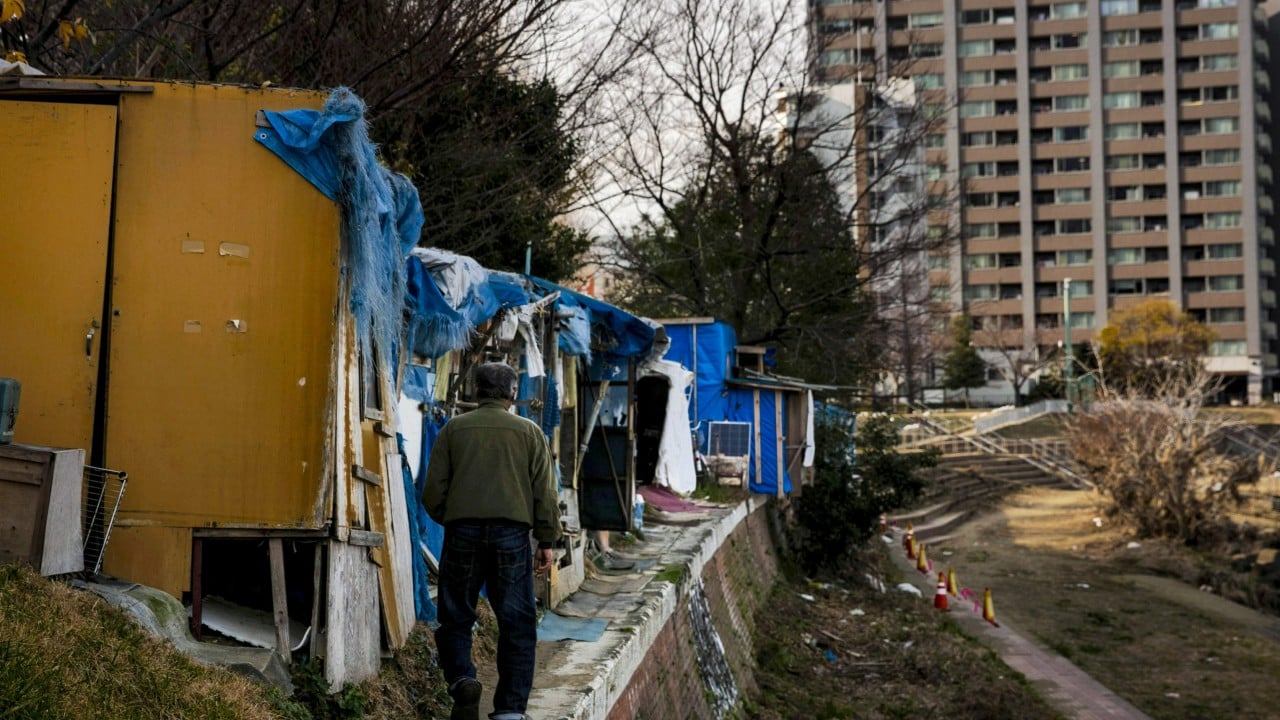
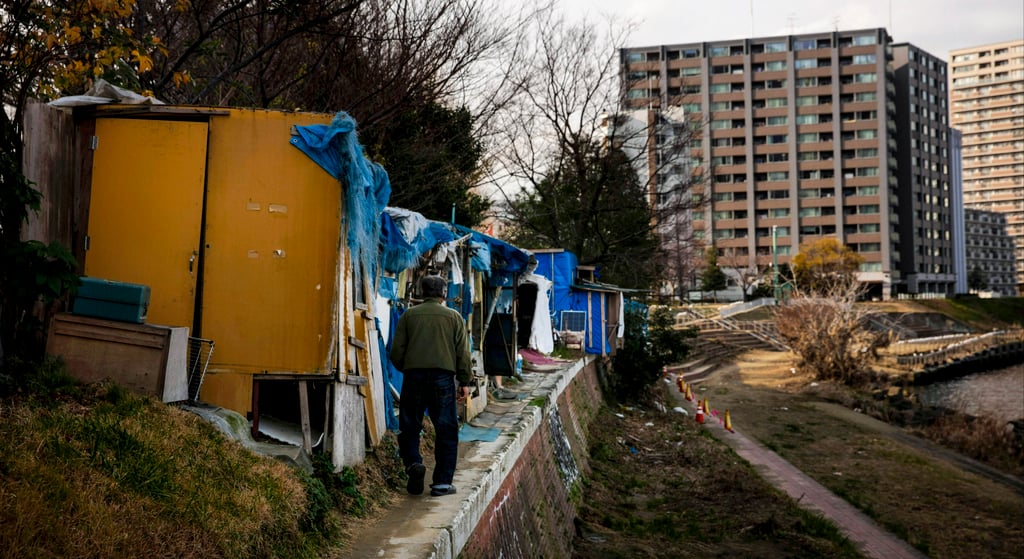
“They find work as day labourers on construction sites, where no questions are asked and they are paid in cash each day,” Ishizuka said, noting that many merge with the urban homeless population, living under tarpaulins and surviving hand-to-mouth.
Others with sufficient cash head to remote, sparsely populated rural areas. “I have heard that some go to Okinawa because the weather is good and they can just lead a quiet life,” he added.
Some manage to slip out of the country entirely. According to National Police Agency (NPA) data, 835 suspects fled abroad in 2024, of whom 640 were foreign nationals. Of those who escaped, 221 went to China, 98 to Vietnam and 75 to Brazil. The total marked an increase from 784 overseas fugitives in 2023, which included 609 foreign nationals.
David Brewster, a criminologist and associate professor at Tokyo Woman’s Christian University, said internet cafes could offer short-term refuge, but permanent housing was the main challenge for those on the run.
“Renting would be difficult because of the paperwork that is required, but it is very likely that these people know enough shady characters – such as gang members – that they are able to get hold of forged documents and take on an alias,” Brewster said.
Several high-profile fugitives have stayed ahead of law enforcement for decades.
Hiroshi Kogure heads the NPA’s list of 10 most wanted suspects. He has been on the run since January 1998 in connection with the murder of a family of three at their home in Gunma prefecture. The agency is also pursuing Takeo Matayoshi, accused of killing two police officers in Okinawa in 1990.
Other priority targets include Tsuyoshi Yoshiya, the leader of a violent street gang wanted over a fatal brawl in Tokyo, and Katsuyuki Obara, who reportedly faked his own suicide after allegedly killing a 17-year-old girl in Iwate prefecture in 2008.
While many names are still on the wanted list, some individuals occasionally resurface.
In September 2020, Takeo Shimizu, former leader of the extreme-left group Chukaku-ha (Middle Core Faction), emerged from hiding after going underground in the mid-1970s. Linked to 124 violent incidents – including the 1971 Shibuya riots and a 1990 home-made projectile attack on the Imperial Palace – Shimizu avoided prosecution because the statutes of limitations on his alleged offences had expired.
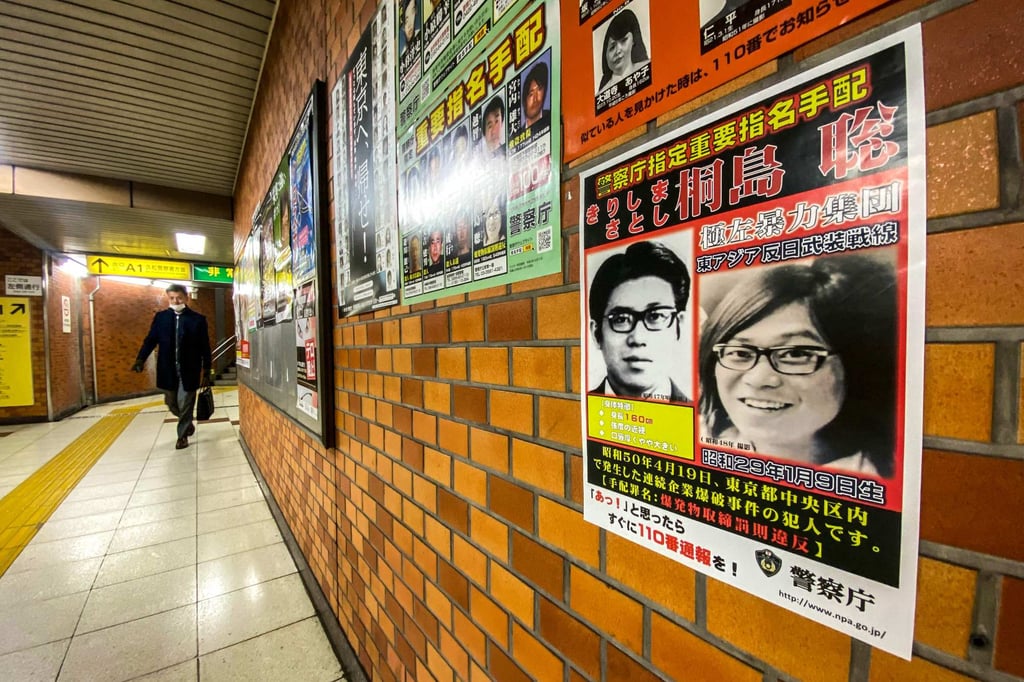
In January 2024, a terminally ill patient at a hospital in Kamakura, who had lived for decades as a construction worker under the alias Hiroshi Uchida, made a dying confession. He revealed himself to be Satoshi Kirishima, a fugitive member of the East Asia Anti-Japan Armed Front wanted for a string of corporate bombings in the 1970s. Questioned by investigators from his hospital bed, Kirishima died four days later.
The NPA avoids publicising the exact figure for every warrant nationwide, but its public campaigns highlight bounties of up to 3 million yen (US$19,000) for information leading to an arrest.
Wanted posters featuring mugshots, alleged crimes, incident dates and identifying physical traits are fixtures outside koban (neighbourhood police boxes) and inside commuter transport hubs.
“In recent years, crime has become more organised, spread across a wider area and more international, making police investigations increasingly challenging,” the NPA said in a statement. “Changes in social conditions, such as growing urbanisation and the weakening of human relationships in local communities, have made it more difficult to obtain cooperation for investigations.”
The statement urged the public: “If you see someone who resembles a wanted suspect, or someone you think vaguely resembles them – even if the photo is old or your memory is hazy – please report it to the police.”
KioskNews shows a cleaned-up reading view extracted from the publisher’s page — the original always lives on their site, not ours.