Expect even more potholes on UK roads after summer heatwaves, says RAC

The UK’s dilapidated roads are expected to get even worse, with motorists warned to expect a jump in the number of potholes as result of the country’s hottest summer on record.
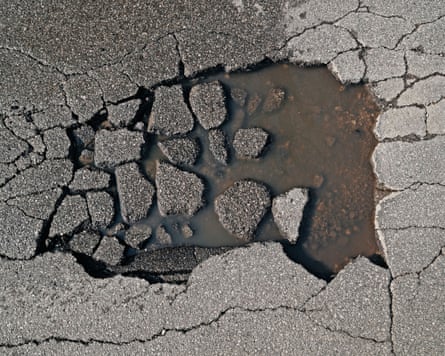
Potholes are commonly assumed to be caused by cold or wet weather, but long periods of heat can also create long-lasting damage on the roads, according to the RAC.
“Intense UV exposure and heat gradually oxidise the bitumen that binds asphalt together, making surfaces more brittle and prone to cracking. Once cracks develop, traffic and later rainfall can quickly turn them into serious defects,” said the company’s head of policy, Simon Williams.
The roads were already in a terrible state after last winter, with only half the network in England and Wales in a good condition after months of rain, the Asphalt Industry Alliance reported earlier this year.
They have been further damaged by the summer’s run of back-to-back heatwaves, with temperatures rising above 38C in some parts of the country.
Mike Hansford, the chief executive of the Road Surface Treatments Association, said: “Extremes in the UK’s weather, including increased summer UV radiation, combined with colder, wetter winter conditions, can accelerate deterioration.”
The extreme heat has been attributed to the climate crisis, with scientists from the Met Office finding that the high temperatures experienced in the UK were 130 times more likely to occur owing to human-induced climate change. An increase in the number of potholes is just one of several ways in which climate chaos is putting the UK’s infrastructure under strain.
Hot, dry weather shrank soil in railway embankments, forcing timetable changes and slower services on some routes. High temperatures even risk making rails buckle, something being looked at as a possible cause for two derailments last month.
UK insurance companies have reported an increase in the number of subsidence claims over July and August as a result of the abnormally hot weather, with the insurer Hastings Direct saying it expects claim volumes “to remain higher than normal through to around October unless sustained rainfall helps restore soil moisture levels”.
after newsletter promotion
According to an RAC report earlier this year, 51% of motorists describe the sorry state of Britain’s roads as their biggest anxiety related to driving, with 83% saying they encounter potholes on most car trips.
Williams said these fears were “a reflection both of a long-term lack of investment in road maintenance and repair by local authorities, and of the road surface issues exacerbated by a particularly wet winter, and now an extremely hot summer”.
However, he also expressed optimism about the government’s newly increased response to the pothole problem. He said: “Council highway budgets in England have been increased to a record £1.6bn for 2025-26, and in November’s budget, £7.3bn was allocated for road improvement works between now and the end of the decade, which will allow councils to make long-term maintenance plans.”
The Department for Transport has also released new requirements for English councils in June that will push them to prove they are doing more to find long-term solutions to fixing potholes and roads. Under the requirements, local authorities could lose up to a third of their road maintenance funding if they fail to demonstrate they are working to build these solutions.
KioskNews shows a cleaned-up reading view extracted from the publisher’s page — the original always lives on their site, not ours.