Miti: Malaysia’s exports to US surge 69pc despite tariffs, powered by AI boom
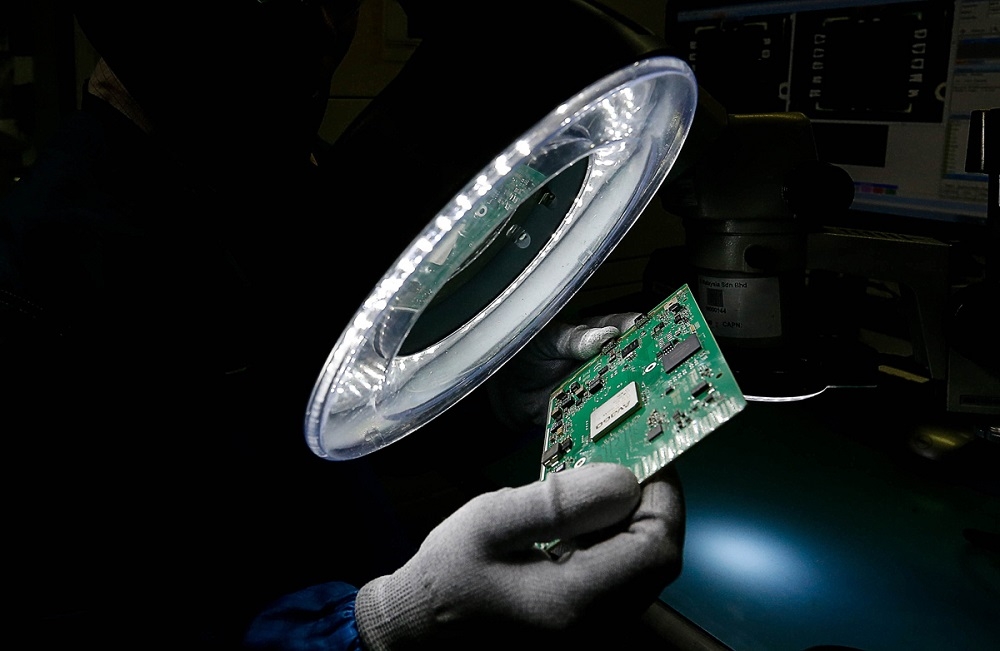

Malaysia’s exports to the United States surged 69.1 per cent to RM282.07 billion in the first nine months of 2026, driven largely by demand for semiconductors and other electronic products. — Picture by Sayuti Zainudin
First Published: Wednesday, 28 Oct 2026 8:52 AM MYT
KUALA LUMPUR, Oct 28 — Malaysia’s exports to the United States surged 69.1 per cent to RM282.07 billion for January to September 2026, while total trade between the two countries rose 39.6 per cent to RM378.70 billion.
The Ministry of Investment, Trade and Industry (Miti) said Malaysia’s trade performance with the US continues to grow despite its exports being subjected to additional tariffs following investigations under various legal instruments conducted by the US.
According to the ministry, the strong export performance was mainly driven by a surge in demand for electrical and electronic (E&E) products, particularly semiconductors, following rapid developments in artificial intelligence (AI) technology and data centres.
“A critical factor driving this growth is Malaysia’s strategic advantage in receiving exemptions from additional tariffs imposed by the US on most semiconductor and E&E products,” said Miti in a written response published on the Parliament’s website on Tuesday.
The ministry was responding to Datuk Seri Amirudin Shari (PH-Gombak), who sought to know the impact of US tariff impositions on Malaysia’s industry in 2026 and the new alternative markets being explored to enable micro, small and medium enterprises (MSMEs) to export their goods.
The ministry noted that the E&E sector accounts for about 64.2 per cent of Malaysia’s total exports to the US, with 44 per cent of E&E exports comprising semiconductor products.
However, Miti said that in the same period, Malaysia’s rubber glove exports to the US decreased by 1.6 per cent to RM5.0 billion, furniture exports fell by 19.2 per cent to RM3.77 billion, and medical device exports dropped by 12.0 per cent to RM8.74 billion.
He said several key Malaysian industries are under pressure to absorb US tariff costs or offer discounts to buyers to maintain product competitiveness, continue exports, and preserve access to that market.
“Miti believes that efforts to diversify markets and reduce excessive dependence on any single market are the best steps to minimise exposure to external shocks and to enhance the country’s trade resilience.
“In this regard, Miti continues to actively work to enhance market access and open new markets through various free trade agreements (FTAs) that have been signed, in addition to exploring non-traditional markets in West Asia, Africa, Latin America, and South Asia,” it added.
Meanwhile, in a separate reply to Mohd Syahir Che Sulaiman (PN-Bachok), Miti said it is finalising the implementation of the New Incentive Framework (NIF) for the services sector, following its rollout for the manufacturing sector from March 1, 2026.
According to the ministry, the NIF shifts the tax incentive approach from a product- and activity-based system to a performance-based approach, with greater emphasis on outcomes and the economic impact generated by a project.
Miti said this in response to Mohd Syahir’s question about the reforms in the investment application evaluation process to ensure added value to the national economy, particularly through the creation of quality jobs. — Bernama
KioskNews shows a cleaned-up reading view extracted from the publisher’s page — the original always lives on their site, not ours.