Mega mega mega, going back to Romford! How an outer London suburb became a metropolis for 90s dance music
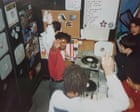
In the early 1990s, the suburban town of Romford was known for three things. It was the home of the world’s best snooker player, Steve Davis. It was where people placed bets at Romford dog track, over a dinner of chicken in a basket. And for those in the know, it was where the UK’s best underground dance music was bought and sold.
That pedigree was immortalised by Romford’s most famous musical act, Underworld, with frontman Karl Hyde shouting the words “mega mega mega, going back to Romford” at the climax of 1995’s Born Slippy. Those words now form the title of a new exhibition in the town, Mega Mega: Romford’s Suburban Sound Revolution, which charts how this unglamorous but party-spirited backwater became an upstart rival to great dance music cities such as Manchester or Detroit.
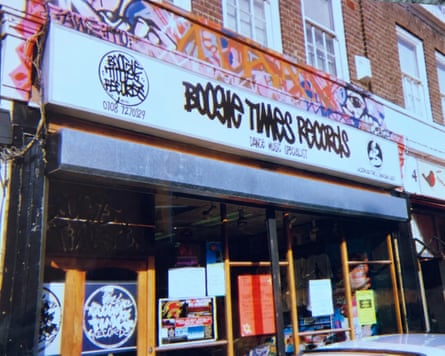
The scene’s key hub was the record shop Boogie Times, opened in 1989 by Danny Donnelly with a bank loan secured shortly before his 18th birthday. He was born in Stratford, east London, but when he was five his parents moved out to Romford, an old Essex market town that had effectively become a suburb of London as the capital sprawled outwards after the second world war.
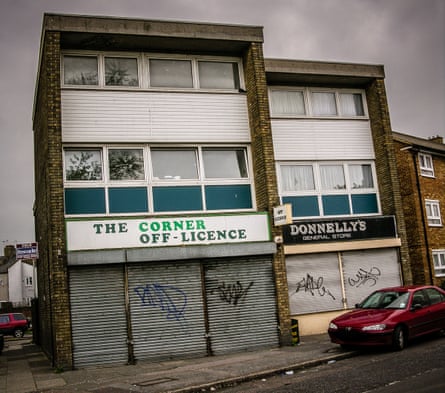
Donnelly’s dad commuted back to Stratford to run the family corner shop, while young Danny inherited his entrepreneurial streak. “I was already buying and selling records at school,” he says. He loved rare groove, where hard-to-find jazz, funk and R&B records were selected for the quality of their breakbeats. At 14, he bought huge speakers for his bedroom, which he later used to put on parties around east London: “You’d hire someone’s flat, charge at the door and it would be treated like a club for the event.”
Boogie Times opened just as house music and ecstasy found their way into post-industrial spaces and farmers’ fields, building demand for rave tunes on vinyl. The location of Donnelly’s dad’s shop in Stratford was similarly fortuitous: east London pirate station Fantasy FM launched in the block next door in 1989. “They would come downstairs and get a cup of tea and a sandwich after they had done their show,” says Donnelly. His dad got chatting to future drum’n’bass legend DJ Hype, who soon paid a visit to Boogie Times with another artist, DJ Krome. “Krome said: ‘Your mum makes the best cheese and onion sandwich.’” After being switched on to hardcore rave, Donnelly endeavoured to supply some of the freshest vinyl to a burgeoning local clientele.
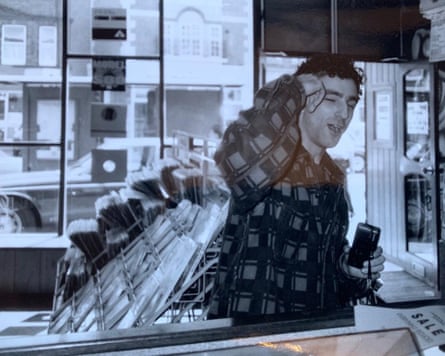
Romford and the wider borough of Havering already housed parties by people such as the polymath producer and promoter Mark Ryder – who later became a star in the UK garage era as Mark “Ruff” Ryder – but Romford was still best known for dancing to pop music on a Saturday night with your glad rags on.
Tony Grimley, another local DJ inspired by his first rave, was asked to run a night at Romford’s biggest nightclub, Hollywood. He named it Culture Shock to describe the way the music landed there. “It was a party venue: a very Sharon and Tracy, 80s place,” says Grimley. Instead of tame disco and “erection section” slow dances, suddenly there were exciting new electronic DJs such as Andrew Weatherall, Danny Rampling and Underworld’s Darren Emerson. The local crowd didn’t like hard techno, Grimley says, “but that happy, high-energy sort of house music [such as] Danny Rampling … every time we booked Danny, we reached capacity.”
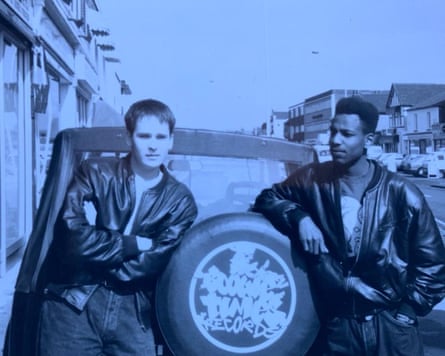
Simon Duggins AKA Uncle Dugs, DJ and former station manager of pirate-turned-legit radio station Rinse FM, went to his first rave after he noticed a circus big top on the side of the A13 when his dad was driving him to football training at Leyton Orient. “I walked into that rave a budding professional footballer,” says Duggins. “I walked out wanting to be [rave DJ] Slipmatt.” Duggins had already been nervously stepping into Boogie Times on a packed Saturday when he was still at school. “Someone would walk in, and then the whisper would go round the shop: That’s DJ Hype. You can’t even believe that you’re in the same space as these people.”
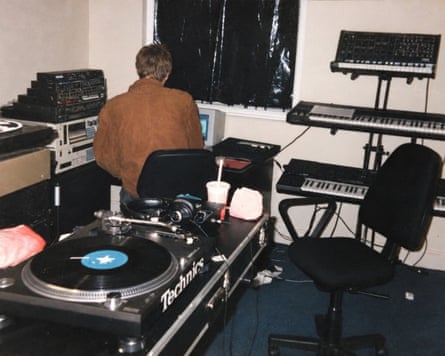
Romford was also surrounded by pirate radio stations such as Conflict FM in Rainham, and Force FM, which operated above a nearby sweet shop. “Pirate radio, the community around record stores and flyering was the analogue version of the internet,” says Donnelly. He broadened that community by creating his own record label, Suburban Base, brainstorming its name in the office above the shop on the day of the Rumbelows Football League cup final on 21 April 1991. It was a canny way to surpass dance music’s supply-chain gatekeepers by making the music themselves. “We were trying to compete with more established dance music shops in central London that were getting exclusives, stuff that we couldn’t get hold of,” says Donnelly. So he used Suburban Base to press small runs of records, “that we could keep exclusive to our shop for at least the first few weeks. People had to come to us.”
The name Suburban Base accurately described Romford’s outsider status in a scene defined by the inner city: away from more credible tracks in London, sometimes Essex artists veered into full-on cheese such as the kids-TV-sampling Sesame’s Treet by Loughton locals Smart E’s. Released by Suburban Base, it reached No 2 in the UK singles chart in July 1992. Donnelly says the track was seen by some on the scene as selling out, but adds: “It was hugely popular amongst rave DJs before it crossed over.” And it does have an innocence that chimed with the family vibe of the Boogie Times shop, which was “like a youth club in a way, with loads of people hanging around listening to music”, says Rachel Wallace, a key member of the Boogie Times tribe. She dated Donnelly and recorded her first tracks for the label in a studio in his parents’ garage, including the relentless and evocatively 90s tune Tell Me Why.
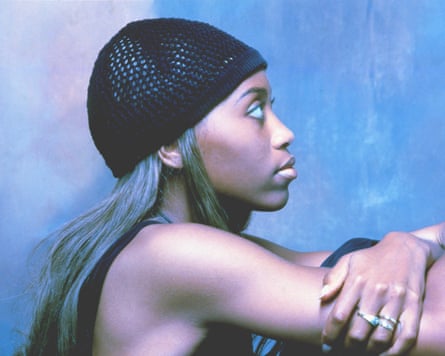
Suburban Base helped to propel the dance scene as breakbeats got faster and more intricate, the bass got bigger and rounder, and ragga MCs became more prevalent. This new sound became known as jungle, showcased on hot Suburban Base dancefloor fillers such as RIP by Remarc. DJ Rap, AKA Charissa Saverio, was living in nearby Walthamstow and put jungle tracks out on Suburban Base, and found the scene unusually welcoming. “You saw Black people and white people together for the first time,” she says. “You walked in [to a jungle night] as a girl, and you weren’t harassed by a bunch of men; you could wear what you want, you didn’t have to look sexy, you could just be you.”
As the 90s progressed, Suburban Base became the first independent UK rave label to open up an office in the US, on the corner of Hollywood and Vine in Los Angeles in 1994. It expanded into Brazil, where drum’n’bass took off in a big way. Donnelly discovered a DJ working in a São Paulo record shop called Marky Mark, who became DJ Marky, and whose track LK became one of drum’n’bass’s biggest UK hits. “If you travel to Brazil now, particularly São Paulo, and you’re wearing a Suburban Base shirt, someone will come up to you,” Donnelly says.
Boogie Times carried on into the 2000s after a record seller from the other side of the river in Gravesend decided to buy it off Donnelly, who had already stepped back from Suburban Base to focus on compiling huge-selling CD compilation series such as Pure Garage and Euphoria.
Duggins, meanwhile, had soundproofed an old primary school building in nearby Dagenham to house Rinse FM, and was putting on nights in Romford to showcase garage-era acts that pre-empted the incoming grime explosion, such as DJ EZ, Masterstepz and Pay as U Go Cartel. EZ would return to Romford to put on what might be the town’s most famous clubbing event: Todd Edwards at Time & Envy on New Year’s Day 2003, in which the US DJ and producer, whose style had so influenced UK garage, stared out at his adoring (and very male) crowd with a mixture of shock, fear and delight – scenes that still frequently go viral on social media.
Time & Envy was rebranded a few times before it closed for good in 2024, and the empty venue will now host the Mega Mega exhibition, including a replica of a 90s recording studio with original equipment from Suburban Base, and a pirate station recreated using original transmitters, aerials and the turntables from Boogie Times. “Young people now are so interested in those kind of analogue and early digital forms of music making,” says Katherine Green, the show’s curator.
Like his old man might have done on a quiet day in the shop, Donnelly is finally taking stock. “I definitely played my part in the global expansion of the scene,” he reflects, but adds a warning that it wasn’t all parties and glamour. “It just comes from the ethos of doing things in a professional way,” he says. “Creating a label identity – and putting barcodes on the records.”
KioskNews shows a cleaned-up reading view extracted from the publisher’s page — the original always lives on their site, not ours.