110-ft-deep pits, 26 operational crushers: How DLSA findings brought CBI to Punjab’s Hoshiarpur
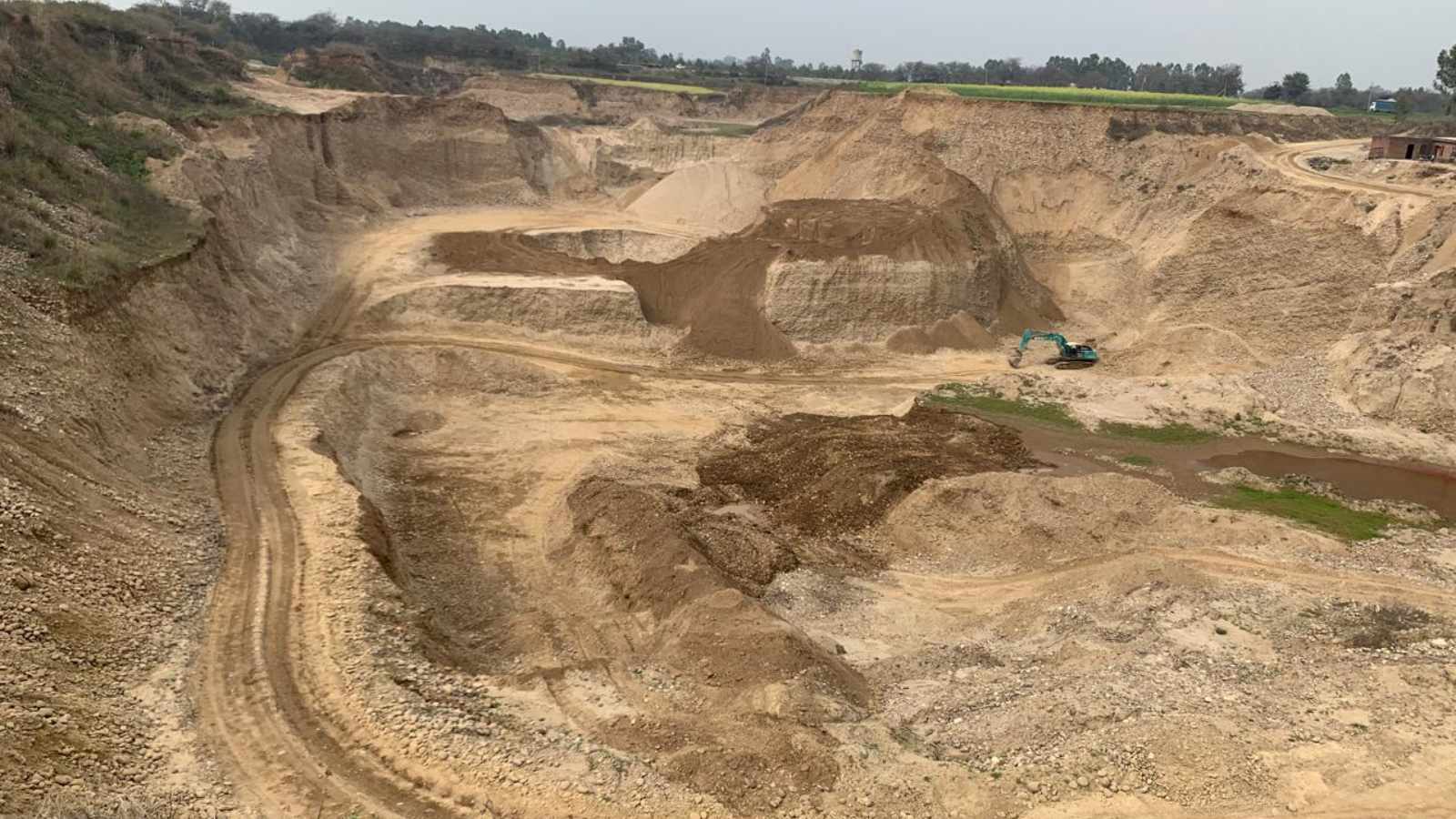
A preliminary inquiry by the Central Bureau of Investigation (CBI) into alleged large-scale illegal mining in Punjab’s Hoshiarpur district has brought into focus a stark discrepancy: while the State told the Punjab and Haryana High Court that no approved mining sites were operational, 26 of the district’s 31 registered stone crushers were functioning.
The court’s concerns stem from a District Legal Services Authority (DLSA) inspection across 17 villages, which recorded excavation pits ranging from 20 to 110 feet deep. The report also flagged circumstances suggesting that operators may have received advance information about the inspection, besides noting the absence of mandatory display boards and GST registration certificates at sites visited.
On September 18, after examining the report and other material placed before it, a division bench of the High Court directed the CBI to conduct a preliminary inquiry to identify those responsible for the alleged ecological destruction. The agency has been asked to submit its report in a sealed cover by December 7. The court also directed a detailed drone survey and three-dimensional satellite imagery to establish the extent of excavation and changes to the landscape over time. The Punjab government will bear the expenses.
The CBI team visited Hoshiarpur on Wednesday, inspecting Master Stone Crusher and adjoining mining sites in Alera village in the Talwara area. Sources said the team also visited the Mining Department’s office on Tanda Road in Hoshiarpur.
The sequence of events began with a petition filed by Rahul Manchanda in the high court on July 14, 2026. Manchanda alleged widespread illegal mining and sought an independent investigation into the alleged connivance of officials of the Mines and Geology Department and the Punjab Pollution Control Board (PPCB).
In early September, after the petitioner submitted photographs purportedly showing excavation beyond permissible depths, the court directed the Chief Judicial Magistrate-cum-Secretary of the DLSA, Hoshiarpur, to inspect the sites and report on the nature, depth and extent of mining. The district administration and mining officials were asked to assist.
The inspection report, submitted on September 14, recorded excavation in Sandhwal, Naushahra Simbli, Dewal, Sariana, Waziran, Godho, Bringli, Dhulal, Bhatehar, Dhol Kalota, Alera, Amroh, Basantpur, Asifpur, Jugial, Parelian and Siparian.
Story continues below this ad
At some locations, the team could not ascertain the depth because the pits were waterlogged or difficult to access. The report also noted that routes leading to certain sites appeared to divert the team away from the actual locations, while some passages were blocked, closed or dismantled. Heavy vehicles and machinery were parked at several crusher premises, but workers were absent.
These circumstances, the report suggested, raised the possibility that operators had been alerted to the inspection in advance.
The team also found no mandatory display boards carrying crusher names and registration or licence details, or GST registration certificates, at the sites visited.
Where did the crushers get their raw material?
The discrepancy between the status of approved mining sites and the number of functioning crushers was central to the court’s concern.
Story continues below this ad
The High Court had sought details on three points: whether gravel and sandstone mining was permitted anywhere in Hoshiarpur district, how many stone crushers were operational, and where they sourced their raw material.
In an affidavit, the Executive Engineer-cum-District Mining Officer stated that none of the approved commercial mining sites, landowner mining sites or crusher mining sites in the district was operational. The affidavit listed 31 registered stone crushers, of which 26 were functioning.
The court noted that the state had failed to provide credible information establishing the source of raw material for these units.
After considering the DLSA report, the bench said it was prima facie convinced that the authorities responsible for preventing large-scale mining had failed to discharge their duties. It added that allegations of collusion between state authorities and those responsible for the alleged ecological destruction could not be brushed aside lightly.
Story continues below this ad
The CBI has been authorised to seek assistance from the district administration, the Mines and Geology Department, expert institutions and Union government departments as part of its inquiry. The proposed drone survey and satellite imagery are expected to help establish the extent of excavation and how the terrain has changed over time.
Farmers allege damage to 400 acres
The court proceedings come against the backdrop of complaints from farmers in Mukerian subdivision, where deep excavation by stone crushers has allegedly left around 400 acres of agricultural land barren, as reported earlier by The Indian Express.
Pits estimated to be 40 to 70 feet deep have reportedly threatened adjoining fields and homes. Residents have also cited rainwater accumulation and collapsing pit edges as factors accelerating erosion. Objections have been raised to the physical verification of 17 proposed mining sites in the Talwara and Mukerian subdivisions.
Located in the Shivalik foothills along the Himachal Pradesh border, Mukerian was once known for its seasonal streams and fertile farmland. A few stone crushers were established in the early 2000s to process material brought from Himachal Pradesh. By 2008-09, miners had increasingly turned to local streams, canals and agricultural land for raw material.
Story continues below this ad
Farmers were drawn by the immediate returns from selling soil, while the number of crushers grew. Residents allege that weak enforcement, political patronage and excavation carried out at night allowed the activity to spread.
Mining is subject to applicable environmental clearances and prescribed conditions, including excavation limits. Villagers, however, allege that enforcement has failed to prevent deep pits, damage to farmland and continuing erosion.
The CBI inquiry will now examine how extensive excavation allegedly took place across multiple villages when the state maintained that no approved mining sites were operational, and how 26 functioning crushers obtained their raw material. It will also look into the role of officials responsible for regulating mining and preventing environmental damage.
KioskNews shows a cleaned-up reading view extracted from the publisher’s page — the original always lives on their site, not ours.