Malaysia must decide when AI helps learning and when it replaces it
SEPTEMBER 4 — New York City Mayor Zohran Mamdani’s decision to impose a one-year moratorium on student-facing generative AI from preschool through Grade 8 deserves Malaysia’s attention. The message behind the policy is more important than the ban itself: technology must serve learning, not replace the intellectual struggle through which learning occurs.
As curriculum practitioners, we should resist the temptation to insert AI into every subject simply because it is available. A good curriculum is not designed around tools. It is designed around what learners must know, understand, practise and eventually do independently.
Malaysia could therefore consider an age-progressive AI curriculum. At primary level, priority should remain on reading, writing, numeracy, conversation, imagination, problem-solving and human interaction. Children must first learn to construct a paragraph before asking AI to improve one, solve a problem before requesting an instant answer, and develop ideas before generating them through a prompt.
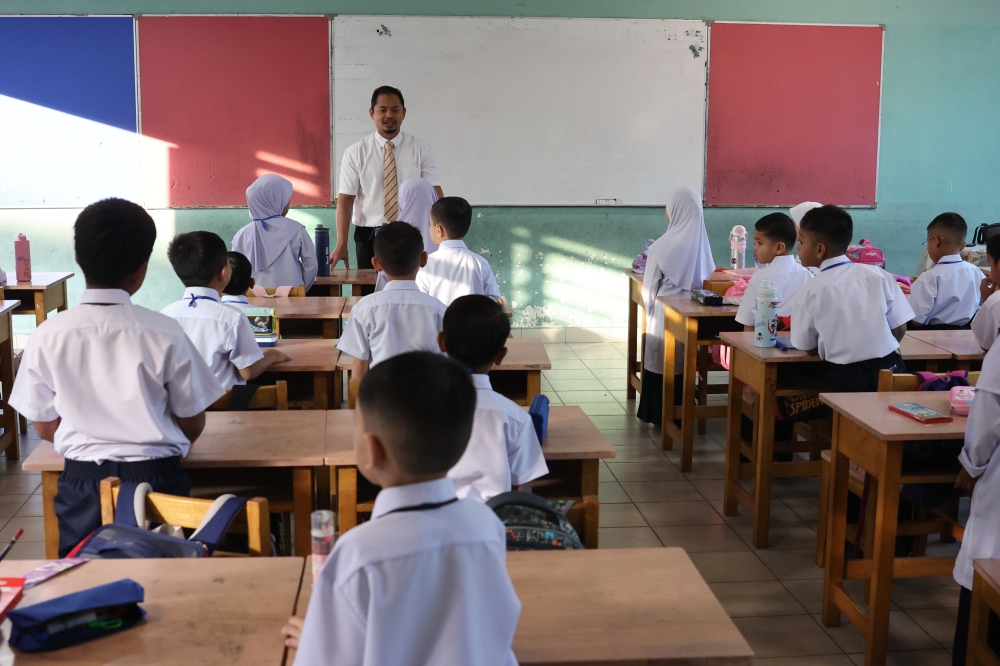
According to the author, children must first learn to construct a paragraph before asking AI to improve one, solve a problem before requesting an instant answer, and develop ideas before generating them through a prompt. — Bernama pic
At secondary level, AI can gradually be introduced as an object of study rather than merely an answer-generating machine. Students should learn how AI works, why it hallucinates, how bias enters generated information, how personal data may be compromised, and when using AI becomes academically dishonest. More importantly, they should learn to challenge an AI response rather than automatically trust it.
Curriculum designers should also redesign assessment. Schools need more oral defence, classroom writing, demonstrations, projects, reflection journals and problem-solving tasks where students must explain how they arrived at an answer. Teachers, meanwhile, require clear curriculum guidelines distinguishing acceptable assistance from cognitive outsourcing.
Malaysia does not necessarily need to copy New York’s moratorium. But we should emulate its central principle: introduce technology according to developmental readiness and educational purpose. The question should never be, “How much AI can we put into schools?” It should be, “What kind of thinking must our children still learn to do for themselves?”
* Assoc Prof Dr Muhammad Noor Abdul Aziz and Dr Siti Noor Aneeis are with the Curriculum Instruction Unit, School of Education, Universiti Utara Malaysia.
** This is the personal opinion of the writer or publication and does not necessarily represent the views of Malay Mail.
KioskNews shows a cleaned-up reading view extracted from the publisher’s page — the original always lives on their site, not ours.