'Stuart Fails to Save the Universe' Bosses Tease an Even More Ambitious Season 2 After Its Finale

Greer Riddell is a London-based culture journalist and critic writing on film, television, audience behaviour, and the wider media industry. She is a Writer and Social Media Coordinator at Collider and TV Editor at FILMHOUNDS.
Her recent collaborations include Netflix, Warner Bros., DC Studios, Hulu, and Disney+, producing features on titles including Saturday Night Live UK, Severance, Sitcoms, Buffy the Vampire Slayer, and Stranger Things. Her recent reviews include Peaky Blinders: The Immortal Man, Stranger Things: Tales From ‘85’, Scrubs Season 10, and The Boroughs. Her work has also included coverage of UK film festivals and features published in Film Stories Magazine.
Sign in to your Collider account
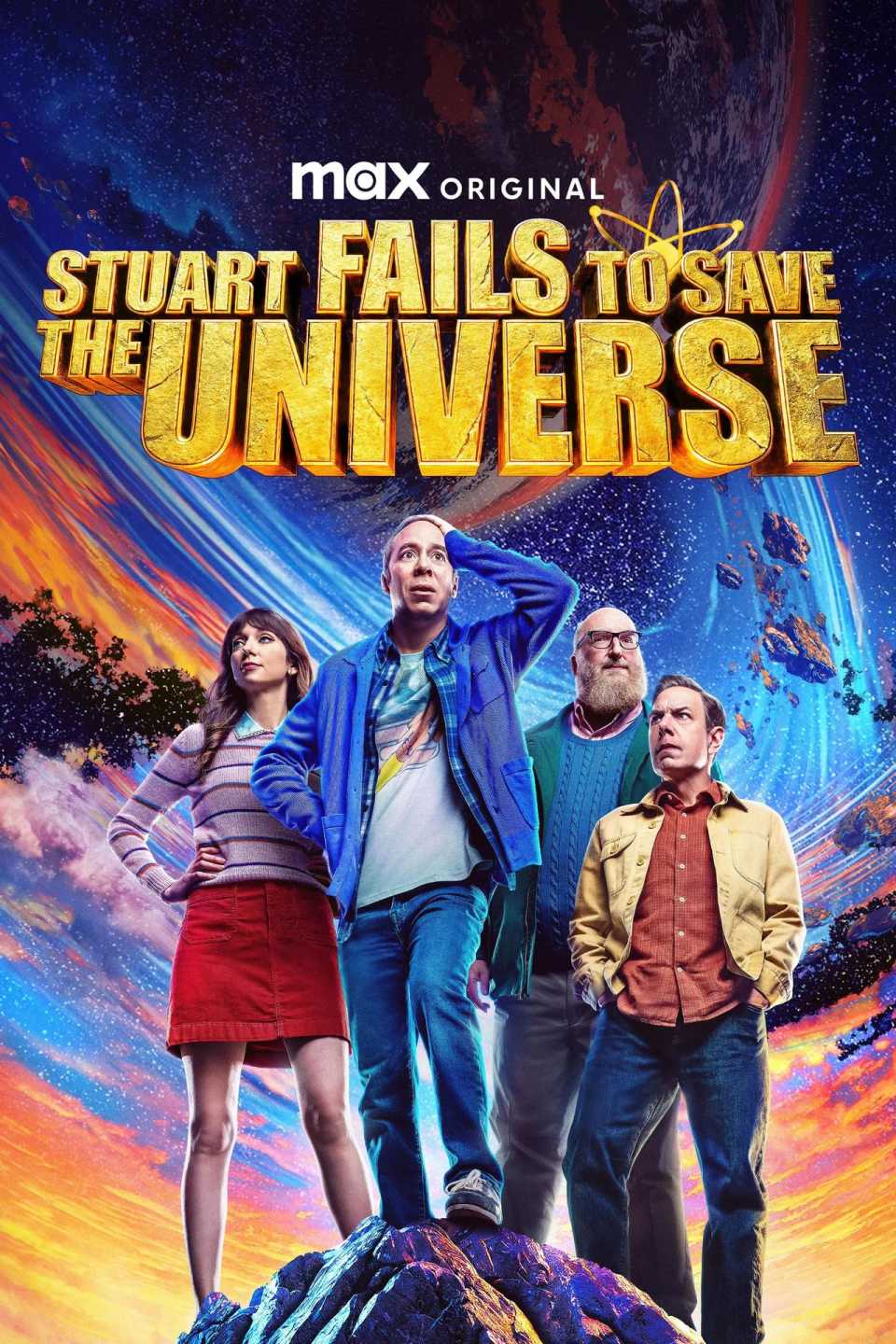
Stuart Fails to Save the Universe certainly got comedy fans' attention with its wild promise — taking an almost unremarkable secondary character, Stuart Bloom (Kevin Sussman) from The Big Bang Theory, a franchise that has already spawned two successful spin-offs, and completely rewriting the genre that character is best known for appearing in. Series creators Chuck Lorre, Zak Penn, and Bill Prady sat down with Collider to talk through the challenges of taking the multi-camera world of a sitcom and turning it into something far more ambitious. Not just one sci-fi story, but ten of them, each with its own universe, explosive CGI effects, and seemingly unlimited Easter eggs.
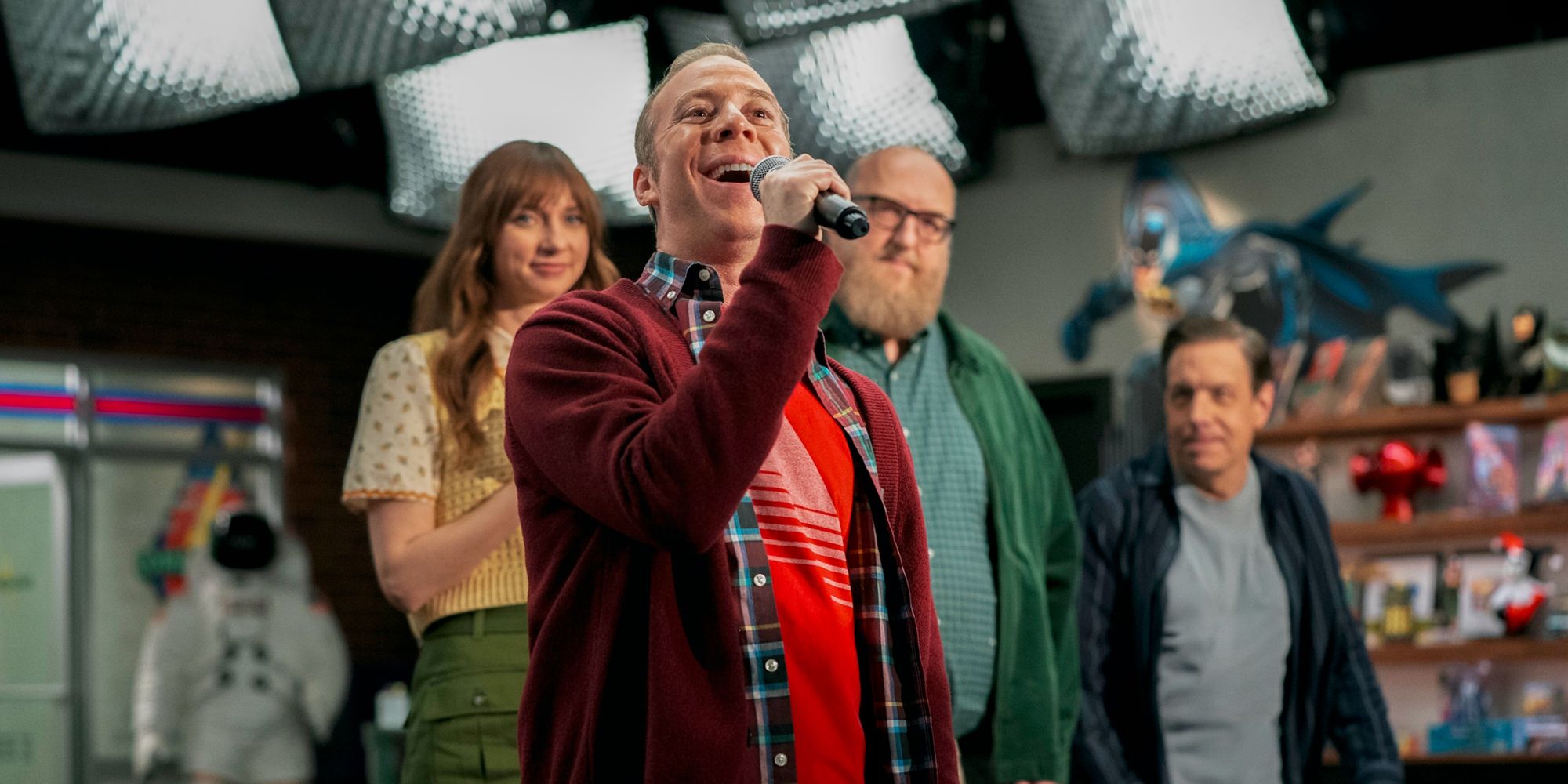
The trio also gave us a peek behind the curtain of the show's mind-bogglingly meta finale, which saw its characters — Stuart, Denise (Lauren Lapkus), Bert (Brian Posehn) and Barry (John Ross Bowie)— almost transcend the actors who play them. Sitcom tropes become yet another universe the group must save, pushing the series' already challenging premise to its logical extreme.

The concept behind Stuart Fails to Save the Universe is definitely not one that would be at the top of the list of The Big Bang Theory spin-offs. We've already explored Sheldon's (Jim Parsons) upbringing in Young Sheldon and watched his brother Georgie Cooper (Montana Jordan) expand his own family in Georgie & Mandy's First Marriage. So who and what was left? Comic book store owner Stuart Bloom’s story hadn’t been explored since 2017, and no one would expect him to front his own series.
But the idea wasn't quite as speculative as it first appeared. In fact, it was one that Prady had pitched to HBO 12 years ago, right as The Big Bang Theory was ending. HBO wasn’t interested at the time, but the idea remained in the team's back pockets. “I'm amazed that we did what we did,” Chuck Lorre says in disbelief. Lorre shared in previous interviews that he wanted to push himself and do something he had never done before with Stuart Fails to Save the Universe. Now that the finale has aired, he is proud that the team managed to pull the idea off while taking some genuinely unexpected risks. “I'm so grateful we did it, and we had the courage to do it because it was, I thought, wonderfully funny and fresh.”
The series takes the sort of enormous creative swing that might seem particularly surprising considering the show's multi-camera sitcom origins. Yet that contrast is exactly what makes Stuart Fails to Save the Universe so brilliant. Zak Penn points to Episode 6, “Spoiler: Corn Is Delicious,” which sees the gang enter a universe where humanity has descended from cows so they eat grass and chew their cud, and said, “There was no way you can anticipate that!” The series uses the freedom of the sci-fi genre to reinvent what each episode can be to the extreme. “Every episode was a standalone, start-from-scratch story,” says Lorre. Having a plot that relies on multiple universes meant the writers could let their imaginations run wild, but it also meant every week had to establish a new set of rules, a new defining story and a new visual identity. In effect, as Lorre put it, all 10 episodes became their own pilots: “Next week won't help me with this week because next week is going to be an entirely different thing.”
That constant reinvention could easily have made the series feel disconnected from its Big Bang Theory roots. Instead, the writers kept the sitcom’s strength as the core of every universe, “We're [still] writing characters, and we're writing comedy, and that we didn't change,” Lorre says. However strange the universe and enormous the effects, the characters still had to be funny first and spectacle came second.
‘Stuart Fails To Save The Universe’ Paid Attention to Every Detail of Their Production
The science fiction and visual identity of Stuart Fails To Save The Universe was an entirely collaborative process, “No matter how difficult the task was, our crew just did an amazing job,” says Penn. Yet the team were conscious that special effects are no longer exclusive to big-budget sci-fi projects. “Right now even TV commercials use special effects and graphics and CGI,” said Lorre. So it was important that Stuart Fails was both “fun to watch, as well as capable of causing you to laugh.”
Episode 3, “Spoiler: Bert Is Magic,” provides perhaps the wildest example of the two. In this alternate universe, Bernadette Rostenkowski (Melissa Rauch) is a witch on commission who claims she can help the group save Bert from being burned at the stake. She agrees to help, but only if they provide the ingredients she needs to restore her powers. Stuart, Kripke, Bert, and Denise eventually meet back at the store, only to be attacked by an alternate-universe Wil Wheaton who is angry they’ve given power to Bernadette — a demon. What follows is a magical battle in the comic book store. Bert unleashes a huge CGI shark at Wheaton; Stuart and Denise hide behind the register with Kripke, who has now taken the form of a penguin. It’s a hilarious use of CGI, but Penn is keen to highlight how the crew used practical effects too. “You know, often people think, ‘Oh, they just did that with CGI,’ but no, it's usually a combination of CGI and incredible stunt work and pyrotechnics and stuff like that,” Penn explains, with the curved floor from Episode 4, "Spoiler: Stuart Makes a Wallet," being his particular favorite.
That same attention to detail extends beyond the action. Stuart Fails to Save the Universe was designed to be the sort of show that the actual Big Bang Theory characters would watch, which meant packing each universe with cameos, Easter eggs, and homages to beloved sci-fi stories. In Episode 4, the team rebuilds The Matrix, featuring Jon Cryer as a sherpa, Porky Pig, and Weird Al Yankovic playing the accordion. “One of the great joys is when you're working with a production team that gets what you're doing and wants to add to it,” says Lorre. That camaraderie became essential to creating the show's increasingly detailed worlds. “The only way you get something like that is if everybody on the show is a writer.”
For Prady, his favorite universe was the one audiences saw for the shortest amount of time — the centaur universe, which appears for a total of just four pages of the script at the end of Episode 7, “Spoiler: Dexys Midnight Runners Get a Royalty Payment.” Prady shares that despite the short screen time, the art department and set decoration teams put in the extra work to get all the details right. “They outfitted that version of the comic book store. They had little statues of DC characters rendered as centaurs. They had art. They had posters. They had comic book covers... You get this incredible rich tapestry. We had the best people.” He reassured us that those same people will all be coming back for Season 2.
For all of its genre ambition, however, Stuart Fails to Save the Universe never completely loses its multi-camera roots. In fact, the show's most radical departure from the genre also led them straight back to the sitcom formula. “In the multi-cam world, special effects is someone walking into the living room and has a cup of coffee,” jokes Lorre. The series' mad and meta finale was filmed in front of a live studio audience, allowing the conventions of the sitcom to become part of the story itself. Kripke begins hearing the sound of recorded laughter and discovers a series of comic books on the shelves depicting their adventures, but some of them are set in the future. Little by little, the group begins to notice increasingly strange things. Denise becomes obsessed with the fact that Stuart hasn't acknowledged that it is her birthday. The lighting changes. Scenes are punctuated with The Big Bang Theory's original atom transitions. Kripke finally realizes that the characters are in a sitcom and the fourth wall physically dissolves into thick fog. The characters pass through it and find themselves on a television set with a live audience, where the actors are actually introduced!
It is the kind of complex finale that seems as though it was mapped out 12 years ago when Prady first pitched the idea, but that wasn't the case. “I think we stumbled into it and then fell in love with it,” Lorre says. Stuart Fails to Save the Universe’s episodes were written chronologically, meaning the writers were just as eager to see where the gang would end up as the audience. When trapped inside the cover of a comic book in Episode 9, “Spoiler: We Couldn't Get Green Lantern,” Lorre, Prady, and Penn realized, “Oh, if they can be inside media, they should be inside some other medium, right?”
The team wanted to take the show “to a place that you could conceive of, but that seemed like the riskiest place to end,” with the final destination feeling “somewhat mystical and surreal.” However, it also creates an unsettling question. If the characters from Stuart Fails to Save the Universe can enter a world where their actors exist as themselves, does that mean we are living in one of the universes created by the show? And should we be worried that Stuart is the one who has to save us? “If you believe in the infinite universes theory, then maybe it's a problem for us as well as our characters. But I hope not, because I don't think he'd get it done,” Penn warns.
The Stuart Fails to Save the Universe finale takes the characters to perhaps the most surreal place the series could reach. So where can they possibly go next? The series was renewed for Season 2 in August 2026, and the writing trio already have some ideas in the bank. There was even an Easter egg in the finale that could point towards one destination, “the underwater universe” reveals Penn which he warned the crew about in Season 1 saying, "'Guys, that is going to be so hard. Do we really want to do that?' So we didn't even try.” But then Lorre jokes that for Season 2, “It might be our Poseidon Adventure."
The willingness to even consider something as technically difficult as an underwater universe speaks to how much freedom the Stuart Fails to Save the Universe team has been given. Despite the outlandish ideas the writers wanted to pursue, Warner Bros. and HBO were incredibly supportive throughout the production. Lorre shared that both companies were “totally on board” and would consistently show them material that they thought was excellent. The writing team also praised the release, marketing, and publicity for the role they played in the show's success, arguing that the production company believed strongly in the premise, and “they put so much energy in trying to get people aware of it.” So does this love mean that the writers have a chance to pursue even more ambitious concepts in Season 2? “The confidence has to be earned,” Lorre says, “and I think in these first 10 episodes we've earned a little bit of confidence that we can pull this off.”
Stuart Fails to Save the Universe is available to stream on HBO Max.
- Release Date
- July 23, 2026
- Network
- HBO Max
- Directors
- Kyle Newacheck, Jonathan Frakes, Robert Duncan McNeill
- Writers
- Bill Prady, Chuck Lorre, Zak Penn
KioskNews shows a cleaned-up reading view extracted from the publisher’s page — the original always lives on their site, not ours.